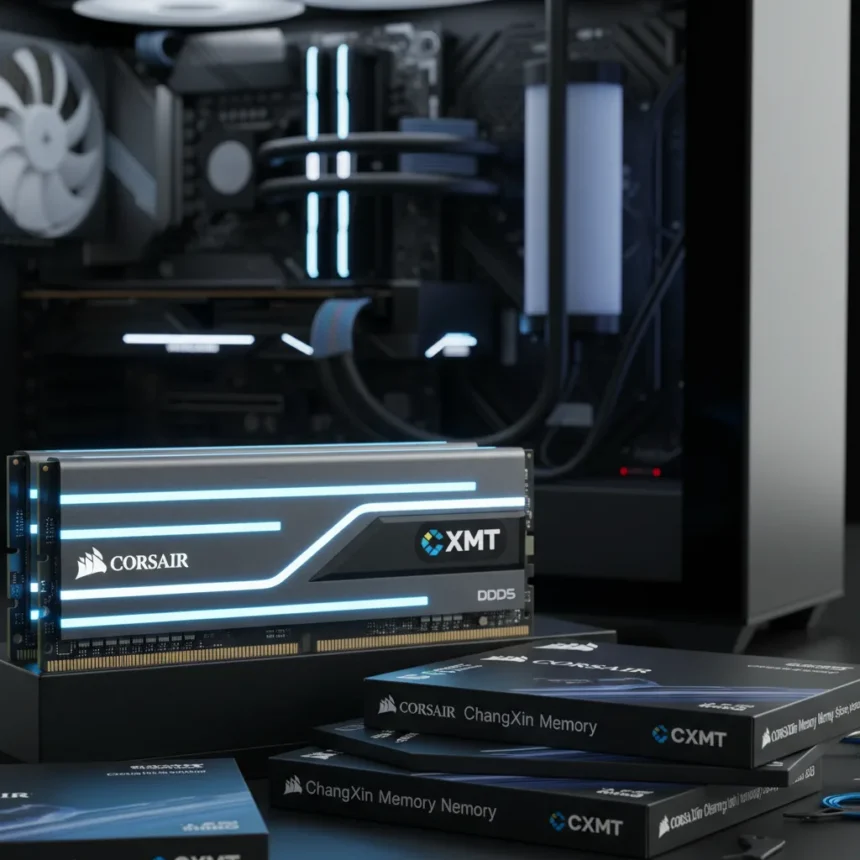
Chinese DDR5 memory is moving from the sidelines into mainstream consumer PC builds. Corsair, one of the world’s largest memory brands, has begun shipping Vengeance DDR5 kits using modules made by ChangXin Memory Technologies (CXMT), a Chinese DRAM manufacturer. This shift marks a significant moment in the RAM supply crisis—one that suggests Chinese-made memory could help ease the pressure on consumer DDR5 availability.
Key Takeaways
- Corsair now sources DDR5 modules from Chinese maker CXMT for mainstream Vengeance kits
- Chinese DRAM makers face less competition for supply from AI data center contracts
- The move signals Chinese memory could become a mainstream consumer alternative, not just a niche supply fix
- Industry observers remain cautious about whether this truly solves the broader RAM shortage
- CXMT’s entry into mainstream consumer memory represents a major shift in the global DRAM supply chain
Why Chinese DDR5 Memory Matters Now
The RAM market has been under severe pressure for months. Consumer DDR5 prices remain elevated, and availability fluctuates as manufacturers prioritize high-margin data center and AI server contracts. Chinese memory makers, including CXMT, operate outside this supply chain squeeze. They are not locked into the same lucrative AI infrastructure deals that consume production capacity at South Korean and Taiwanese suppliers. This positioning makes them a potential relief valve for consumer memory demand.
When a manufacturer as large as Corsair begins integrating DDR5 modules from CXMT into a mainstream product line, it signals confidence in both the quality and the supply reliability of Chinese DRAM. Corsair’s Vengeance brand targets mainstream gamers and PC enthusiasts—not niche or budget segments. This is not a desperation move; it is a strategic sourcing decision.
Chinese DDR5 Memory vs. Traditional Supply Sources
The traditional DRAM supply chain has been dominated by Samsung, SK Hynix, and Micron. These companies allocate a growing share of their production to data centers and AI accelerators, where margins are higher and contracts are larger. CXMT and other Chinese manufacturers operate in a different ecosystem. They serve primarily domestic and regional markets, with less exposure to the AI boom that has starved the consumer memory market.


This structural difference creates an opportunity. Chinese DDR5 memory can reach consumer channels at potentially lower costs because the manufacturer is not competing for the same premium contracts. However, the industry remains cautious. As one observer noted in coverage of this trend, it is too early to say whether Chinese DRAM will definitively solve the RAM crisis. Adoption by Corsair is encouraging, but it is a single data point in a much larger market.
What This Means for the RAM Shortage
The appearance of Chinese DDR5 memory in Corsair’s mainstream lineup suggests the supply situation may be shifting. If other major brands follow Corsair’s lead, Chinese DRAM could absorb a meaningful portion of consumer demand, freeing up capacity elsewhere in the supply chain. This would not happen overnight, but the trajectory matters.



The RAM shortage has lasted longer than many expected. When DDR5 launched, supply constraints were blamed on the transition from DDR4 and general semiconductor scarcity. Those excuses have worn thin. The real culprit is simple: manufacturers can make more money selling memory to data centers than to PC makers. Chinese producers, less integrated into that ecosystem, offer an alternative path to market. Whether this path scales to meet global consumer demand remains an open question.
Is Chinese DDR5 Memory a Real Solution?
The honest answer is: not yet, and maybe not at all. CXMT’s entry into mainstream consumer memory is a positive sign, but one product line from one major brand does not constitute a market shift. Many consumers remain skeptical of Chinese-made components, fairly or not. Reliability concerns, warranty support, and long-term availability are legitimate questions. Corsair’s reputation gives CXMT credibility, but that credibility must be earned over time through consistent performance and support.
Additionally, Chinese DRAM makers face their own constraints. Geopolitical tensions, export restrictions, and competition from other Chinese manufacturers could limit their ability to scale production for global markets. The notion that Chinese DDR5 memory is an antidote to crushing shortages has merit when a brand like Corsair adopts it, but the remedy is incomplete without sustained supply growth and broad industry adoption.
What Happens Next for Memory Supply?
If Corsair’s move succeeds—if these CXMT-based Vengeance kits sell well and maintain reliability—expect other brands to follow. Kingston, G.Skill, and others may explore similar partnerships. This could create a two-tier memory market: premium DDR5 from Samsung and SK Hynix at higher prices, and competitive DDR5 from Chinese makers at lower costs. Such bifurcation would ease consumer pressure without solving the underlying supply problem.



The data center and AI boom will not slow down. That demand will continue to pull production capacity away from consumer channels. Chinese DRAM makers offer a partial countermeasure, not a complete solution. The real relief will come when either AI demand plateaus or when new manufacturing capacity comes online globally. Until then, Chinese DDR5 memory is a pragmatic stopgap—useful, but not a cure.
Will Chinese DDR5 memory improve PC gaming performance?
No. Memory speed and latency have minimal impact on gaming frame rates compared to GPU and CPU performance. Chinese DDR5 modules with the same specifications as other DDR5 will deliver identical gaming performance. The benefit of Chinese DDR5 memory is availability and cost, not gaming speed.
Is CXMT memory reliable for daily use?
Corsair’s decision to use CXMT modules in a mainstream product suggests the modules meet quality standards. However, long-term reliability data is limited since this is a recent development. Corsair’s warranty will cover defective modules, but individual experience may vary as with any new supply source.
Should I wait for Chinese DDR5 memory prices to drop further?
If you need RAM now, the Corsair Vengeance kit with CXMT modules is likely a reasonable choice. Waiting for prices to fall further is a gamble—memory costs depend on supply, demand, and geopolitical factors that are unpredictable. Chinese DDR5 memory may eventually become cheaper, but that timeline is uncertain.
Chinese DDR5 memory is not a revolution, but it is a meaningful shift in how the industry addresses supply constraints. Corsair’s adoption of CXMT modules signals that Chinese DRAM has moved from fringe to mainstream. Whether this trend accelerates or stalls depends on reliability, scale, and the broader trajectory of AI demand. For now, consumers benefit from more options and potentially lower prices. That is progress, even if it is not the complete solution the market needs.
Edited by the All Things Geek team.
Source: Tom's Hardware