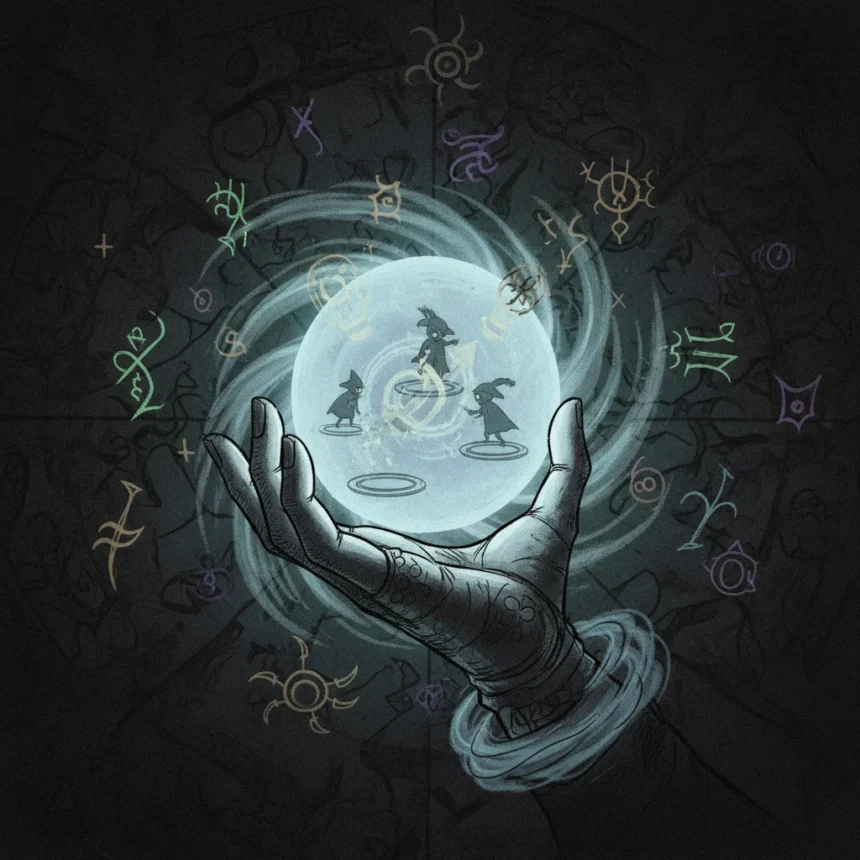
The Magician’s Hand is a hand-drawn indie game that stands out for its unusually eerie, animation-like visual presentation. Developed by creators with backgrounds in animation, the game demonstrates how artistic sensibility can transform indie game design into something that feels more like an interactive art film than a traditional video game experience.
Key Takeaways
- The Magician’s Hand uses hand-drawn art to create a distinctly creepy atmosphere unlike most indie games.
- The game’s visual style draws comparisons to Glover, a classic title known for its distinctive aesthetic.
- Former animators bringing their craft to game design creates a unique artistic vision.
- Hand-drawn indie games are increasingly using animation techniques to push visual storytelling in gaming.
- The game prioritizes artistic presentation alongside gameplay mechanics.
What Makes This Hand-drawn Indie Game Different
The Magician’s Hand distinguishes itself through its commitment to hand-drawn artistry in a medium increasingly dominated by 3D rendering and photorealism. Rather than chasing technical polish, the developers have leaned into the inherent character of hand-drawn animation—the imperfect lines, the deliberate brushstrokes, the sense that you’re watching something crafted by human hands rather than algorithms. This approach creates an unsettling quality that feels intentional, even deliberate. The game’s creepy atmosphere emerges not from jump scares or grotesque imagery, but from the uncanny valley created when animation techniques meet interactive gameplay.
What separates this hand-drawn indie game from other artistic indie titles is its willingness to embrace eeriness as a core aesthetic rather than a side effect. Many indie games use hand-drawn visuals to evoke charm or nostalgia. The Magician’s Hand instead uses those same techniques to unsettle, to create discomfort, to remind players that they’re experiencing something deliberately strange. This is a deliberate artistic choice, not a limitation of the medium.
Animation Backgrounds Shaping Game Design
The developers’ animation backgrounds fundamentally shape how The Magician’s Hand approaches visual storytelling. Animators understand movement, timing, and how to convey emotion through gesture and expression—skills that translate directly into game design when applied thoughtfully. Rather than treating animation as a layer on top of gameplay, these creators appear to have built the game around animation principles from the ground up. Every frame is considered, every movement deliberate.


This differs sharply from how many indie games approach art direction. Typical indie game development treats visuals as one component among many—code, sound, mechanics, narrative. Animation-first design inverts that hierarchy. It asks: what if the animation itself is the primary experience, and everything else serves that vision? The Magician’s Hand seems to answer that question by creating a game where you’re never unaware that you’re watching something drawn, something constructed, something artistic.
Comparisons to Glover and Classic Indie Aesthetics
Players have drawn comparisons between The Magician’s Hand and Glover, a title that similarly prioritized distinctive visual character over technical prowess. Glover, released in the late 1990s, became memorable precisely because it looked and felt unlike anything else on its platform—a hand-drawn, whimsical experience that stood apart from the polygon-heavy games surrounding it. The Magician’s Hand evokes similar recognition: here is a game that looks like nothing else currently available, a game that refuses to conform to industry expectations about what a video game should look like.



The comparison is apt but also instructive. Glover proved that distinctive aesthetics can sustain a game experience even when technical limitations exist. The Magician’s Hand appears to be making a similar argument, but from a position of artistic choice rather than technical constraint. The developers are hand-drawing their game not because they lack access to 3D tools, but because hand-drawn aesthetics serve their vision better. That distinction matters. It signals that artistic vision drives development, not technical circumstance.
Why Hand-drawn Indie Games Matter Right Now
In an era when AAA studios compete on graphical fidelity and processing power, hand-drawn indie games occupy a crucial creative space. They prove that visual innovation doesn’t require the largest budgets or the most advanced technology. The Magician’s Hand exemplifies this principle: a small team with animation expertise can create something visually distinctive and memorable by committing fully to a specific artistic direction.
The hand-drawn indie game space also benefits from audience fatigue with photorealism. After years of chasing ever-more-detailed graphics, some players crave experiences that feel deliberately stylized, deliberately crafted. The Magician’s Hand taps into that desire by offering something that feels handmade, imperfect, and intentionally unsettling. It’s a reminder that innovation in game visuals doesn’t mean pushing technical limits—it means making bold artistic choices.
Is The Magician’s Hand worth playing?
If you’re drawn to games that prioritize artistic vision and distinctive visual style, The Magician’s Hand appears to be a compelling choice. The game is designed for players who appreciate animation craft, who enjoy creepy atmospheres built through aesthetic rather than shock value, and who want experiences that feel different from mainstream releases. It’s not a game for everyone—its hand-drawn, eerie style won’t appeal to players seeking action-focused gameplay or cheerful aesthetics—but for the right audience, it offers something genuinely distinctive.


How does The Magician’s Hand compare to other hand-drawn indie games?
The Magician’s Hand stands apart from other hand-drawn indie games through its deliberate embrace of eeriness and its apparent prioritization of animation principles in game design. While many hand-drawn indie titles use the style for charm or retro appeal, this game uses hand-drawn aesthetics to create discomfort and unease. That tonal distinction makes it a unique entry in the hand-drawn indie game landscape.
Will The Magician’s Hand be available on multiple platforms?
Platform availability and release details for The Magician’s Hand have not been confirmed in current coverage. Players interested in the game should monitor official announcements from the developers for information about which platforms will receive the title and when it will be available.
The Magician’s Hand represents something increasingly rare in game development: a project where artistic vision takes absolute priority, where the hand-drawn aesthetic isn’t a stylistic choice among many but the foundation upon which everything else is built. In an industry obsessed with technical specifications and graphical benchmarks, that commitment to pure artistic expression feels genuinely bold. Whether you’re a fan of hand-drawn indie games or simply someone seeking experiences that feel genuinely different, The Magician’s Hand deserves attention.
Edited by the All Things Geek team.
Source: Creativebloq