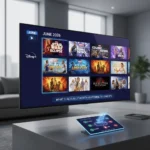
Entry-level AR glasses are finally arriving. Xreal’s new sub-brand, X by Xreal, is launching its first product to make augmented reality accessible to gamers and movie-watchers who’ve been priced out of premium AR hardware. This move signals a fundamental shift in the AR market—away from niche tech enthusiasts and toward mainstream entertainment use.
Key Takeaways
- X by Xreal targets gamers and movie-lovers with an affordable AR glasses entry point
- The sub-brand represents Xreal’s strategy to broaden AR adoption beyond premium segments
- Xreal’s existing lineup spans multiple price tiers, from the Air 2 Pro at $449 to the One Pro at $649
- Competing AR platforms like Viture Beast and Meta’s Orion target similar mainstream audiences
- Future AR glasses from Asus and Xreal’s Android XR initiative suggest intensifying competition in 2026
Why Entry-Level AR Glasses Matter Right Now
For years, AR glasses have been the domain of early adopters willing to spend $400–$650 on experimental hardware. X by Xreal’s entry-level push changes that equation. By creating a dedicated sub-brand, Xreal is signaling that the technology is mature enough for casual users—people who want to watch movies on a virtual screen or play games without committing to a premium device. This is not a niche play; it is a bet that AR glasses can become as common as gaming headsets.
The timing matters. As AR chip technology improves and manufacturing costs drop, the window for establishing mainstream adoption is narrowing. Competitors like Viture and Meta are also pushing downmarket. Meta’s planned Android XR smart glasses, expected later in 2026, will bring Google’s full software ecosystem to AR hardware. If Xreal does not establish an entry-level foothold now, it risks ceding the mainstream market to larger players with deeper resources.
How Entry-Level AR Glasses Fit Into Xreal’s Broader Strategy
Xreal is not abandoning its premium segment. The XREAL One Pro, priced at $649, remains the flagship, offering a 57-degree field of view, 1,200p resolution, and 1,250 nits of brightness. The Air 2 Pro, at $449, serves mid-market buyers seeking a lighter option with a 46-degree field of view and 1080p OLED per eye. By introducing X by Xreal below that tier, the company is creating a three-tier ecosystem—entry, mid, and premium—that mirrors strategies used by smartphone manufacturers to capture different market segments.


This tiered approach also hedges against uncertainty in AR adoption rates. If mainstream consumers embrace AR glasses quickly, X by Xreal captures volume sales and builds brand loyalty. If adoption stays niche, Xreal’s premium products remain profitable. It is a rational hedge in a market where demand is still unpredictable.
The Competitive Pressure Behind the Entry-Level Push
Xreal is not moving alone. Asus has announced the ROG Xreal R1, a gaming-focused AR glasses product expected later this year with a potential 240Hz refresh rate. Viture’s Beast model offers a 58-degree field of view, competing directly with Xreal’s One Pro on specs. Meanwhile, Meta’s Orion prototype demonstrates that tech giants are serious about AR glasses as a consumer platform, not a niche category.



The entry-level market is where volume lives. Smartphone makers learned this decades ago—the real profit and market share come from the $300–$500 segment, not the $1,000+ premium tier. X by Xreal is applying that lesson to AR. By establishing a recognized brand for affordable AR glasses, Xreal can build a user base that upgrades to premium models over time while also creating software and content ecosystem lock-in.
What Entry-Level AR Glasses Mean for Gamers and Movie-Lovers
For gamers, entry-level AR glasses offer a gateway to spatial gaming without the cost barrier. For movie-lovers, they provide a personal cinema experience—Xreal’s Air 2 Pro offers an equivalent 147-inch screen, and the One Pro stretches that to 171 inches. These use cases drive demand in ways that productivity or professional AR cannot.
The challenge is software. High-quality AR games and streaming apps are still sparse. X by Xreal’s success depends not just on hardware affordability but on a growing catalog of compelling entertainment content. Xreal has partnerships with streaming services and game studios, but the ecosystem is nascent compared to smartphones or VR headsets. An entry-level device is only attractive if there is something worth watching or playing on it.
FAQ
What is the difference between X by Xreal and regular Xreal products?
X by Xreal is a sub-brand created specifically for entry-level consumers. While Xreal’s existing products like the One Pro and Air 2 Pro target tech enthusiasts and early adopters, X by Xreal aims to make AR glasses accessible to mainstream gamers and movie-watchers at a lower price point. The exact specs of the X by Xreal product have not been disclosed, but the positioning suggests a focus on entertainment use rather than professional or advanced AR applications.


How do entry-level AR glasses compare to premium models?
Premium models like the XREAL One Pro offer superior specs: a 57-degree field of view, 1,200p resolution, and 1,250 nits of brightness. Entry-level glasses typically compromise on display quality, field of view, or brightness to reduce cost. However, for casual movie-watching and gaming, these trade-offs may be acceptable. The key is whether the entry-level experience is good enough to build a habit—if it is, users may upgrade to premium models later.
When will X by Xreal glasses be available for purchase?
The research brief does not specify an exact launch date or availability window for X by Xreal’s entry-level glasses. Xreal has announced the sub-brand and its gaming and movie-focused positioning, but pre-order dates and regional availability details have not been confirmed. Interested buyers should monitor Xreal’s official channels for announcements.
Xreal’s entry-level AR glasses launch is a pivotal moment for the AR industry. By targeting mainstream users instead of chasing enthusiasts, Xreal is betting that AR glasses are ready for prime time. Whether that bet pays off depends on execution—pricing, software quality, and marketing will determine if entry-level AR glasses become a category or remain a curiosity. For now, the move signals that AR’s niche era is ending.
Edited by the All Things Geek team.
Source: Android Central