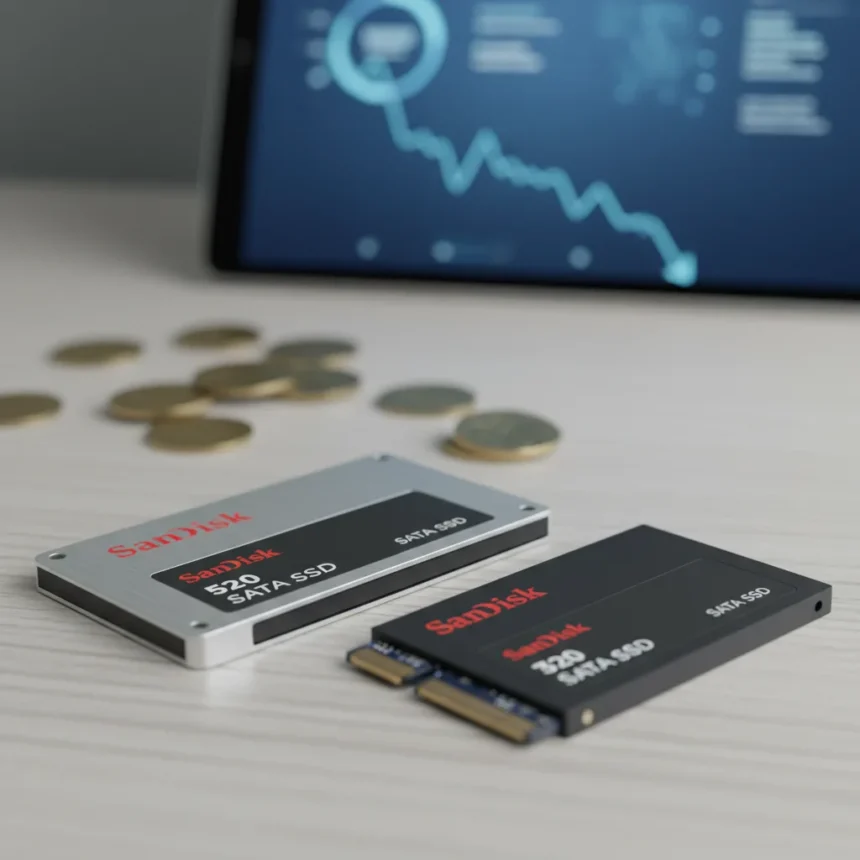
SanDisk is preparing to launch new affordable SATA SSDs—the 520 and 320 models—designed to challenge the recent spike in internal storage pricing that has frustrated PC builders and everyday upgrades alike. These drives represent a significant shift: SanDisk stepping back into the budget SATA segment after years of focusing on premium and portable offerings. The 520 and 320 will reach capacities of up to 4TB, directly addressing buyers who need cost-effective internal storage without premium performance premiums.
Key Takeaways
- SanDisk is launching affordable 520 and 320 SATA SSDs with up to 4TB capacity
- The new drives target budget-conscious PC builders facing elevated storage costs
- SATA SSDs remain relevant for older systems and cost-sensitive upgrades
- SanDisk’s move signals shifting market priorities toward affordability over speed
- These drives compete directly with other budget SATA options in the internal storage space
Why SanDisk is returning to budget SATA storage
The SSD market has undergone a painful shift for consumers. Premium NVMe drives dominate SanDisk’s current lineup—the Portable SSD, Extreme Portable SSD, and Extreme PRO Portable SSD all target users willing to pay for speed and portability. But that focus has left a gap at the bottom end. Budget-conscious system builders, older PC owners, and users upgrading aging laptops need affordable internal storage, and the market has made those options scarce and expensive. SanDisk’s decision to resurrect the 520 and 320 SATA lines acknowledges a hard truth: not every upgrade requires latest speed, and plenty of users simply want more storage space without breaking the bank.
SATA SSDs have fallen out of fashion in enthusiast circles, but they remain the practical choice for millions of machines still running older motherboards or SATA-only systems. A 4TB SATA drive offers genuine capacity at a price point that NVMe drives cannot match. SanDisk’s return to this segment is less about nostalgia and more about recognizing that the market has swung too far toward premium products, leaving everyday users behind.
What the 520 and 320 SATA SSDs mean for the broader market
The launch of affordable SATA SSDs from a major manufacturer like SanDisk sends a message to competitors and to the industry: there is real demand at the budget end, and ignoring it is a mistake. While NVMe has become the standard for new systems, SATA drives still power countless PCs, and upgrading from mechanical storage to an SSD—even a SATA one—delivers a transformative speed boost for users who have not yet made that jump.


Pricing pressure from these new models could reshape the internal storage market. Buyers have tolerated elevated SSD costs for the past year, but the arrival of competitively priced 520 and 320 drives gives them alternatives. This is especially significant for system builders who spec machines for corporate offices, schools, or budget-conscious consumers where every dollar matters. A 4TB SATA SSD that undercuts premium NVMe drives becomes the obvious choice for those use cases.
SATA SSDs vs. NVMe: where each fits
The comparison between SATA and NVMe is not really about speed anymore—it is about use case and budget. NVMe drives are faster, yes, but for most everyday computing tasks like web browsing, document editing, video streaming, and even gaming, the speed difference is imperceptible. SATA SSDs like the upcoming 520 and 320 models excel in scenarios where capacity and cost matter more than raw bandwidth: media storage, backup drives, secondary storage, and systems that lack NVMe support.



SanDisk’s broader SSD portfolio already includes premium options for users who need speed. The new affordable SATA SSDs do not cannibalize that market—they expand into a segment that has been underserved. A user upgrading a 2015 laptop from a hard drive to a SATA SSD does not need NVMe; they need reliability and capacity at a fair price. That is exactly what the 520 and 320 promise to deliver.
Frequently asked questions
Are SATA SSDs still worth buying in 2026?
Yes, especially for systems without NVMe support, secondary storage, or budget-limited builds. SATA SSDs deliver massive speed improvements over mechanical drives at a lower cost than NVMe alternatives. For most users, the performance difference between SATA and NVMe is negligible in daily use.
How do SanDisk’s new 520 and 320 SATA SSDs compare to older SSD models?
The exact specifications remain unconfirmed pending official launch details, but the 4TB maximum capacity positions these drives as modern storage solutions designed for current capacity needs rather than older-generation limited-capacity designs.
Will the 520 and 320 SATA SSDs work in my older PC?
If your system has a 2.5-inch SATA connection, these drives should be compatible. SATA is a standard interface that has remained backward-compatible for nearly two decades, so integration into older systems should be straightforward.



SanDisk’s return to affordable SATA SSDs is a pragmatic response to market demand that premium manufacturers have ignored. Not every PC owner needs—or can afford—the latest high-speed NVMe technology. By bringing back the 520 and 320 with capacities up to 4TB, SanDisk is acknowledging that storage affordability matters just as much as performance. For budget-conscious builders and users upgrading aging systems, this is genuinely good news.
Where to Buy
Edited by the All Things Geek team.
Source: Tom's Hardware