





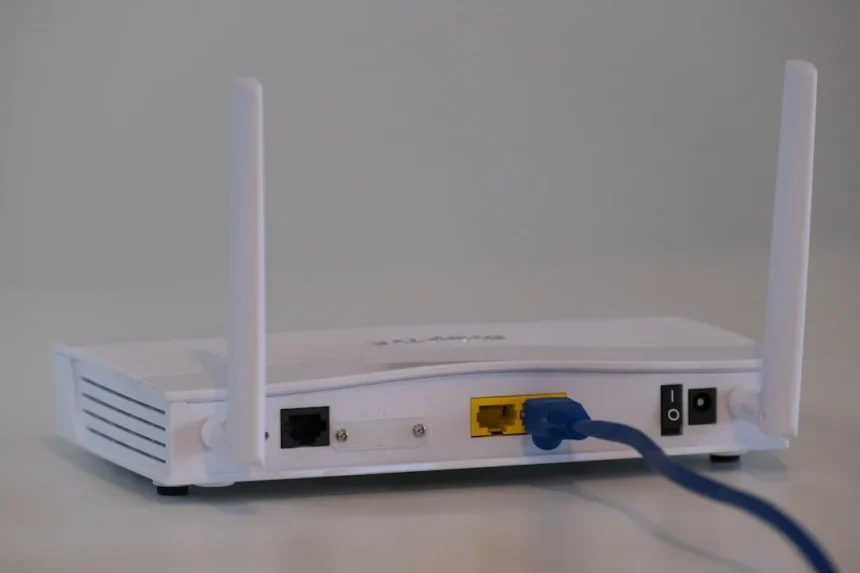
The Wi-Fi 8 router era has a launch date — at least on paper. TP-Link Systems Inc. announced Archer 8, its first consumer Wi-Fi 8 router platform built around the emerging IEEE 802.11bn specification, scheduled for October 2026 pending FCC approval. This isn’t a speed race. TP-Link is explicitly framing Wi-Fi 8 as a reliability and latency play, not a headline-throughput upgrade — and that distinction matters more than most press releases let on.
Key Takeaways
- TP-Link’s Archer 8 is the first announced consumer Wi-Fi 8 router platform, targeting October 2026 subject to FCC approval.
- Wi-Fi 8 (IEEE 802.11bn) uses existing 2.4/5/6 GHz bands and prioritises reliability, latency, and roaming over peak speed.
- TP-Link reports up to 33% higher throughput from modulation improvements and up to 30% better signal performance in multi-floor environments.
- The broader Wi-Fi 8 portfolio includes Deco 8 mesh (Q1 2027), Roam 8 travel router (Q2 2027), and range extenders and adapters (Q2 2027).
- Final pricing and regional specifications have not been announced and will vary by market.
What Is Wi-Fi 8 and Why Does It Matter Now?
Wi-Fi 8 refers to the IEEE 802.11bn wireless standard, which focuses on steady connections, stronger coverage, smoother roaming, lower latency, and improved reliability rather than simply pushing peak throughput higher. The standard doesn’t introduce a new frequency band — it operates across the same 2.4 GHz, 5 GHz, and 6 GHz bands already used by Wi-Fi 6E and Wi-Fi 7 hardware. The real difference, according to TP-Link’s own materials, is consistency and responsiveness rather than raw speed.
That’s a meaningful philosophical shift. Wi-Fi 7 arrived with enormous headline numbers — 320 MHz channels, 4096-QAM modulation, Multi-Link Operation, and theoretical speeds up to 46 Gbps. Wi-Fi 8 doesn’t try to one-up those figures on paper. Instead, it targets the frustrations that actually degrade everyday network experience: dropped connections when walking between floors, latency spikes when a dozen devices compete for bandwidth, and inconsistent performance in dense home environments. Whether that pitch lands with consumers used to buying routers based on gigabit claims remains to be seen.
TP-Link Archer 8 Specs and Reported Performance Gains
The Archer 8 is TP-Link’s first Wi-Fi 8 router platform, and the company has published specific performance claims from its initial testing. Enhanced modulation and coding improvements deliver up to 33% higher throughput, while unequal modulation technologies contribute up to 24% higher throughput. In multi-floor home environments, single-device connections see up to 30% signal-performance improvement. Multi-device scenarios benefit from a 10–20% improvement through the platform’s antenna architecture and AI-assisted optimisation.


It’s worth being clear about what those numbers represent. These are TP-Link’s reported results from its own protocol-level testing — not independent lab benchmarks. The company says testing showed improvements at comparable distances and signal conditions, but final production hardware may differ, and real-world gains will depend heavily on the devices connecting to the router. TP-Link’s own materials acknowledge that the biggest benefits come when connecting newer Wi-Fi 8 client devices rather than existing hardware.
TP-Link first demonstrated Wi-Fi 8 connectivity on October 12, 2025, using a prototype device that validated both the Wi-Fi 8 beacon and data throughput. The Archer 8 announcement is the commercialisation step that follows that prototype milestone — moving from proof-of-concept to a product with a launch window.



The Full Wi-Fi 8 Roadmap: Beyond the Archer 8
TP-Link isn’t stopping at a single router. The company has outlined a staged Wi-Fi 8 portfolio that extends well into 2027. Archer 8 leads the lineup in October 2026, followed by the Deco 8 mesh system in Q1 2027 and the Roam 8 travel router in Q2 2027. Wi-Fi 8 range extenders and adapters are also planned for Q2 2027. That’s a reasonably complete ecosystem push for a standard that hasn’t yet reached mainstream consumer availability.
The inclusion of a travel router is interesting. Roam 8 suggests TP-Link sees Wi-Fi 8’s reliability and low-latency characteristics as valuable outside the home — in hotel rooms, temporary offices, or mobile setups where connection stability matters even more than at a fixed desk. Whether that product finds a market will depend on how quickly Wi-Fi 8 client support spreads across laptops and phones by mid-2027.
Should You Wait for a Wi-Fi 8 Router?
For most people buying a router today, the honest answer is no — not yet. The Archer 8 won’t ship until October 2026 at the earliest, and that date carries an explicit FCC approval caveat. Final specifications and pricing haven’t been confirmed, and regional availability will vary. TP-Link has stated that market-specific details will be announced closer to launch.
If you’re on Wi-Fi 5 or older hardware, a current Wi-Fi 7 router delivers a genuine upgrade right now. Wi-Fi 7’s Multi-Link Operation and 6 GHz band support already address many of the congestion and latency issues that Wi-Fi 8 promises to improve further. The gap between Wi-Fi 7 and Wi-Fi 8 is narrower than the leap from Wi-Fi 5 to Wi-Fi 6 or 6E. That said, if you’re planning a home renovation, building out a new network from scratch, or simply won’t buy new hardware until late 2026 anyway, holding out for Wi-Fi 8 becomes a more rational choice.



Is Wi-Fi 8 backwards compatible with older devices?
Yes. TP-Link’s materials confirm that Wi-Fi 8 works with existing devices, though the most significant performance improvements come when connecting newer Wi-Fi 8 client hardware. Older smartphones, laptops, and smart home devices will still connect normally — they just won’t unlock the full reliability and latency benefits the standard offers.
When will the TP-Link Archer 8 actually be available?
TP-Link has scheduled the Archer 8 for October 2026, but the launch is pending FCC approval. Regional availability and final product specifications will be confirmed closer to launch and may vary by market. No pricing has been announced for any product in the Wi-Fi 8 lineup.
Does Wi-Fi 8 use a new wireless band?
No. Wi-Fi 8 (IEEE 802.11bn) operates on the same 2.4 GHz, 5 GHz, and 6 GHz bands as Wi-Fi 6E and Wi-Fi 7 hardware. The standard doesn’t introduce new spectrum — its improvements come from enhanced modulation, coding, antenna optimisation, and protocol-level reliability features rather than access to new frequencies.
TP-Link’s Archer 8 roadmap is the clearest signal yet that Wi-Fi 8 is moving from standards committee to living room. The reliability-first framing is the right bet for a market where most users have stopped caring about theoretical gigabit ceilings and started caring about why their video call drops when someone walks upstairs. Whether the October 2026 timeline holds, and whether the real-world gains match the testing claims, will define whether Wi-Fi 8 earns its place or becomes another spec-sheet footnote.
Edited by the All Things Geek team.
Source: Tom's Hardware




