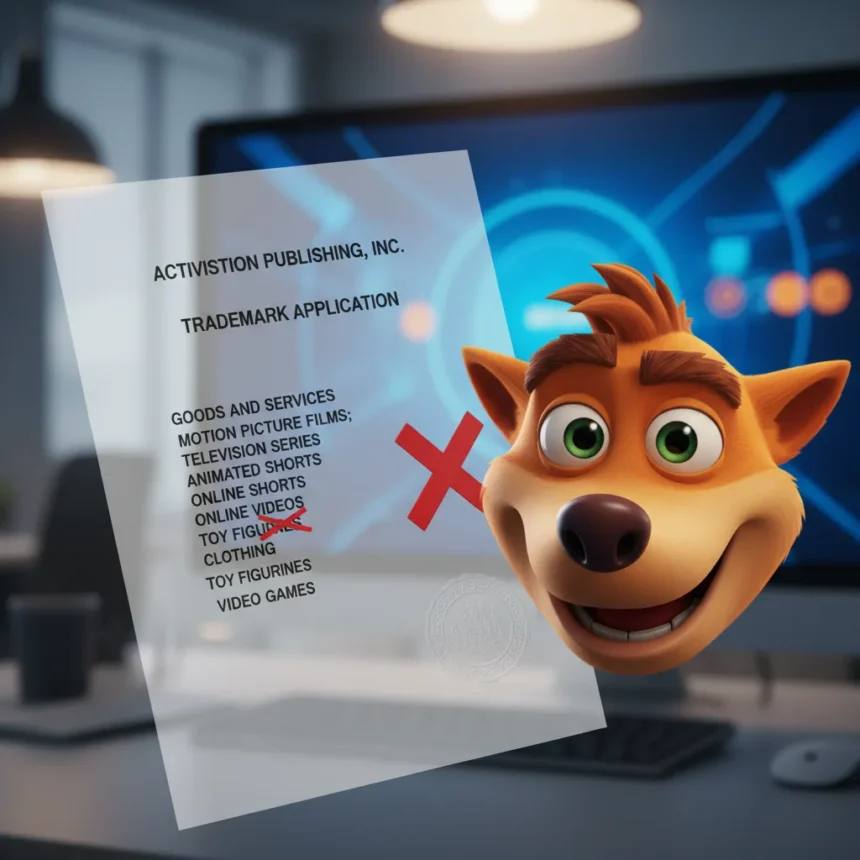
Activision has filed a new Crash Bandicoot trademark filing that covers movies, television, and animation—but conspicuously excludes video games. The trademark registration marks a significant legal maneuver that suggests the company is actively positioning the franchise for adaptation into non-gaming media, even though no official film or series has been greenlit.
Key Takeaways
- Activision filed a new Crash Bandicoot trademark covering film, TV, and animation categories
- The filing does not include video game software classes
- Trademark filings signal brand-expansion strategy but do not confirm production timelines
- Game franchises increasingly pursue film and television adaptations as revenue streams
- No release date, studio partner, or casting has been announced
What the Trademark Filing Actually Tells Us
A trademark filing is not a greenlight. It is a legal placeholder—a company’s way of staking a claim on a brand name across specific product categories before competitors do. Activision’s decision to file the Crash Bandicoot trademark for film, television, and animated productions indicates the company believes the franchise has value in those spaces. What it does not do is confirm that a movie script is in development, that a streaming deal is signed, or that cameras will roll anytime soon.
The strategic significance lies in what is absent: video games. By excluding game software from the trademark classes, Activision is signaling that this particular filing is purely about entertainment adaptation, not about future Crash Bandicoot games. This does not mean the franchise is abandoning gaming—it means this specific legal action is reserved for non-gaming expansion.
Why Game Franchises Are Racing Into Film and TV
The broader entertainment landscape has shifted dramatically. Successful video game franchises no longer live exclusively on consoles or PC. The Last of Us, Sonic the Hedgehog, and Detective Pikachu have demonstrated that gaming IP can translate into profitable film and television properties, reaching audiences who may never touch a controller. Streaming services are hungry for established intellectual property with built-in fanbases, and game franchises offer exactly that.


Crash Bandicoot carries decades of nostalgia and a devoted audience. A film or series adaptation could tap into that loyalty while introducing the character to younger viewers who know the franchise only through remasters or mobile games. The trademark filing suggests Activision is serious about exploring that potential.
What Remains Unknown About Crash Bandicoot Trademark Filing
The trademark filing raises more questions than it answers. There is no confirmed project title, no announced studio partner, no casting, no budget, and no production timeline. Previous rumors have circulated about Crash Bandicoot reaching film or television, but a trademark filing is not the same as a production announcement.
Activision has not released an official statement detailing what comes next. The filing itself is the news—a legal signal that the company is preparing to move the franchise into entertainment media. Whether that results in a theatrical film, a streaming series, or both remains entirely unclear.
How Does This Compare to Other Game Franchises?
Crash Bandicoot is entering a crowded space. The Sonic franchise has released multiple films with varying degrees of success. Nintendo’s Super Mario Bros. Movie became a cultural phenomenon. Uncharted, Castlevania, and Halo have all received film or television adaptations. The difference is that most of those projects were announced before or alongside their trademark filings, with casting and directors already attached. Activision’s approach here is more cautious—laying legal groundwork without yet revealing the creative direction.
What Should Crash Bandicoot Fans Expect?
The trademark filing is a necessary first step, but it is not a promise. Companies file trademarks for properties they may never develop, simply to protect brand ownership. That said, Activision would not bother with this filing if the company had zero intention of exploring entertainment adaptation.
Fans should expect a long wait before any official announcement. Trademark filings typically precede actual project development by months or even years. When Activision does announce a Crash Bandicoot film or series, the trademark will already be in place, protecting the company’s legal rights.


Could This Mean the End of Crash Bandicoot Games?
Not necessarily. The trademark filing covers entertainment media, not games. Activision can and likely will continue developing Crash Bandicoot games while simultaneously pursuing film and television projects. The franchise is valuable enough to exist across multiple mediums simultaneously, much like how Mario and Sonic operate today.
Why Now? What Triggered This Trademark Filing?
The research brief does not specify what prompted Activision to file the trademark at this particular moment. It is possible the company has been negotiating with studios or streaming services behind the scenes, or it could be a proactive legal move to secure the trademark before competitors attempt similar filings. Without an official statement from Activision, the timing remains speculative.
FAQ
Does the Crash Bandicoot trademark filing confirm a movie is in production?
No. A trademark filing protects brand ownership across specific product categories but does not confirm that a project is greenlit, in production, or has a release date. It is a legal precaution, not a production announcement.
Will Crash Bandicoot games stop being made?
The trademark filing covers only film, television, and animation—not games. This suggests Activision can pursue both entertainment adaptations and new games simultaneously.
When will the Crash Bandicoot movie or TV series be released?
No release date has been announced. The trademark filing does not include production timelines, studio partners, or casting information.
Activision’s Crash Bandicoot trademark filing is a calculated move, not a surprise announcement. It signals that the company sees value in adapting the franchise for film and television audiences—but patience is required before the actual project details emerge. Until Activision makes an official statement, the trademark remains what it is: a legal placeholder for future possibilities.
Edited by the All Things Geek team.
Source: Windows Central