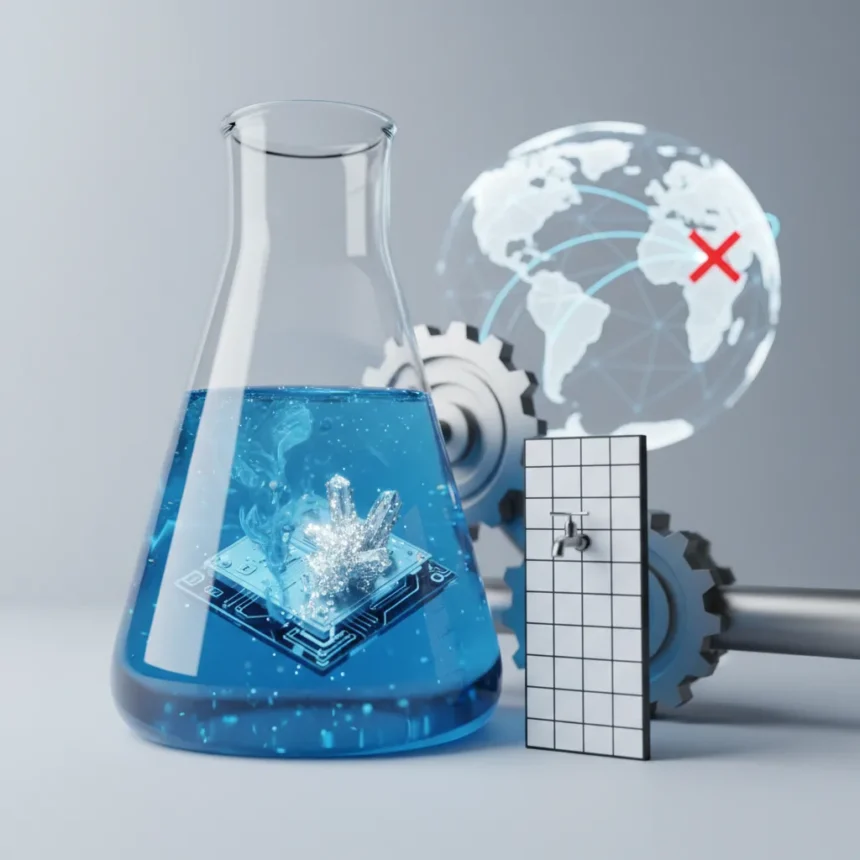
A lithium extraction breakthrough from MIT researchers could fundamentally reshape how the world sources one of the most critical materials for modern technology. Scientists at the institution have developed a new low-cost extraction method that may ease global dependence on Chinese lithium supply chains, addressing a geopolitical vulnerability that underpins everything from smartphones to electric vehicles to grid-scale energy storage systems.
Key Takeaways
- MIT researchers developed a new low-cost lithium extraction method targeting global battery supply issues.
- The breakthrough was reportedly inspired by a bathroom renovation project, demonstrating unexpected innovation pathways.
- The method could reduce reliance on China for lithium supply chains.
- Lithium-ion batteries power most consumer gadgets and energy-storage infrastructure worldwide.
- The discovery addresses a critical vulnerability in the global battery supply ecosystem.
Why Lithium Extraction Breakthrough Matters Now
The global battery supply chain faces a critical chokepoint. Lithium-ion batteries are foundational to nearly every consumer device—smartphones, laptops, tablets, smartwatches—and increasingly essential to renewable energy infrastructure. Yet the extraction and refinement of lithium remains expensive, environmentally intensive, and heavily concentrated in regions where China exerts significant control. This concentration creates geopolitical risk: supply disruptions, tariffs, or export restrictions could cascade across the entire electronics and energy sectors. A breakthrough in low-cost extraction methods directly addresses this vulnerability by offering an alternative pathway that reduces dependence on existing supply chains.
The MIT discovery is significant precisely because it tackles extraction costs. Traditional lithium recovery methods are capital-intensive and require specialized infrastructure, making them economically viable only at large scale. A cheaper approach democratizes lithium production, enabling smaller operations and reducing the economic moat that protects incumbent suppliers. For device manufacturers and energy companies, lower extraction costs translate to reduced material expenses and greater supply chain resilience.
The Unlikely Origin: From Bathroom Renovation to Battery Innovation
What makes this breakthrough particularly compelling is its origin story. The MIT team reportedly drew inspiration from a bathroom renovation project—an unconventional catalyst for scientific innovation. This narrative reflects a broader truth about breakthrough research: transformative ideas often emerge from unexpected observations rather than linear hypothesis-driven work. A researcher noticing something during a home improvement project, then recognizing its application to lithium extraction, exemplifies how scientific creativity operates outside formal laboratory settings.

While the specific details of how the renovation project inspired the extraction method remain unverified from the available sources, the story underscores an important lesson for innovation ecosystems. Breakthroughs do not always emerge from dedicated research teams working on a problem directly. Sometimes they come from peripheral observations, cross-disciplinary thinking, or chance encounters. This particular discovery suggests MIT researchers possessed the intellectual flexibility to recognize a connection between an everyday situation and a complex materials science challenge.
Reducing Chinese Dominance in Lithium Supply
The potential to reduce reliance on China represents the geopolitical dimension of this breakthrough. China does not necessarily control lithium reserves globally—Australia, Chile, and Argentina hold significant deposits—but Chinese companies dominate the processing and refinement stages, giving Beijing leverage over the supply chain. A low-cost extraction method developed in the West could shift this balance by making alternative sources economically competitive. If the MIT method proves scalable and commercially viable, it could enable lithium production in allied nations, diversifying supply sources and reducing strategic vulnerability.



For policymakers and industry leaders, this matters enormously. The ongoing competition for battery materials is reshaping geopolitical alignments. Nations investing in alternative extraction technologies, processing capacity, and supply chain localization are positioning themselves for advantage in the energy transition. A breakthrough from MIT—a leading research institution—signals that Western innovation can compete with established supply chain incumbents, at least at the research stage. The next critical phase is scaling the method from laboratory proof-of-concept to commercial production.
What Remains Uncertain
The research brief does not detail the extraction chemistry, yield rates, scalability timelines, or exact cost savings compared to existing methods. These are crucial questions for assessing whether the breakthrough will actually reshape global supply chains or remain primarily a laboratory achievement. Commercial viability requires not just a cheaper method in principle, but one that works reliably at scale, with acceptable environmental impact and regulatory compliance. Many promising materials science breakthroughs never reach commercial deployment due to scaling challenges, cost overruns, or technical limitations that only emerge at production scale.
Additionally, the article provides no timeline for when this method might reach commercial production or which companies might license or implement it. Without such details, the breakthrough remains a research achievement rather than a near-term market disruption. However, the fact that MIT scientists pursued this work suggests they believe the method has genuine commercial potential—otherwise, the effort would likely remain confined to academic journals rather than generating media attention.
How does the lithium extraction breakthrough compare to current methods?
The research brief does not specify which existing extraction methods the MIT approach surpasses or how it compares quantitatively to alternatives. However, the framing as a low-cost method suggests it improves upon current approaches by reducing capital requirements, operational expenses, or both. Existing lithium extraction relies on either hard-rock mining (which is energy-intensive) or brine evaporation (which requires specific geographic conditions and takes months). A fundamentally different approach could address limitations in both methods.



When will the lithium extraction breakthrough reach commercial production?
The available information does not specify a commercial timeline. The breakthrough is presented as a scientific achievement, not an imminent product launch. Moving from laboratory success to commercial-scale production typically requires years of additional development, pilot testing, regulatory approval, and capital investment. Readers should expect this to be a multi-year process before the method meaningfully impacts global lithium supply.
Could this method reduce battery costs for consumers?
If the lithium extraction breakthrough reaches commercial scale and competitors adopt it, lower extraction costs could eventually reduce battery material expenses. However, lithium is only one component of battery cost, and material expenses represent only part of the total manufacturing process. Savings from cheaper lithium would cascade through the supply chain but would not necessarily translate into proportional price reductions at the consumer level. Device and vehicle manufacturers often retain efficiency gains rather than passing them fully to buyers.
The MIT lithium extraction breakthrough represents genuine progress on a critical supply chain vulnerability. Whether it reshapes global battery production depends entirely on successful commercialization—a hurdle that many promising research discoveries fail to clear. For now, the discovery matters most as a signal that Western innovation can address strategic material challenges, potentially reducing future dependence on concentrated supply chains. The real test comes when the method moves from MIT laboratories into factories worldwide.
Edited by the All Things Geek team.
Source: TechRadar