Handheld gaming PCs just got a major upgrade at Computex 2026, and the gaming world is split between excitement and sticker shock. The latest generation of handheld gaming PCs promises OLED displays, blazing-fast refresh rates, and bundled AR glasses—but the cost is climbing fast. Asus and MSI both unveiled next-generation devices that redefine what portable gaming can do, even as prices threaten to push the category out of reach for casual players.
Key Takeaways
- Asus ROG Xbox Ally X20 features a 7.4-inch OLED display with 1,400-nit peak HDR brightness and 0.2ms response time
- Bundle includes ROG XReal R1 Edition 20 AR glasses projecting a 171-inch micro-OLED display at 240Hz
- MSI Claw 8 EX AI+ uses Intel’s Arc G3 Extreme processor with reported $1,500 starting price (unconfirmed)
- Handheld gaming PCs are becoming premium devices, with prices potentially reaching $2,000 or higher
- Computex 2026 marks a shift toward performance over affordability in portable gaming hardware
Asus ROG Xbox Ally X20: The OLED Powerhouse
The Asus ROG Xbox Ally X20 is the successor to the ROG Xbox Ally X, and it brings a serious display upgrade. The 7.4-inch OLED panel reaches 1,400-nit peak HDR brightness with a response time of 0.2ms and carries a VESA DisplayHDR 1000 rating. That’s the kind of spec sheet you’d expect from a premium gaming monitor, not a handheld device. The anti-reflective coating reduces glare by 65%, which matters when you’re gaming outdoors or in bright indoor spaces. Compared to the Lenovo Legion Go 2, the X20’s display represents a meaningful leap in color accuracy and brightness.
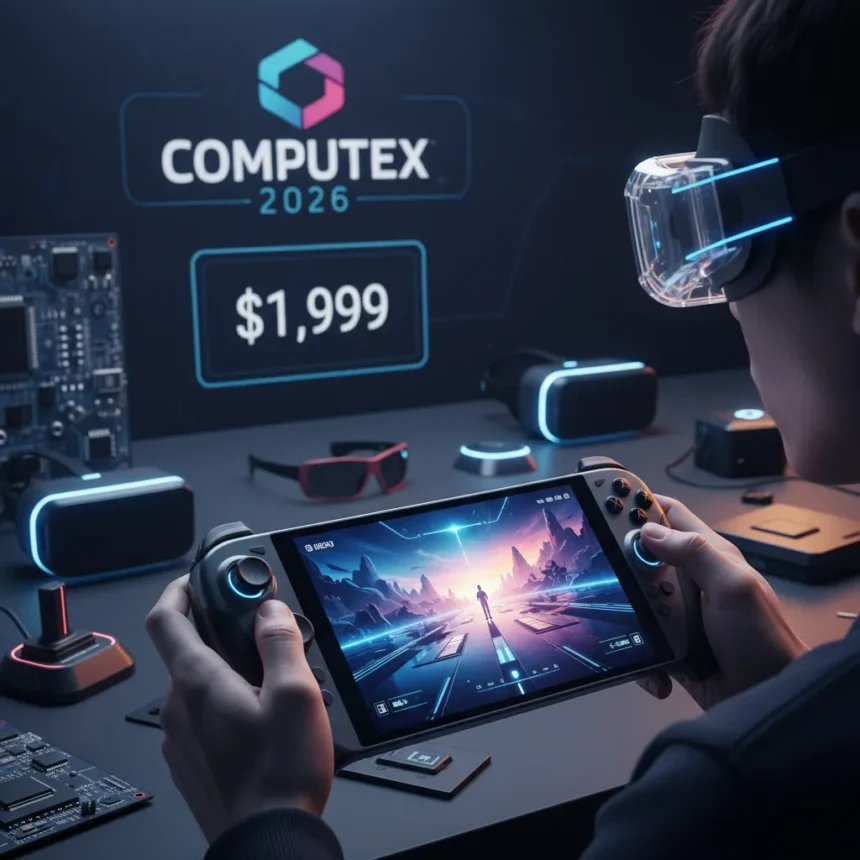
But here’s where Asus gets aggressive: the company is bundling the X20 with the ROG XReal R1 Edition 20 gaming AR glasses. These glasses project games onto a 171-inch micro-OLED display with a 240Hz refresh rate and 0.01ms response time. That’s absurdly fast. The standalone glasses cost 849 USD (approximately 749 GBP or around 1,799 AUD), and Asus estimates the complete bundle will cost at or just under 2,000 USD. That’s the price of a solid laptop.
MSI Claw 8 EX AI+ and Intel’s New Handheld Chips
MSI’s Claw 8 EX AI+ is the second major handheld gaming PC unveiled at Computex 2026. The device uses Intel’s Arc G3 Extreme processor, part of a new wave of handheld-focused chips designed to deliver desktop-class gaming in portable form. A reported starting price of 1,500 USD (roughly 1,120 GBP or 2,100 AUD) has circulated, though MSI has not officially confirmed this figure. Even if that price holds, it’s a significant jump from previous-generation handhelds.

Intel’s new handheld chips are a major reason why 2026 handheld gaming PCs are both more powerful and more expensive. Retailers have listed Intel-based handhelds at around 1,800 USD or higher, signaling that the entire category is shifting upmarket. This is the real story: handheld gaming PCs are no longer budget alternatives to consoles. They’re becoming premium devices for players willing to pay flagship prices.
The Price Problem Nobody’s Talking About
Here’s the tension at the heart of Computex 2026: every handheld gaming PC announced is objectively better than what came before, but none of them are accessible. The ROG Xbox Ally X20 bundle approaches 2,000 USD. The MSI Claw 8 EX AI+ starts at 1,500 USD (unconfirmed). Meanwhile, Intel’s new chips have pushed the floor price for any serious handheld to around 1,800 USD or more. That’s console-plus-accessories money. It’s also the price of a mid-range gaming laptop.

The gap between budget and premium handheld gaming PCs is widening. You can still buy older, cheaper models, but they’re increasingly outmatched by hardware that costs nearly twice as much. For players who want the latest OLED display, the fastest processor, and AR glass integration, the price of entry is no longer a barrier—it’s a wall.
How Handheld Gaming PCs Compare to Other Portable Options
Handheld gaming PCs occupy a strange middle ground. They’re more powerful than Nintendo Switch successors but far more expensive. They’re more portable than gaming laptops but less convenient than dedicated consoles. The Asus ROG Xbox Ally X20 and MSI Claw 8 EX AI+ both target the premium end of this spectrum, where buyers prioritize performance and display quality over affordability. The Lenovo Legion Go 2 serves as a direct competitor, though the X20’s OLED advantage and AR bundle integration suggest Asus is chasing a different audience—one willing to pay for latest features.
What Computex 2026 Reveals About the Market
Computex 2026 made one thing clear: handheld gaming PCs are maturing, and maturity means premium pricing. The devices unveiled this year pack OLED displays, AR bundles, and the latest mobile processors. They’re genuinely impressive. But they’re also a reminder that the handheld gaming market is splitting into two tiers: affordable-but-dated devices and expensive-but-latest hardware. There’s less and less room in the middle.
The ROG XReal R1 Edition 20 glasses alone cost 849 USD, which tells you everything about where Asus’s priorities lie. This isn’t a device for casual players. It’s for enthusiasts willing to spend laptop money on a handheld system. Intel’s new Arc G3 Extreme chip is powerful, but it’s also a signal that raw performance has a real cost. The days of handheld gaming PCs as budget-friendly alternatives are over.
Should You Buy a Premium Handheld Gaming PC in 2026?
If you’re a competitive gamer or content creator who travels, a premium handheld gaming PC like the ROG Xbox Ally X20 or MSI Claw 8 EX AI+ might justify the cost. The display quality, processing power, and AR integration represent genuine advances. But if you’re a casual player looking for a portable gaming device, the price jump should give you pause. Older handheld gaming PC models still exist and cost far less. The question is whether the OLED upgrade and AR features are worth 500-700 USD more.
Will handheld gaming PC prices ever come down?
Historically, gaming hardware prices drop as production scales and competition increases. However, the shift toward OLED displays and custom processors suggests prices may stabilize at this higher level rather than fall significantly. As long as manufacturers bundle premium features like AR glasses, entry prices will remain steep.
How does the ROG Xbox Ally X20 compare to older Ally models?
The X20 upgrades to an OLED display with superior brightness and response time, while adding AR glass integration through the bundled ROG XReal R1 Edition 20. Previous Ally models used LCD screens and lacked AR features, making the X20 a meaningful jump in both display technology and ecosystem features.
Is the MSI Claw 8 EX AI+ price confirmed?
No. A 1,500 USD starting price has been reported, but MSI has not officially confirmed this figure. Actual pricing may differ when the device launches.
Computex 2026 proved that handheld gaming PCs can match desktop performance in a portable form. It also proved that doing so costs serious money. If you want the latest OLED display, AR integration, and latest processor, expect to pay flagship prices. For everyone else, the handheld gaming market is increasingly split between yesterday’s technology at yesterday’s prices and tomorrow’s features at tomorrow’s cost.
Edited by the All Things Geek team.
Source: TechRadar