



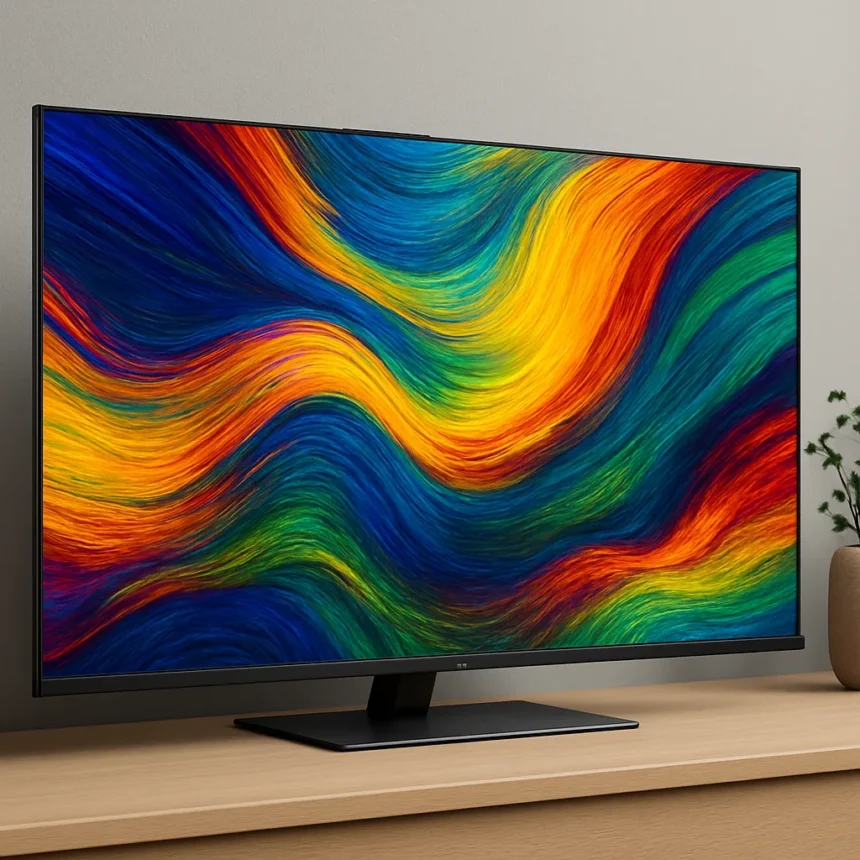
The Hisense U7 Mini LED TV is a 4K ULED television made by Hisense, part of the brand’s 2026 lineup alongside the U6 series, targeting buyers who want flagship-level brightness and gaming performance without flagship-level pricing. With a native 165Hz refresh rate, peak brightness of 3000 nits, and a full Google TV smart platform, the U7 arrives as one of the most spec-aggressive value TVs announced this year.
What Makes the Hisense U7 Mini LED TV Stand Out in 2026
The headline numbers on the U7 are difficult to ignore. A native 165Hz refresh rate — not interpolated, not marketing math — combined with Motion Rate 480 and MEMC frame insertion makes this a genuinely compelling proposition for sports fans and gamers who have historically had to spend significantly more to get smooth motion at this level. The Mini-LED Pro backlight with Full Array Local Dimming pushes peak brightness to 3000 nits, which puts the U7 in serious contention for bright living rooms where OLED panels simply cannot compete on luminance.
Hisense also equips the U7 with Hi-View AI Engine Pro, its image processing system designed to optimize picture quality dynamically. Quantum Dot colour technology — branded as Hi-QLED — delivers what Hisense claims is over a billion shades, alongside Wide Colour Gamut support. The anti-glare and anti-reflection panel treatment is a practical addition that many competing sets at this tier skip entirely, and it matters enormously if your TV faces a window.
HDR and Gaming Specs on the Hisense U7 Mini LED TV
HDR support on the U7 is as comprehensive as anything in its class. Dolby Vision, Dolby Vision IQ, Dolby Vision Gaming, HDR10, HDR10+, HDR10+ Adaptive, HDR10+ Gaming, HLG, IMAX Enhanced, and Filmmaker Mode are all present. That breadth of format support means the U7 should handle content from every major streaming service and physical media source without compromise.

For gaming specifically, the U7 supports VRR and ALLM alongside its native 165Hz panel, and Game Mode Ultra or Game Mode Pro is available to minimise input lag. Connectivity is strong: four HDMI 2.1 ports on some configurations — or a mix of two HDMI 2.1 and two HDMI 2.0 depending on the specific model — plus two USB ports, eARC, Ethernet, optical audio out, and an ATSC 3.0 NextGen TV tuner. Wi-Fi 6E and Bluetooth 5.4 round out the wireless options. Audio is handled by a 2.1.2 multi-channel surround system built into the set.
Hisense U7 vs U6: Which Should You Choose?
The U6 series is no slouch — it shares the same ULED Mini-LED 4K platform, the same sweeping HDR format support, and the same Google TV smart platform. Both series are available in 55, 65, 75, 85, 100, and 116-inch sizes. But the differences between the two are meaningful. The U7 runs at a native 165Hz versus the U6’s 144Hz, which is a tangible advantage for fast-motion content. The U7 also delivers superior contrast thanks to more capable local dimming, making it the better choice for anyone who watches in a darkened room and wants deeper blacks alongside that extreme brightness ceiling.



For buyers on tighter budgets who primarily watch in bright rooms and are less concerned about dark-scene performance, the U6 remains a strong option. But for gaming, sports, and mixed viewing environments, the U7’s extra headroom justifies the step up. The 100-inch U7 model, to give a sense of scale, weighs 62 kilograms without its stand and measures 2230 by 1282 millimetres — this is furniture-scale hardware that demands serious room planning.
How Does the Hisense U7 Compare to OLED Alternatives?
The perennial question in the premium TV market is whether Mini-LED can challenge OLED on picture quality. The honest answer in 2026 is that it depends entirely on your viewing conditions. OLED panels deliver perfect per-pixel black levels that no LCD-based technology including Mini-LED can fully replicate. In a darkened home cinema setup, a well-calibrated OLED still holds an edge in absolute contrast. However, the U7’s 3000-nit peak brightness is a category where OLED simply cannot compete — most OLED panels top out well below that figure — making the Hisense a stronger performer in bright environments. Add the 165Hz native refresh rate and the lower price point that Mini-LED typically commands versus OLED, and the U7 makes a compelling case for the majority of real-world viewing situations.
Is the Hisense U7 good for gaming?
The Hisense U7 Mini LED TV is well-suited to gaming, offering a native 165Hz refresh rate, VRR, ALLM, and dedicated Game Mode Ultra or Game Mode Pro to reduce input lag. The four HDMI 2.1 ports on supported configurations mean next-generation consoles and PC gaming setups can connect without compromise. It is one of the more gaming-capable TVs announced at its price tier for 2026.
What sizes does the Hisense U6 and U7 come in?
Both the Hisense U6 and U7 series are available in six screen sizes: 55, 65, 75, 85, 100, and 116 inches. The range covers everything from a standard living room setup to genuinely large-format home cinema installations, with the 116-inch option sitting at the extreme end of what most households would consider practical.

Does the Hisense U7 support Dolby Vision?
Yes. The Hisense U7 Mini LED TV supports Dolby Vision, Dolby Vision IQ, and Dolby Vision Gaming, alongside HDR10, HDR10+, HDR10+ Adaptive, HDR10+ Gaming, HLG, IMAX Enhanced, and Filmmaker Mode. It is one of the most format-complete HDR implementations available in its class.
The Hisense U7 Mini LED TV positions itself as the answer for buyers who are tired of choosing between brightness, motion performance, and price. At 165Hz native, 3000 nits peak, and a full-featured Google TV platform, it arrives with a spec sheet that demands attention — and the U6 sitting below it ensures there is a Hisense option for nearly every budget. Pricing has not yet been confirmed, but if Hisense maintains its traditional value positioning, both series could seriously disrupt the mid-to-premium TV market in 2026.
This article was written with AI assistance and editorially reviewed.
Source: What Hi-Fi?