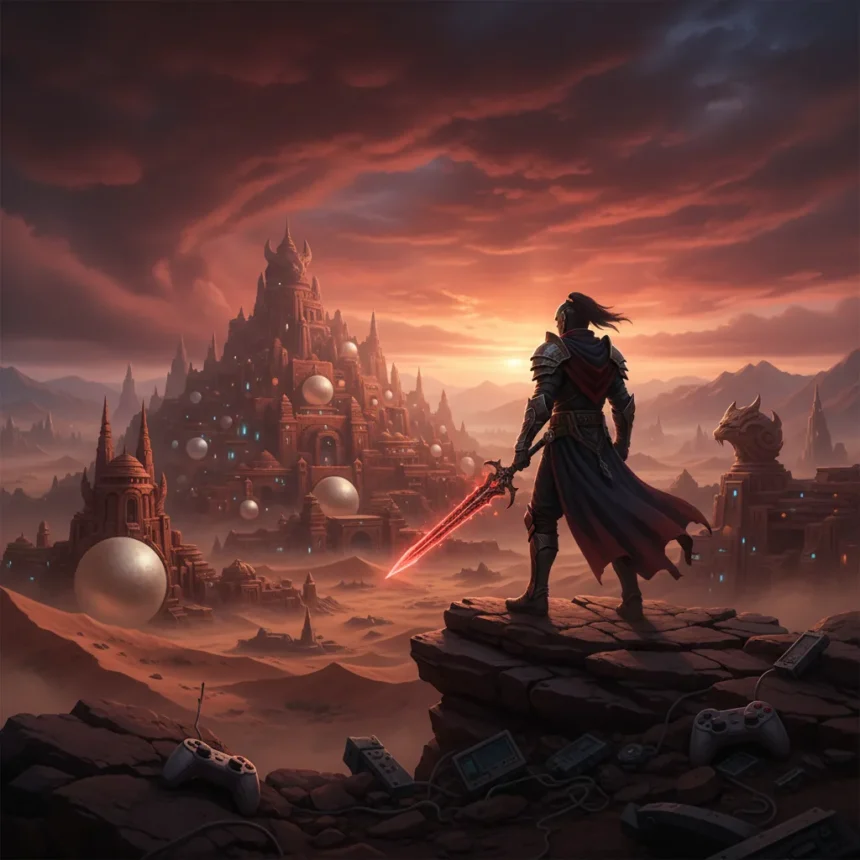
Crimson Desert reviews from early hands-on previews are in, and Pearl Abyss’ ambitious open-world action-adventure has delivered something genuinely surprising: a game that lives up to years of hype without collapsing under its own scale. Combat rivals Devil May Cry and Ninja Gaiden in depth while unfolding across a seamless world that dwarfs most competitors. Yet the same previews that celebrate its brilliance also expose a glaring weakness that threatens to undermine the entire experience.
Key Takeaways
- Crimson Desert reviews praise fast-paced, contextual combat comparable to Devil May Cry in an open world.
- The massive world features diverse biomes, verticality, dungeon-style locations, and reactive NPCs across the continent of Pywel.
- Early previews highlight incredible sound design, enemy animations, and immersive travel mechanics.
- Quality-of-life systems are weak: confusing inventory, limited storage, and quest items not auto-removed frustrate players.
- Crimson Desert launches across Windows, PlayStation 5, and Xbox Series X/S.
Combat That Justifies the Hype
Crimson Desert’s combat is the game’s greatest strength, and that strength is substantial. Protagonist Kliff chains strikes fluidly—fast attacks via R1, powerful strikes via R2, grabs and throws using Circle and Triangle, timed parries with L1, and context-sensitive abilities that evolve as you learn enemy patterns. One previewer after six hours described it as “one of the most overwhelming, chaotic, madcap videogames” they’d ever played, driven by combat that “feels more grounded, more reactive, more immersive” than comparable titles. The system rewards observation: you learn a knight boss’s kick pattern, then exploit it. Horseback combat, elemental effects, meteor strikes, and throwing trees add absurdist variety without sacrificing tactical depth. This is not button-mashing—it’s a conversation with enemies who think, surround, and overwhelm.
Comparisons to Devil May Cry and Ninja Gaiden are unavoidable and fair. What separates Crimson Desert is scale. You execute a three-strike heavy into palm strike combo that stuns, then jump into a double-kick, all within a world as large as Shadow of the Colossus or The Witcher 3. Bosses like Kailock the Hornsplitter, who wields an Abyss Artifact granting speed and magic waves, demand the same contextual awareness as any action-game elite encounter. Early hands-on time confirms the combat system is not a shallow showcase—it has the depth reviewers claimed.
A World That Rewards Getting Lost
The continent of Pywel is a medieval fantasy setting caught between rival factions, mythical creatures, and arcane forces. Kliff, a former Greymane mercenary, searches for his battle-brothers Oongka, Yann, and Naira after an attack by the Black Bears faction led by Myrdin. The premise is straightforward, but the world-building is not. Previews highlight wondrous exploration, dungeon-style locations with unique loot, insane enemy variety, and mind-blowing verticality—nooks and crannies that encourage vertical thinking rather than horizontal trudging. Biomes are diverse, not one repeated texture stretched across the map. Reactive NPCs, immersive travel, fishing, cooking, crafting, and hunting all exist, suggesting a world that breathes rather than merely decorates.


One YouTube deep dive noted that Crimson Desert’s world feels like a fusion of Tears of the Kingdom’s sandbox physics, Elden Ring’s enemy variety and dungeon design, and Red Dead Redemption 2’s immersive detail. The soundtrack rivals The Witcher 3’s ambient and combat tracks. Enemy animations are alive—comparable to Breath of the Wild in their fluidity and responsiveness. This is not a technical achievement alone; it’s a design philosophy that respects the player’s time and curiosity.
The Quality-of-Life Problem No One Can Ignore
Here is where Crimson Desert stumbles, and it matters more than the hype suggests. Early previews consistently flag weak quality-of-life systems that feel outdated for a 2026 release. The inventory is confusing. Quest items do not auto-remove after use. Storage is severely limited—you have a bank but no camp storage to stash gear while exploring. For a game this massive, these friction points are not minor annoyances. They are design choices that will test player patience during 40-plus-hour playthroughs.


The BlackSpace Engine, Pearl Abyss’ proprietary technology enabling dynamic combat, massive seamless worlds, and detailed terrain with reactive objects, powers everything you see. Yet the same engine that renders verticality and enemy intelligence apparently could not solve basic inventory management. This gap between ambition and execution is Crimson Desert’s defining tension. A game this overwhelming—one previewer called it “unrepentantly dedicated to the rule of cool”—needs systems that get out of the way, not ones that demand constant menu wrestling.
Is Crimson Desert Worth the Hype?
Yes, with a caveat. Crimson Desert is positioned as one of 2026’s biggest open-world games, and early hands-on previews justify that placement. The combat is standout. The world design is ambitious and rewards exploration. The sound design and enemy animations set a high bar. But the quality-of-life issues are real, and they will frustrate players who expect modern conveniences. If you value moment-to-moment gameplay and can tolerate clunky menus, Crimson Desert is essential. If you demand seamless quality-of-life, wait for post-launch patches or player feedback. Pearl Abyss has built something genuinely special here—they just need to sand down the rough edges.
What makes Crimson Desert’s combat stand out from other action games?
Crimson Desert’s combat combines the contextual depth of Devil May Cry with an open-world scale rarely seen in action-adventure games. Enemies surround and overwhelm, forcing you to learn patterns and chain abilities in real time. Horseback combat, elemental effects, and context-sensitive moves add variety without sacrificing tactical reward.
Are there Metacritic scores for Crimson Desert yet?
No specific Metacritic scores are available yet from the early hands-on previews. Reviewers note they have not completed the game, so aggregated scores will come after launch. Early sentiment is overwhelmingly positive on combat and world design, though quality-of-life concerns temper enthusiasm.


What platforms will Crimson Desert launch on?
Crimson Desert is launching on Windows, PlayStation 5, and Xbox Series X/S. The game was developed by Pearl Abyss as a standalone title, originally conceived as a prequel to Black Desert Online.
Crimson Desert is arriving at a moment when open-world fatigue is real, yet early previews prove Pearl Abyss understands what players actually want: combat that rewards mastery, a world worth exploring, and the confidence to let absurdity coexist with sincerity. The quality-of-life stumbles are real, but they are fixable. What cannot be fixed is a broken foundation—and Crimson Desert’s foundation is solid. That is why the hype matters, and why those menu issues sting all the more.
Where to Buy
Edited by the All Things Geek team.
Source: Windows Central