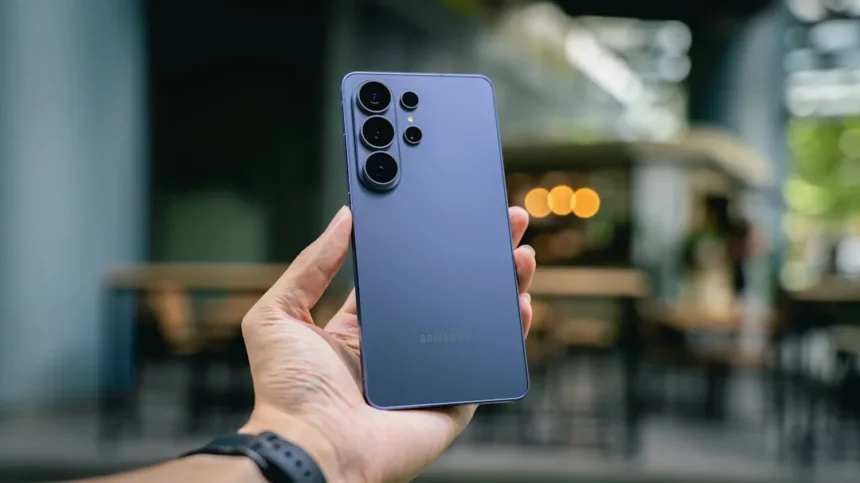
The Galaxy S26 Ultra camera system is a quad-lens powerhouse that fundamentally changes how you approach mobile zoom photography compared to the iPhone 17 Pro Max. After shooting over 200 photos in daylight, low light, night, and extended zoom scenarios, the S26 Ultra’s brighter f/1.4 main lens and dual telephoto setup—a 3x telephoto and a 5x periscope with f/2.8 aperture—create a clear separation in one critical area: anything beyond 3x magnification.
Key Takeaways
- Galaxy S26 Ultra has a 200MP main sensor with f/1.4 aperture; iPhone 17 Pro Max uses 48MP with f/1.8.
- S26 Ultra’s 5x periscope telephoto focuses reliably; iPhone 17 Pro Max’s 5x telephoto struggles with focus accuracy.
- At 10x zoom, S26 Ultra retains facial and hair detail; iPhone 17 Pro Max loses sharpness significantly.
- iPhone 17 Pro Max delivers brighter, sharper results in indoor low-light conditions.
- Both shoot 4K video at 120fps, but S26 Ultra adds ultrawide 4K capability and 8K recording.
Zoom Performance Sets the Tone
The Galaxy S26 Ultra camera’s zoom advantage is not theoretical—it is visible in every extended telephoto shot. The S26 Ultra’s dedicated 3x telephoto and 5x periscope lens, paired with the ability to push to 10x hybrid zoom, outperforms the iPhone 17 Pro Max’s approach of relying on digital cropping of its 5x telephoto. At 10x magnification, the S26 Ultra retains facial definition and hair texture that the iPhone simply cannot match. The periscope design also focuses properly in most conditions, whereas the iPhone 17 Pro Max’s telephoto occasionally hunts for focus in challenging scenarios. This is where the 200-photo test revealed the sharpest contrast between the two flagships.
The iPhone 17 Pro Max does field a competitive 48MP telephoto sensor with 5x optical zoom, but without a secondary periscope lens, it cannot extend beyond that without visible quality degradation. For photographers who regularly shoot at 5x and beyond—whether capturing distant subjects or cropping tightly in post—the Galaxy S26 Ultra camera delivers a tangible advantage that no computational photography trick can replicate.
Ultrawide and Main Sensor Trade-Offs
In daylight, both phones deliver excellent detail, but the Galaxy S26 Ultra camera’s 200MP main sensor with its 0.6μm pixels and f/1.4 aperture should theoretically crush the iPhone’s 48MP sensor with 1.22μm pixels. In practice, the difference is more subtle. The S26 Ultra captures more raw detail and slightly warmer, more natural color rendering, while the iPhone 17 Pro Max defaults to a 24MP output that prioritizes sharpness and contrast. Neither approach is objectively better—it depends on whether you prefer maximum information capture or immediate pop.


Ultrawide performance tilts decisively toward the Galaxy S26 Ultra camera. The 50MP ultrawide sensor on the S26 Ultra paired with the ability to shoot ultrawide 4K video (a feature the iPhone cannot match) makes it the clear choice for landscape photographers and videographers. The iPhone 17 Pro Max’s 48MP ultrawide is competent but lacks this video flexibility.
Low Light Reveals iPhone’s Remaining Strength
Where the iPhone 17 Pro Max reasserts itself is in dim indoor environments and moderate low-light conditions. The iPhone’s larger 1.22μm pixels and sensor-shift optical image stabilization produce brighter, sharper results in challenging light without requiring longer exposures. In extremely dark scenarios—true night photography where subjects are barely visible—the Galaxy S26 Ultra camera pulls ahead, delivering more natural color and detail through superior noise reduction algorithms. But for the common case of shooting indoors under restaurant or home lighting, the iPhone remains the easier phone to use without post-processing.



This low-light split reflects a philosophical difference: the S26 Ultra prioritizes color accuracy and detail retention even when it means slightly higher noise, while the iPhone favors brightness and contrast clarity. Neither is wrong, but they suit different shooting styles.
Video: S26 Ultra’s 8K and Ultrawide Edge
Both phones shoot 4K video at 120fps, but the Galaxy S26 Ultra camera adds two capabilities the iPhone cannot match: 8K recording at 30fps and ultrawide 4K recording. For videographers, this is significant. The iPhone 17 Pro Max does offer superior video stabilization and slightly higher contrast in standard 4K, but the S26 Ultra’s format flexibility and resolution ceiling give it the edge for future-proofing and creative options. Slow-motion performance is equivalent—both handle 1080p at 240fps without issue.
Which Phone Should You Actually Buy?
The Galaxy S26 Ultra camera wins if zoom matters to you. Beyond 3x magnification, it is the only rational choice. The ultrawide video capabilities and 8K recording push the advantage further. But if you shoot primarily in daylight and indoors under normal lighting, and you value the iPhone’s ecosystem, the iPhone 17 Pro Max remains a capable flagship that will not disappoint. The 200-photo test confirmed what the spec sheets hinted: these are two different philosophies optimized for different priorities, not a clear knockout.
How does the Galaxy S26 Ultra camera compare to its predecessors?
The Galaxy S26 Ultra camera introduces a brighter f/1.4 main lens (up from f/1.8 on the S25 Ultra) and an improved f/2.8 5x periscope telephoto, plus better noise reduction and AI-powered features. These refinements strengthen its zoom and night performance without fundamentally reinventing the camera system.



Can the iPhone 17 Pro Max match the S26 Ultra’s zoom?
No. The iPhone 17 Pro Max maxes out at 5x optical zoom with a single telephoto lens. The Galaxy S26 Ultra camera’s dual telephoto design—3x and 5x—allows it to extend to 10x hybrid zoom with far better detail retention than the iPhone can achieve at equivalent magnification.
Which phone is better for night photography?
In extremely dark conditions, the Galaxy S26 Ultra camera excels with natural color and detail. In typical low-light interiors, the iPhone 17 Pro Max is brighter and sharper out of the box. The choice depends on your specific environment.
The Galaxy S26 Ultra camera’s zoom system and ultrawide video capabilities make it the winner in this 200-photo showdown, but the iPhone 17 Pro Max remains competitive in the everyday shooting scenarios where most users actually take photos. If extended zoom and creative video are central to your phone choice, the S26 Ultra is the clear winner. If you prioritize ecosystem integration and consistent low-light performance, the iPhone remains a solid alternative.
Edited by the All Things Geek team.
Source: Tom's Guide