


Gerald Undone, YouTube’s most meticulous camera color scientist, just published a tier list that dismantles the myth that Fujifilm and Panasonic deliver superior color out of the box. His camera color accuracy rankings, based on testing over 50 cameras, reveal a stark technical hierarchy that contradicts years of enthusiast preference for “pleasing” film simulations.
Key Takeaways
- Sony’s movie gamma and stills gamma modes deliver extremely accurate color straight from the camera without post-processing.
- Fujifilm’s F-Log with the original LUT ties or beats Sony in accuracy, but perceptual color rendering differs significantly.
- Panasonic Lumix LUTs fail to match their own color values, requiring manual correction and custom solutions.
- DJI D-Log M is accurate but oversaturated and too red compared to neutral Sony profiles.
- Proper exposure metering using zebras at 41% for middle gray is essential for LUT accuracy across all brands.
Why Gerald Undone’s Camera Color Accuracy Rankings Matter Right Now
Color grading workflows have shifted. Content creators increasingly work across multiple camera brands in the same project, demanding technical accuracy rather than aesthetic interpretation. Gerald Undone’s camera color accuracy rankings address this shift directly by quantifying which brands deliver measurable precision in log profiles, manufacturer LUTs, and standard recording modes. This matters because a miscalibrated LUT wastes hours in post and introduces color casts that ripple through entire productions.
The tier list methodology tested log profiles, manufacturer-supplied LUTs, and standard modes like PP off, movie gamma, and stills gamma. Gerald evaluated blues, yellows, greens, skin tones, and overall vectorscope alignment—the technical metrics that determine whether footage matches across cuts or requires secondary color correction. His findings challenge the assumption that Fujifilm’s beloved film simulations or Panasonic’s reputation for pleasing colors translate into technical accuracy.
Sony Dominates Camera Color Accuracy Rankings
Sony’s movie gamma and stills gamma modes are “extremely accurate,” according to Gerald’s testing. The base profiles dial in blues and yellows better than most competitors, and Sony’s consistency across different shooting scenarios is a defining strength. This consistency means footage shot on different Sony bodies requires minimal color matching in post, a practical advantage for multi-camera productions.

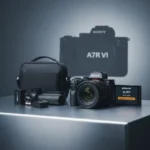
Sony’s neutral color science—less aggressive than Fujifilm’s warm tones or Panasonic’s greens—translates into technical precision. The camera doesn’t impose a stylistic interpretation; it captures what is actually there. For colorists and editors who value starting from an accurate baseline, Sony’s approach eliminates guesswork. This is why Sony ranks at the top of Gerald Undone’s camera color accuracy rankings across most testing scenarios.
Fujifilm and Lumix Deliver Disappointing Results in Camera Color Accuracy Rankings
Fujifilm’s F-Log with the original F-Log LUT provides the best result among Fujifilm’s options, potentially tying with Sony or the Ronin 4D-8K for accuracy. However, perceptual color rendering differs—Fujifilm’s output looks distinct even when technically matched, a trade-off between measured precision and visual character.



Panasonic Lumix represents a harder blow. Even with Panasonic’s official LUTs, color values often don’t match the expected output. Skin tones shift toward magenta, greens turn muddy, yellows desaturate unpredictably. Gerald is developing a dedicated Lumix LUT pack to address these systemic failures, acknowledging that manufacturer LUTs alone cannot solve the problem. For Lumix shooters, this means additional work in post or waiting for third-party solutions—a significant friction point compared to Sony’s out-of-the-box accuracy.
DJI and Canon: Specialized Color Science
DJI’s D-Log M demonstrates the perils of inconsistency. While technically accurate in isolation, the profile is often oversaturated and too red compared to Sony’s neutral baseline. DJI’s color science shows strong performance in highlights but weak shadow detail, creating an uneven tonal response that complicates matching across footage.
Canon occupies a unique position with specialized color science—particularly in cinema cameras like the Venice and Cinelike profiles—but Gerald’s tier list does not explicitly rank Canon against the field. Canon’s strength lies in distinctive color rendering rather than measured neutrality, a different design philosophy than Sony’s technical approach.
How to Apply Gerald Undone’s Findings to Your Workflow
Accurate color matching begins with exposure. Set your camera’s zebras to 41% for middle gray, ensuring consistent exposure across shots before applying any LUT. Gerald’s Technically Accurate LUTs, available for free download via geraldundone.com and tographer.io, correct color and contrast if exposure is correct, but they cannot rescue severely over- or underexposed footage (5-10 stops off). Version 2 of his LUTs improves contrast and dynamic range handling compared to earlier iterations.



For Panasonic Lumix users, the interim solution is manual color correction using a color checker card. Match your waveform exposure, adjust hue-versus-hue curves for skin tones (reducing orange and magenta casts), boost saturation selectively, and align your luma curve to reference. This workaround is time-consuming but necessary until Gerald’s Lumix pack launches. Sony users can apply his LUT immediately with minimal tweaking, reflecting their camera color accuracy rankings advantage.
What Gerald Undone’s Camera Color Accuracy Rankings Reveal About Manufacturer Priorities
Manufacturer LUTs vary wildly in quality. Some add excess contrast, sacrificing dynamic range for perceived “pop.” Others introduce color casts that require secondary correction. Gerald’s findings suggest that manufacturers optimize for subjective appeal rather than technical precision—a valid choice for casual shooters but a liability for professionals who need predictable, repeatable color science.
Sony’s advantage in camera color accuracy rankings stems from a philosophy that prioritizes neutral baseline accuracy. Fujifilm prioritizes distinctive character. Panasonic’s struggles suggest either QA gaps or a mismatch between claimed LUT performance and actual output. These are not accidents; they reflect different market strategies and design priorities.
Does Gerald Undone’s LUT work on all editing software?
Gerald’s Technically Accurate LUTs work on compatible editing and grading software including Premiere Pro, DaVinci Resolve, and Final Cut Pro. Download availability via geraldundone.com and tographer.io ensures global access. Always verify software compatibility before applying LUTs to your workflow.
Can you use Gerald Undone’s LUTs on cameras not tested in his camera color accuracy rankings?
Gerald’s LUTs are designed for specific cameras or log profiles tested in his rankings. Using them on untested models may produce unexpected results. However, many LUTs share similar design principles and may work acceptably on similar log profiles from the same manufacturer.
Should you buy a Sony camera based on camera color accuracy rankings alone?
Camera color accuracy rankings are one factor among many. Build, ergonomics, autofocus, lens ecosystem, and price matter equally or more for most shooters. Sony’s accuracy advantage is significant for multi-camera productions and color-critical work, but if you already own Fujifilm or Panasonic gear, improving your grading workflow often costs less than switching systems.
Gerald Undone’s camera color accuracy rankings settle a long-standing debate: technical precision and subjective appeal are not the same thing. Sony wins on measured accuracy; Fujifilm delivers character; Panasonic needs help. For creators who value predictable, repeatable color science, the choice is clear. For those who prioritize aesthetic character, the rankings confirm that pleasing color and technical accuracy require different trade-offs. The real insight is not which camera is “best,” but that accuracy is measurable, testable, and increasingly non-negotiable in professional workflows.
Edited by the All Things Geek team.
Source: TechRadar