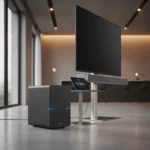



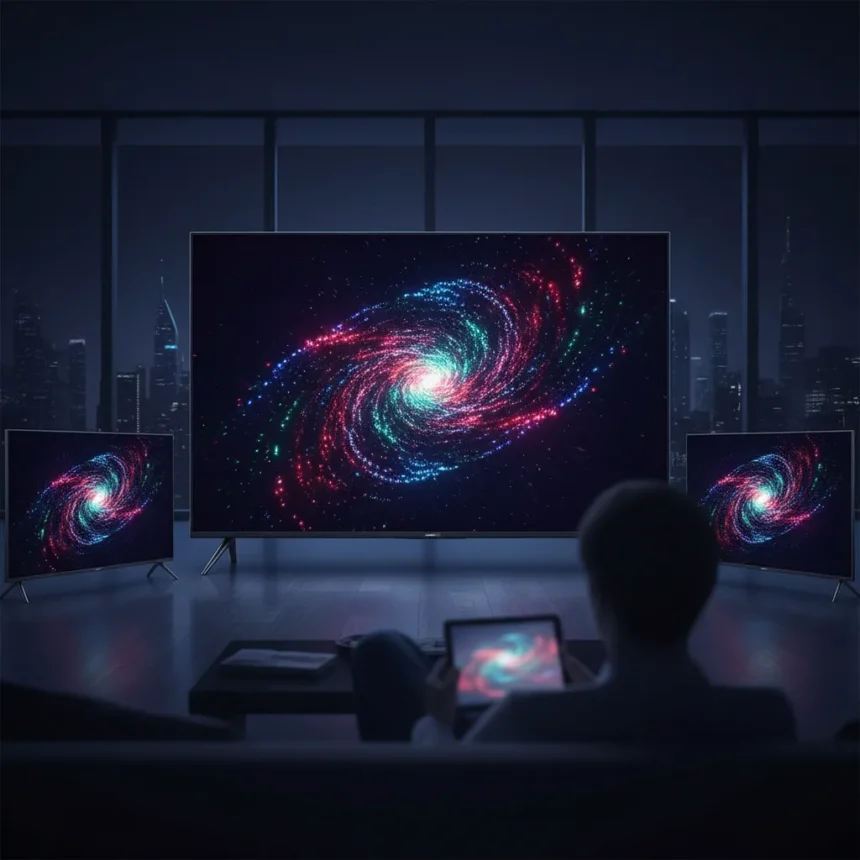
Hisense RGB Mini LED TVs represent a significant shift in the company’s 2026 strategy, with the technology anchoring a major portion of its new television lineup. Rather than spreading resources across multiple display technologies, Hisense is doubling down on RGB Mini LED as its core platform for mid-range and premium segments. This focus signals confidence in the technology’s ability to compete against OLED and standard Mini LED alternatives at a more accessible price point.
Key Takeaways
- Hisense RGB Mini LED TVs form the centerpiece of the 2026 television lineup, not a niche offering.
- The technology combines Mini LED backlighting with RGB color precision for improved contrast and color accuracy.
- Mid-range models now reach up to 116 inches, offering massive screens at competitive price points.
- Google TV and non-Google TV options available across the RGB Mini LED range, giving buyers choice in smart platform.
- RGB Mini LED represents Hisense’s answer to OLED’s dominance in premium segments without matching OLED’s cost.
What Makes Hisense RGB Mini LED TVs Different
Hisense RGB Mini LED TVs use a hybrid approach: thousands of independently controlled Mini LED backlights combined with an RGB color layer that adds precision to color reproduction. This differs from standard Mini LED, which relies on white LEDs and quantum dot layers. The RGB configuration allows finer control over color channels, theoretically delivering better color accuracy and smoother gradations without the burn-in risks associated with OLED. For mid-range buyers, this represents a meaningful step up from edge-lit or basic full-array backlighting.
The 2026 lineup positions RGB Mini LED as Hisense’s mainstream choice rather than a premium outlier. By committing engineering resources to scaling the technology across multiple screen sizes, Hisense is betting that manufacturers can achieve the economies of scale that will keep prices competitive. This contrasts with competitors like LG and Samsung, which have treated Mini LED as a stepping stone between budget and flagship OLED models.
Screen Sizes and Model Range for Hisense RGB Mini LED TVs
The 2026 Hisense RGB Mini LED TVs lineup spans aggressive size options, with mid-range models now reaching 116 inches. This size expansion is notable because historically, 100-plus-inch screens remained exclusive to flagship tiers or specialized commercial displays. By bringing RGB Mini LED to 116 inches, Hisense is targeting living rooms and commercial spaces willing to prioritize screen real estate over thickness or bezel design.
Smaller sizes in the RGB Mini LED range remain available for traditional home theater setups, ensuring the technology is not limited to early adopters chasing the largest possible display. The breadth of the size range suggests Hisense expects RGB Mini LED to appeal to a wide audience, not just enthusiasts or premium buyers.
Smart TV Platform Flexibility in the 2026 Range
A distinctive feature of Hisense RGB Mini LED TVs is the availability of both Google TV and non-Google TV versions across the lineup. This flexibility addresses a real market divide: some buyers prefer Google TV’s integration with Android phones, Google Home, and YouTube, while others want a simpler, less data-intensive smart platform or prefer alternative ecosystems like Roku or proprietary systems. By offering both options, Hisense avoids forcing a single smart platform on its entire RGB Mini LED customer base.


This approach differs from competitors who typically lock buyers into a single smart platform per model year. The choice represents a recognition that display technology and smart platform preference are separate decisions, and forcing them together limits addressable market size.
How Hisense RGB Mini LED TVs Compare to OLED and Standard Mini LED
OLED displays remain superior in contrast ratio and response time because each pixel emits its own light, allowing true blacks and instantaneous pixel switching. However, OLED carries burn-in risk with static images and costs significantly more to manufacture. Hisense RGB Mini LED TVs eliminate burn-in risk and offer lower entry prices while sacrificing some of OLED’s absolute contrast performance. For viewers concerned about gaming HUDs, news tickers, or static logos, RGB Mini LED’s lack of burn-in is a practical advantage.
Compared to standard Mini LED with quantum dots, RGB Mini LED TVs offer more granular color control but add manufacturing complexity. The trade-off is justified if color accuracy matters more than cost minimization, making Hisense RGB Mini LED TVs a middle-ground choice for buyers who want precision without OLED’s premium price tag or burn-in anxiety.
Why Hisense Is Betting on RGB Mini LED for 2026
Hisense’s commitment to Hisense RGB Mini LED TVs across its 2026 range reflects a strategic calculation: the company believes it can own the mid-premium segment by offering superior picture quality to budget brands and competitive pricing against OLED manufacturers. By centralizing engineering around one core technology, Hisense reduces SKU complexity, improves supply chain efficiency, and builds brand consistency.



The strategy also positions Hisense to scale manufacturing as demand grows. Unlike OLED, which requires specialized panel fabrication facilities, Mini LED backlighting can be produced by existing suppliers, making volume increases more feasible. This manufacturing advantage could translate to price stability or gradual price reductions as Hisense moves volume through retail channels.
Does Hisense RGB Mini LED offer better value than OLED?
For most buyers, yes—if you prioritize burn-in resistance, lower cost, and acceptable contrast performance. OLED remains superior for absolute picture quality and response time, but Hisense RGB Mini LED TVs deliver 80-90% of that performance at 50-60% of the price. The choice depends on your tolerance for static images and budget constraints.
What sizes are available in the Hisense RGB Mini LED lineup?
The 2026 lineup spans multiple sizes, with mid-range models reaching up to 116 inches. Smaller sizes for traditional home theater remain available, ensuring buyers can choose based on room size and budget rather than being forced into oversized displays.
Can I choose a non-Google TV version of Hisense RGB Mini LED models?
Yes. Hisense offers both Google TV and non-Google TV versions across the RGB Mini LED range, allowing you to select the smart platform that fits your ecosystem and preferences.
Hisense RGB Mini LED TVs represent a calculated bet that mid-range buyers will value the technology’s balance of picture quality, burn-in resistance, and price over pure performance. If the company executes manufacturing scale efficiently, this strategy could establish RGB Mini LED as a genuine alternative to OLED for the next generation of television buyers. The real test comes in retail pricing and long-term reliability—two factors that will determine whether Hisense’s 2026 focus on this technology was visionary or a misstep.
This article was written with AI assistance and editorially reviewed.
Source: What Hi-Fi?