
Handheld gaming PCs are heading toward their worst year on record, and the culprit is not weak demand or poor design—it is a memory crisis triggered by the AI boom. As artificial intelligence data centers consume the global supply of DDR5 RAM and SSDs, handheld manufacturers are facing impossible choices: suspend production, absorb catastrophic losses, or price devices out of reach. The handheld gaming PC market, which promised explosive growth just months ago, is now stalling entirely.
Key Takeaways
- AI data centers are consuming DDR5 RAM and SSD supply, starving handheld gaming PC manufacturers of critical components.
- IDC forecasts global PC shipments to drop 11.3% in 2026, the sharpest decline in over a decade.
- Gartner predicts memory costs will peak at 23% of manufacturing costs by 2026, up from 16% in 2025, making low-end devices nonviable.
- AYANEO suspended sales of its NEXT 2 handheld after preorders due to unsustainable SSD shortages.
- Sub-500 entry-level PCs are expected to vanish entirely by 2028 as component costs spiral.
Why AI is killing handheld gaming PC supply
The memory shortage plaguing handheld gaming PCs stems directly from artificial intelligence’s explosive infrastructure demands. Data centers training and running large language models consume DDR5 RAM and solid-state drives at unprecedented scale, leaving consumer hardware manufacturers fighting for scraps. Unlike previous chip shortages driven by pandemic logistics or natural disasters, this one is structural: AI companies have the budget to outbid consumer PC makers for every available unit of memory.
Crucial, a major memory supplier, has already begun discontinuing consumer-grade product lines to prioritize enterprise and AI customers. This is not a temporary allocation—it signals a permanent shift in where manufacturers see their profit margins. When a company stops making entry-level RAM entirely, handheld makers cannot simply wait for supply to normalize. They must redesign around unavailable components or exit the market.
Valve, the maker of the Steam Deck, has publicly acknowledged RAM constraints affecting its device. If Steam Deck—arguably the most successful handheld gaming PC ever made—is struggling to source memory, smaller competitors like AYANEO, Acer, and Lenovo face even steeper challenges. The AYANEO NEXT 2, a premium handheld with desktop-class hardware, was supposed to ship in June 2026. Instead, AYANEO announced that building and selling the device is no longer sustainable due to SSD shortages. Preorders will be honored, but the company has suspended all new sales indefinitely.

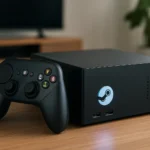
The handheld gaming PC market faces collapse in 2026
Gartner’s latest forecast paints a dire picture for the entire PC market, with handhelds bearing the brunt of the damage. The analyst firm predicts worldwide PC shipments will decline 10.4% in 2026—the steepest contraction in over a decade. More concerning, memory costs are expected to peak at 23% of total manufacturing costs, up from just 16% in 2025. That sharp jump removes vendors’ ability to absorb costs, making low-margin entry-level laptops and handhelds economically unviable.
IDC forecasts an even steeper decline: 11.3% drop in global PC shipments, from 284.7 million units in 2025 to 252.53 million in 2026. Despite fewer devices shipping, the total market value will still rise 1.6% to 274 billion dollars—a phenomenon driven entirely by price hikes. Consumers are not buying more; they are paying more for less.
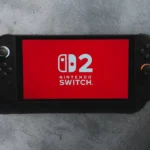
Ranjit Atrwal, senior director analyst at Gartner, warned that higher prices will narrow the range of devices available, prompting buyers to hold on to existing devices for longer. This creates a vicious cycle: fewer new handhelds reach market, existing owners keep their older models, and manufacturers lose volume to offset rising component costs. By 2028, sub-500 entry-level PCs are predicted to disappear entirely, replaced only by premium-priced machines.
Handheld gaming PCs vs. desktop alternatives in 2026
As handheld makers struggle with memory scarcity, desktop gaming PCs emerge as a more viable alternative despite their own cost pressures. Desktop platforms can spread component shortages across a wider range of configurations—a manufacturer can skip the handheld segment, focus on towers, and still maintain volume. Handheld makers, by contrast, operate in a niche market where every percentage point of component cost increase hits profitability harder.
The comparison is not flattering for handhelds. A desktop PC offers upgradeable components, superior cooling, larger displays, and better thermals—advantages that justify premium pricing even amid shortages. A handheld offers portability, but that portability is worthless if the device costs 800 dollars due to component scarcity. Desktop gaming PCs, while also facing price hikes, at least retain compelling value propositions that justify their cost to consumers.
What 2026 means for handheld gaming
One industry observer summed up the handheld market’s outlook bluntly: By all measurable metrics, 2026 is probably going to be one of the worst years ever seen for PC handhelds. This is not hyperbole. The combination of AI-driven memory scarcity, manufacturing cost inflation, and shrinking consumer demand creates a perfect storm. Handhelds face economic stagnation despite their technical capabilities—there is simply no room to grow when component availability and pricing make profitability impossible.
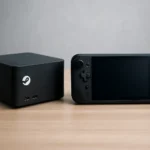

Manufacturers must choose between three bad options: suspend production and lose market presence, raise prices and lose customers, or sell at a loss and burn cash. AYANEO chose the first path. Others may follow. The handheld gaming PC market that promised to challenge Nintendo and dominate portable gaming is instead collapsing under the weight of infrastructure demands it cannot control.
Will handheld gaming PCs recover after 2026?
Recovery depends entirely on whether memory supply normalizes and AI demand moderates. Neither outcome is guaranteed. If data centers continue consuming DDR5 and SSDs at current rates, the shortage could persist through 2027 and beyond. Even optimistic forecasts assume memory costs will remain elevated, keeping entry-level devices nonviable for years. Handheld makers betting on a quick rebound may find themselves permanently sidelined.
Which handheld gaming PCs are still available in 2026?
Existing models like the Steam Deck and AYANEO NEXT Lite may remain available in limited quantities, though at higher prices. New premium models are being suspended—the AYANEO NEXT 2 is the highest-profile casualty so far. Expect announcements of price increases and production delays from Acer Nitro Blaze and Lenovo Legion Go 2 as they navigate the same supply constraints. Budget-friendly handhelds are the first to disappear.
Why is AI consuming so much memory?
Large language models and AI training infrastructure require enormous quantities of high-speed memory to function. A single data center running advanced AI models can consume more DDR5 and SSD capacity than thousands of consumer PCs combined. Since AI companies have higher profit margins and longer-term budgets, they outbid consumer manufacturers for every available unit. This is not a temporary imbalance—it reflects a structural shift in where semiconductor capacity flows.
The handheld gaming PC market entered 2026 with momentum and promise. It exits the year in freefall. The culprit is not innovation failure or design flaws—it is a memory crisis driven by forces entirely outside manufacturers’ control. Until AI demand moderates or memory supply expands dramatically, handhelds will remain a luxury for enthusiasts willing to pay premium prices, not the mass-market devices they were meant to be.
Edited by the All Things Geek team.
Source: TechRadar