





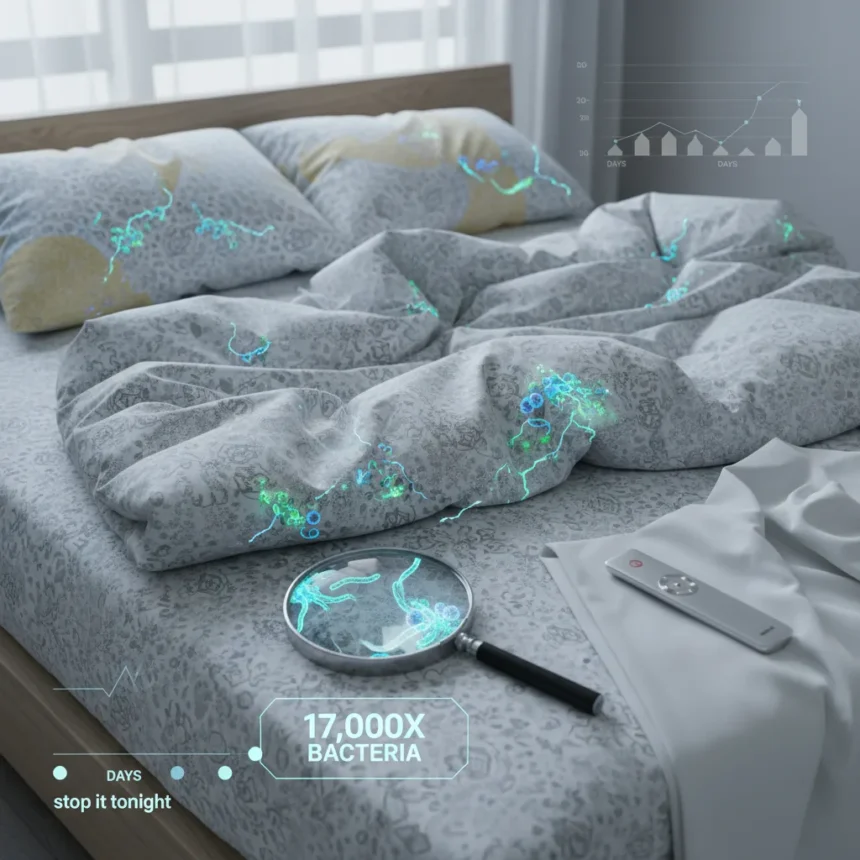
Unwashed bed sheets bacteria accumulates at alarming rates, with research showing that pillowcases left unwashed for just one week contain roughly 3 to 5 million colony-forming units (CFUs) of bacteria per square inch. That’s not a minor inconvenience—it’s a public health concern hiding under your duvet.
Key Takeaways
- One-week unwashed pillowcases harbor 17,000 times more bacteria than toilet seats
- Four-week unwashed sheets accumulate nearly 12 million CFUs per square inch
- Common bedding bacteria include gram-negative rods (42%), gram-positive rods (27%), and bacilli (25%)
- Humans shed 500 million skin cells daily, feeding dust mites whose excrement triggers allergies and asthma
- Pillows can accumulate billions to trillions of mold spores, causing respiratory issues
How Fast Does Unwashed Bed Sheets Bacteria Multiply?
The bacterial explosion on unwashed bed sheets bacteria happens faster than most people realize. After just seven days without washing, pillowcases and sheets contain 3 to 5 million CFUs per square inch. Extend that to four weeks, and the count climbs to nearly 12 million CFUs per square inch. To put this in perspective, unwashed pillowcases for one week harbor approximately 17,000 times more bacteria than an average toilet seat. Your pillow is becoming a petri dish while you sleep.
The bacterial composition matters too. Research identifies gram-negative rods as the dominant bacteria type on sheets at 42%, followed by gram-positive rods at 27%, bacilli at 25%, and gram-positive cocci at 12%. These aren’t just numbers—different bacterial species create different health risks, from skin infections to respiratory issues.
Why Your Bedding Becomes a Bacterial Breeding Ground
Your bed creates near-perfect conditions for bacterial and fungal growth. Warmth, darkness, and bodily fluids combine to form an ideal environment for microorganisms to thrive. The problem intensifies because humans shed approximately 500 million skin cells daily, and those dead cells become food for dust mites. The mites’ excrement then triggers allergies, asthma, and eczema in susceptible individuals.


Pillows face an even grimmer fate. They can accumulate billions to trillions of mold spores, including species like Aspergillus, which causes respiratory infections. According to research from the University of Manchester, sweat released from the scalp during sleep combines with dust mite excrement to create ideal conditions for mold growth. The pillow warmed by your body heat becomes a incubator for fungal colonies.
Making your bed each morning, while aesthetically pleasing, actually accelerates bacterial growth. A well-made bed traps moisture and warmth, promoting bacterial and fungal proliferation. Leaving your bed unmade allows sunlight and air circulation to naturally kill bacteria, though this approach requires accepting an unkempt bedroom.



Five Steps to Eliminate Unwashed Bed Sheets Bacteria Tonight
Action starts immediately. Strip your bed and expose sheets to air and sunlight—bacteria wither when exposed to direct sunlight. This single step disrupts the warm, dark environment that pathogens need to flourish.
Wash all bedding weekly in hot water to kill dust mites, bacteria, and allergens. Weekly washing is the standard recommendation, though if you’ve been exposed to illness, wash sheets immediately. Bacteria like influenza survive approximately 15 minutes on fabric, while stomach bugs persist for about four hours. Don’t wait—contaminated sheets need immediate treatment.
After washing, dry bedding on high heat for at least 30 minutes to kill bedbugs and their eggs. This step eliminates parasites that washing alone might miss.
Ventilation matters more than most people realize. Maintain indoor humidity below 75% to prevent mold and dust mite proliferation. High humidity creates the exact conditions that fungi need to spread. Vacuum your mattress regularly and use breathable protectors to reduce accumulated skin cells and dust mite populations.



Hospital Standards Reveal Gaps in Home Hygiene
Hospital research provides sobering context. Dirty bed linen in healthcare settings averages 23 CFU per 25 square centimeters, with a range from 1 to 191 CFU. Even clean hospital linen picks up contamination from staff uniforms, averaging 45 CFU per 25 square centimeters. If hospitals struggle to maintain clean bedding despite rigorous protocols, home bedding hygiene requires even more vigilance.
What Bacteria Types Should You Know About?
The bacterial species on unwashed bed sheets bacteria vary, but all pose health risks. Gram-negative rods dominate at 42% of sheet bacteria, while gram-positive rods comprise 27%. Bacilli make up 25% of pillowcase bacteria, and gram-positive cocci account for 12%. Each type has different virulence factors and survival strategies. Some resist antibiotics, others trigger inflammatory responses, and a few cause skin infections if they penetrate through cuts or abrasions.
Beyond bacteria, mold becomes the hidden threat. Pillows examined in research contained Aspergillus species capable of producing billions to trillions of spores. Aspergillus causes aspergillosis, a respiratory infection that ranges from mild allergic responses to severe lung disease in immunocompromised individuals.
How Often Should You Really Wash Bedding?
Weekly washing is the evidence-based standard for reducing unwashed bed sheets bacteria to acceptable levels. However, certain situations demand immediate action. If you’re sick or recovering from illness, wash sheets as soon as symptoms appear or immediately after exposure. Sweat, respiratory droplets, and gastrointestinal pathogens persist on fabric for hours, making delayed washing a contamination risk.
For people with allergies or asthma, weekly washing may not be frequent enough. Dust mite populations and their allergenic excrement accumulate rapidly on unwashed bedding, so twice-weekly washing provides better symptom control.
Does Sunlight Actually Kill Bacteria?
Yes. Bacteria, like vampires in folklore, wither when exposed to sunlight, leaving sanitary and fresh-smelling beds. Ultraviolet radiation damages bacterial DNA and disrupts cellular function, killing pathogens without chemicals. This is why stripping your bed and leaving sheets exposed to morning or afternoon sunlight provides genuine antimicrobial benefit. It’s free, chemical-free, and effective—though it requires space and weather cooperation.
FAQ
How much bacteria is on unwashed bed sheets after one week?
Unwashed pillowcases and sheets after one week contain 3 to 5 million colony-forming units of bacteria per square inch. This is approximately 17,000 times more bacteria than an average toilet seat.
Can washing in cold water kill bacteria on bedding?
Research recommends hot water washing to effectively kill dust mites, bacteria, and allergens. Cold water is less effective at eliminating pathogens, making hot water the preferred method for hygiene.
What temperature should you dry bedding to kill bedbugs?
Dry bedding on high heat for at least 30 minutes to kill bedbugs and their eggs. This temperature and duration combination is necessary to eliminate parasites that washing alone might miss.
Your bedding hygiene directly impacts your health. Unwashed bed sheets bacteria accumulate rapidly, creating respiratory risks, skin infections, and allergic reactions. Strip your bed tonight, wash in hot water, dry on high heat, and commit to weekly cleaning. Your lungs, skin, and immune system will thank you.
Where to Buy
Sijo Cooling AiryWeight Eucalyptus | Cozy Earth Bamboo Sheet Set | Brooklinen Luxe Core Sheet Set | Utopia Bedding Microfiber Sheet Set
This article was written with AI assistance and editorially reviewed.
Source: Tom's Guide