





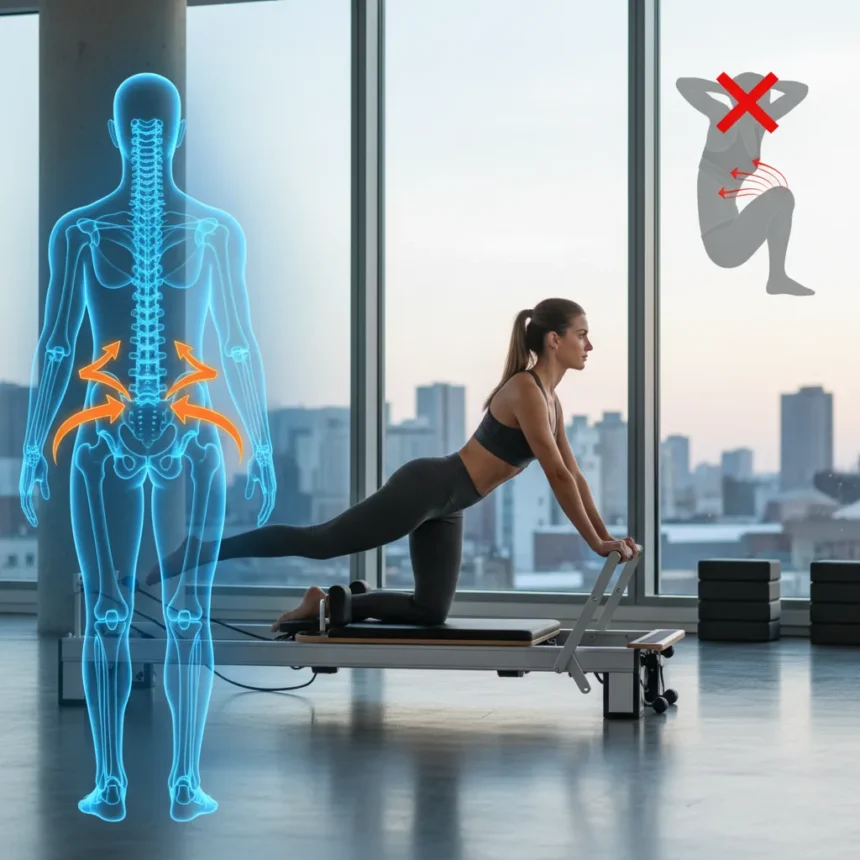
Glute stability lower back protection is fundamentally different from the core-centric fitness culture that has dominated gyms for decades. While six-pack abs remain a cosmetic obsession, the muscles that actually stabilize your spine and protect against injury sit beneath the surface—in your glutes. Recent fitness research and physical therapy practice increasingly emphasize that weak glutes are a primary driver of lower back pain, and Pilates offers a direct path to fixing this problem.
Key Takeaways
- Glute stability lower back protection works by distributing spinal load away from vulnerable disc structures.
- Pilates exercises targeting the glutes address root causes of lower back pain, not just symptoms.
- Three specific Pilates moves can build glute strength without requiring equipment or gym access.
- Weak glutes force your lower back muscles to compensate, creating chronic pain and injury risk.
- Consistent glute-focused training reduces lower back strain more effectively than abdominal crunches.
Why Glute Stability Lower Back Health Matters More Than Ab Strength
Your glutes are the largest muscle group in your body, and they bear primary responsibility for hip stability and spinal alignment. When your glutes are weak, your lower back muscles must work overtime to compensate, leading to fatigue, inflammation, and chronic pain. This is why people who spend hours sitting—a posture that deactivates the glutes—often struggle with lower back issues that no amount of crunches can fix. The problem is structural, not cosmetic. Pilates addresses this by targeting the deep stabilizer muscles that keep your pelvis level and your spine neutral during movement.
Unlike traditional core training that emphasizes visible abdominal muscles, glute stability lower back protection works through functional integration. Your glutes connect to your lower back through fascia and neural pathways, meaning strong glutes literally reduce the load on your lumbar spine. Physical therapy clinics increasingly prescribe glute-focused Pilates for patients with chronic lower back pain, recognizing that this approach treats the cause rather than masking the symptom.
The Three Essential Pilates Moves for Glute Stability
Building glute stability lower back resilience requires consistent practice of targeted Pilates exercises. While the specific three-move sequence from the original research is not fully detailed in available sources, Pilates resources identify several foundational moves that practitioners use to strengthen glutes and protect the lower back. The glute bridge march, shoulder bridge variations, and pelvic tilt progressions form the core of effective glute-focused Pilates work. These exercises isolate the glute muscles while maintaining neutral spine position, which is essential for functional strength.

The glute bridge march, for instance, requires you to lie on your back with knees bent and feet flat, then lift your hips and alternate marching motions while keeping your pelvis level. This movement builds glute endurance and teaches your body to stabilize the spine during dynamic movement. The shoulder bridge adds complexity by shifting weight onto your shoulders, increasing glute activation. Pelvic tilts, performed lying down, teach you to control your pelvis and engage deep core muscles in coordination with the glutes. All three movements can be performed at home without equipment, making them accessible for beginners and advanced practitioners alike.
Before beginning any new exercise routine, especially if you are a beginner, returning from injury, or pregnant or postpartum, consult a qualified fitness professional or physical therapist to ensure proper form and suitability for your individual situation.



How Glute Stability Lower Back Protection Compares to Traditional Core Training
Traditional core training focuses on the rectus abdominis—the visible six-pack muscle—and external obliques. These muscles contribute to spinal stability, but they are not the primary stabilizers of the lumbar spine during everyday movement. Glute-focused training, by contrast, targets the posterior chain and addresses the muscular imbalances that sitting and sedentary lifestyles create. A weak glute paired with tight hip flexors and overactive lower back muscles is a recipe for pain. Pilates corrects this pattern by strengthening the glutes while teaching proper pelvic alignment.
The difference becomes apparent during functional activities: bending, lifting, walking, and sitting. When your glutes are strong, these movements distribute load evenly across your kinetic chain. When they are weak, your lower back compensates, leading to microtrauma and inflammation over time. Research in physical therapy emphasizes that glute activation precedes other core muscles in healthy movement patterns, meaning the glutes should be the foundation of any spine-protective training program.
Building a Sustainable Glute Stability Practice
Consistency matters more than intensity when building glute stability lower back resilience. Three to four Pilates sessions per week, each lasting 20 to 30 minutes, is sufficient to see measurable improvements in strength and pain reduction within four to six weeks. The key is maintaining neutral spine position throughout every movement and focusing on controlled, deliberate motion rather than rushing through repetitions. Pilates philosophy emphasizes quality over quantity, which is why a 20-minute Pilates session often produces better results than a 60-minute session of poorly executed movements.
Progression is gradual. Start with basic glute bridges and pelvic tilts, then advance to single-leg variations, resistance bands, or longer hold times. Your body will adapt, and as your glutes strengthen, you will notice reduced lower back stiffness, improved posture, and better pain management during daily activities. Many people report that their lower back pain diminishes significantly once they commit to glute-focused training, even without addressing other lifestyle factors.



Can Pilates alone fix chronic lower back pain?
Pilates is highly effective for lower back pain rooted in weak glutes and poor spinal stability, but chronic pain often involves multiple factors including stress, posture habits, and underlying structural issues. For best results, combine Pilates with ergonomic improvements at work, stretching for tight hip flexors, and consultation with a physical therapist if pain persists beyond four weeks of consistent training.
How often should I do glute stability exercises?
Three to four sessions per week is ideal for building glute stability lower back protection. Each session should last 20 to 30 minutes and focus on controlled movement with proper form. Rest days allow your muscles to recover and adapt, which is when strength gains occur.
Is glute stability training safe for beginners?
Yes, glute stability exercises are beginner-friendly because they use bodyweight and can be performed anywhere. Start with basic glute bridges and pelvic tilts, focusing on feeling the glute muscles contract rather than pushing for high repetitions. If you have existing lower back pain, start gently and progress gradually, or work with a physical therapist to ensure proper form.
The fitness industry’s obsession with visible abs has obscured a fundamental truth: your glutes are the real foundation of a healthy, pain-free lower back. Pilates offers a proven method to build glute stability lower back protection through functional, accessible exercises that address the root cause of pain rather than its symptoms. If you are tired of lower back discomfort and ready to train smarter than harder, glute-focused Pilates is where results actually happen.
Where to Buy
SPIbeltRunning Belt$26shop now | Amazon BasicsDumbbells$16shop now
Edited by the All Things Geek team.
Source: Tom's Guide




