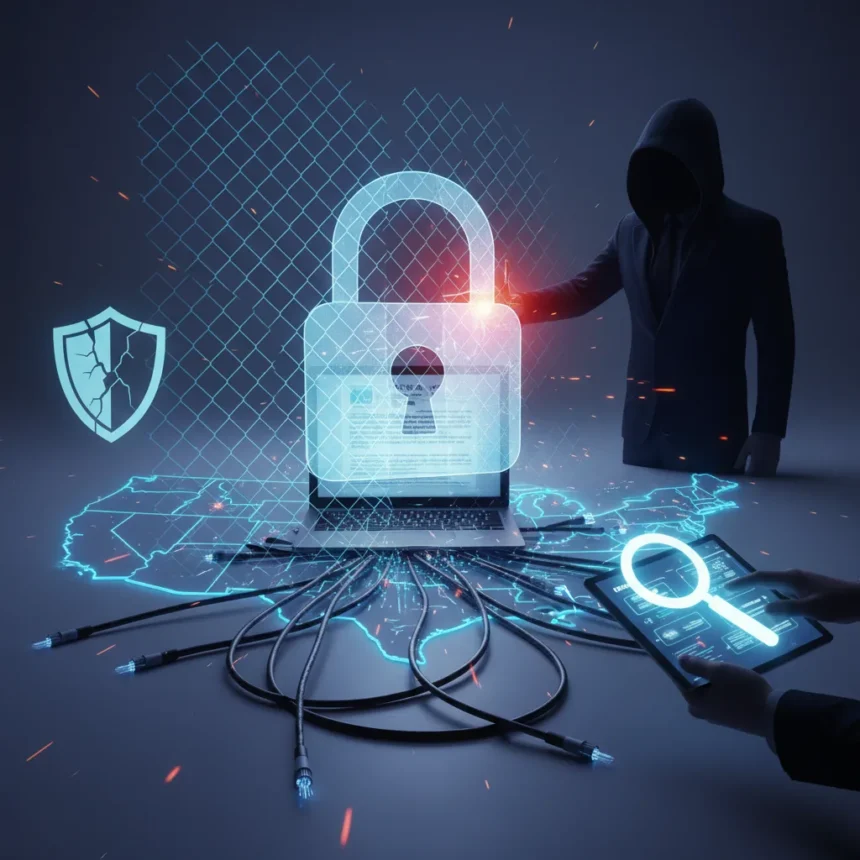
The VPN privacy paradox sits at the heart of a growing security crisis: the very tools Americans use to hide from government surveillance could expose them to warrantless intelligence collection instead. Six Democratic lawmakers—including Senators Ron Wyden, Alex Padilla, Ed Markey, and Elizabeth Warren, alongside Representatives Sara Jacobs and Pramila Jayapal—sent a letter to Director of National Intelligence Tulsi Gabbard demanding clarity on how the government treats VPN users under federal surveillance law.
Key Takeaways
- Six Democratic lawmakers sent a letter demanding answers about VPN users and warrantless surveillance exposure.
- Americans using overseas VPN servers may appear foreign, potentially triggering FISA Section 702 collection with fewer legal safeguards.
- 36% of US adults currently use a VPN, with 35% specifically seeking protection from government monitoring.
- Congress faces an April 20 deadline to renew FISA Section 702, making the timing critical.
- VPNs have been recommended by government agencies for privacy, yet could inadvertently strip users of Fourth Amendment protections.
Understanding the VPN privacy paradox
The VPN privacy paradox refers to a fundamental contradiction in how federal surveillance law treats Americans who use overseas VPN servers. Under Section 702 of the Foreign Intelligence Surveillance Act, the government can collect large amounts of data targeting people outside the United States with significantly fewer legal safeguards than it applies to domestic surveillance. When an American routes their internet traffic through an overseas VPN server, their activity appears to originate from a foreign location, potentially triggering these foreign intelligence collection authorities. The problem is stark: an American using an overseas VPN becomes indistinguishable from a foreign user in the eyes of surveillance systems, which means they could lose the warrant requirement and other constitutional protections that normally shield Americans from government interception.
Domestic surveillance law creates a two-tier system. Americans receive stronger protections than foreigners, including the requirement for court-approved warrants before their communications can be intercepted. But when a user’s location is unknown or appears foreign, the government may treat them as a foreign target instead. This creates a perverse incentive: seeking privacy through a VPN could backfire by making you appear to be a foreign national, thereby removing your Fourth Amendment protections entirely.
Why lawmakers are demanding answers about VPN privacy paradox
The timing of the lawmakers’ letter is urgent. Congress faces an April 20 deadline to renew FISA Section 702, the legal authority that enables much of this surveillance. The letter emphasizes a critical gap in public understanding: Americans should be warned of the risks that VPN use could strip them of their constitutional protections against government surveillance. For decades, privacy advocates and even government agencies have recommended VPNs as a best practice for security. Yet the VPN privacy paradox suggests that this advice could inadvertently harm the very people trying to protect themselves.


The lawmakers’ concern reflects a broader shift in how Americans view surveillance. According to survey data, 80% of Americans express concern about government monitoring or restrictions on online activity, and 53% say news coverage of foreign surveillance prompted them to adopt privacy tools like VPNs. Among the 36% of US adults who currently use a VPN, 35% specifically cite wanting to keep their online activity private from the government. In other words, millions of Americans are taking steps to protect themselves from surveillance—steps that could backfire under current law.
How FISA Section 702 creates the VPN privacy paradox
FISA Section 702 was designed to allow intelligence agencies to target foreign nationals outside the United States without individual warrants. The statute treats Americans and foreigners differently: communications from known American citizens receive stronger protections, while communications from unknown or foreign locations receive fewer safeguards. This distinction made sense when most internet traffic had a clear geographic origin. But VPNs scramble that origin signal. When a user’s true location is hidden, the government’s surveillance systems cannot distinguish between an American using a VPN and an actual foreign national.



The result is a legal grey zone. An American who routes traffic through an overseas VPN server may be treated as a foreign target, subject to collection authorities that bypass the warrant requirement. The government has never publicly clarified how it handles such cases, which is precisely why the lawmakers are demanding answers. The letter requests clarification on whether Americans using VPNs could be subjected to warrantless surveillance and what safeguards, if any, exist to prevent this scenario.
The stakes for American privacy rights
The VPN privacy paradox exposes a fundamental mismatch between privacy tools and legal protections. Americans are increasingly adopting VPNs as a privacy measure, yet the legal system has not caught up with the technology. If the government treats VPN users as foreign targets, it could create a mass surveillance loophole affecting millions of Americans. The paradox is that the more Americans try to protect their privacy, the more they could inadvertently expose themselves to warrantless government collection.
The renewal of FISA Section 702 in April presents Congress with an opportunity to clarify the law and close this gap. Lawmakers could require the government to treat Americans as domestic targets even when their location is obscured by a VPN, ensuring they retain their Fourth Amendment protections. Alternatively, they could mandate that Americans be informed of the surveillance risks before using overseas VPN servers. Without action, the VPN privacy paradox will remain unresolved, leaving millions of privacy-conscious Americans in legal limbo.
Does using a VPN actually protect your privacy from the government?
Using a VPN encrypts your traffic and hides your IP address from your internet service provider and websites you visit. However, the VPN privacy paradox suggests that routing through an overseas server could expose you to foreign intelligence collection authorities with fewer legal safeguards than domestic surveillance laws provide. A VPN still protects you from ISPs and commercial tracking, but it may not protect you from government surveillance in the way users assume.



What should Americans know about FISA Section 702 and VPN use?
FISA Section 702 allows the government to collect large amounts of data on people outside the United States without individual warrants. If you use an overseas VPN server, your activity may appear to originate from a foreign location, potentially triggering this collection authority. The government has not publicly clarified how it treats VPN-routed traffic, which is why the lawmakers’ letter demanding answers is significant. Americans should understand that privacy tools like VPNs, while useful for protecting against commercial tracking and ISP monitoring, may not shield them from government surveillance in the way they expect.
Why are 36% of US adults using VPNs if they carry surveillance risks?
Survey data shows that 36% of US adults use VPNs, with 35% specifically seeking protection from government monitoring. This widespread adoption reflects growing concern about surveillance—80% of Americans express worry about government monitoring or online restrictions. Even though the VPN privacy paradox suggests potential risks, most VPN users are motivated by a desire to protect their privacy from multiple threats, not just government surveillance. The lawmakers’ letter highlights the need for transparency so Americans can make informed choices about the tools they use.
The VPN privacy paradox represents a critical failure of legal clarity in the age of encryption and overseas data routing. Millions of Americans are using VPNs believing they are protecting themselves from government surveillance, yet the law may treat them as foreign targets instead. The lawmakers’ demand for answers is overdue. Congress must clarify FISA Section 702 before the April renewal deadline to ensure that Americans retain their constitutional protections, regardless of what privacy tools they choose to use.
Edited by the All Things Geek team.
Source: TechRadar