





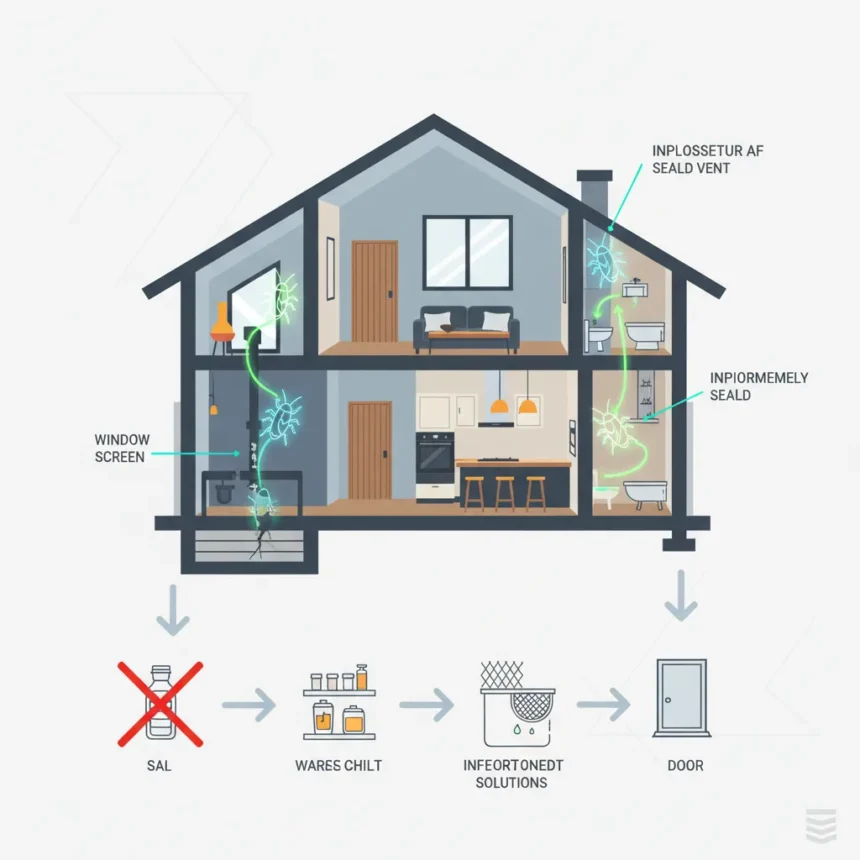
Cockroach prevention starts with understanding why these pests keep finding their way indoors in the first place. Unlike random invasions, cockroaches follow specific patterns—they seek food, water, and shelter. Once you know what attracts them, blocking entry becomes straightforward.
Key Takeaways
- Cockroaches enter homes searching for food scraps, standing water, and dark hiding spots.
- Sealing cracks, gaps, and entry points is the first line of cockroach prevention.
- Natural repellents like bay leaves offer limited effectiveness but are worth trying.
- Removing food sources and moisture eliminates the primary reasons roaches stay indoors.
- Professional pest control remains the most reliable option for severe infestations.
What Draws Cockroaches Inside Your Home
Cockroaches do not randomly wander into houses. They are attracted by three specific factors: accessible food, moisture, and shelter. Kitchen areas with crumbs, grease buildup, and standing water create ideal conditions for infestation. Roaches hide in cracks behind appliances, under sinks, and inside walls during the day, emerging at night to feed. Understanding this behavior is essential to effective cockroach prevention.
The most overlooked attractant is moisture. A leaky pipe under a sink or condensation around an air conditioning unit provides water that roaches cannot resist. Even pet water bowls left out overnight can sustain a colony. By eliminating these moisture sources, you remove one of the three pillars that make your home appealing to roaches.
Cockroach Prevention Through Sealing and Sanitation
Physical barriers form the foundation of cockroach prevention. Seal cracks and gaps around baseboards, pipes, and electrical outlets with caulk or weatherstripping. Roaches are flat-bodied and can squeeze through openings as small as a credit card. Pay special attention to areas where utilities enter the home—these are common entry routes.

Sanitation is equally critical. Wipe down countertops and stovetops daily, sweep under appliances weekly, and store food in airtight containers. Do not leave dirty dishes in the sink overnight. Take garbage out regularly and ensure trash cans have tight-fitting lids. These steps eliminate the food sources that sustain cockroach populations indoors.
Natural Repellents and Their Limitations
Bay leaves are frequently recommended as a natural cockroach prevention method. The theory is that roaches dislike the scent and avoid areas where bay leaves are placed. However, evidence for their effectiveness is mixed. Some sources suggest bay leaves may provide minor deterrent value, but they are not a standalone solution for cockroach prevention.



If you choose to use bay leaves, place them in kitchen cabinets, pantries, and under sinks. Combine this approach with sealing entry points and removing food sources. Natural repellents work best as part of a comprehensive strategy rather than as a single fix. Other DIY options like diatomaceous earth have limited effectiveness compared to targeted pest control measures.
When Professional Help Becomes Necessary
For established infestations, professional pest control is far more reliable than DIY approaches. Exterminators use targeted treatments that reach roaches in walls and hidden spaces where home remedies cannot. If you see roaches during the day, find egg cases, or discover an infestation despite your prevention efforts, call a pest control service immediately.
Prevention is always cheaper and easier than elimination. Focus first on sealing your home, removing attractants, and maintaining cleanliness. Only if these steps fail should you escalate to professional intervention. The goal is to make your home so inhospitable that cockroaches never establish themselves in the first place.
Does bay leaf cockroach repellent actually work?
Bay leaves provide limited deterrent value and should not be relied upon as a primary cockroach prevention method. Research suggests they may discourage roaches in some cases, but they are far less effective than eliminating food sources, sealing entry points, and removing moisture. Use them as a supplementary measure only, combined with proven sanitation practices.



What is the fastest way to get rid of cockroaches?
Professional pest control treatments eliminate cockroaches faster than any DIY method. If you have an active infestation, contact a licensed exterminator. For prevention, focus on sealing cracks, removing food and water sources, and maintaining strict cleanliness to avoid infestations from developing in the first place.
Can cockroaches enter through drains and pipes?
Yes, roaches frequently enter homes through drains, pipe gaps, and utility openings. Seal these entry points with caulk and ensure drain covers are in place. Keep drains clean and consider using drain screens to prevent roaches from traveling through plumbing into your home.
Effective cockroach prevention requires addressing why roaches enter homes rather than hoping they will leave on their own. Seal entry points, eliminate food and water sources, and maintain cleanliness. If these measures fail, professional pest control provides the most reliable solution. The best infestation is the one that never starts.
Edited by the All Things Geek team.
Source: Tom's Guide




