



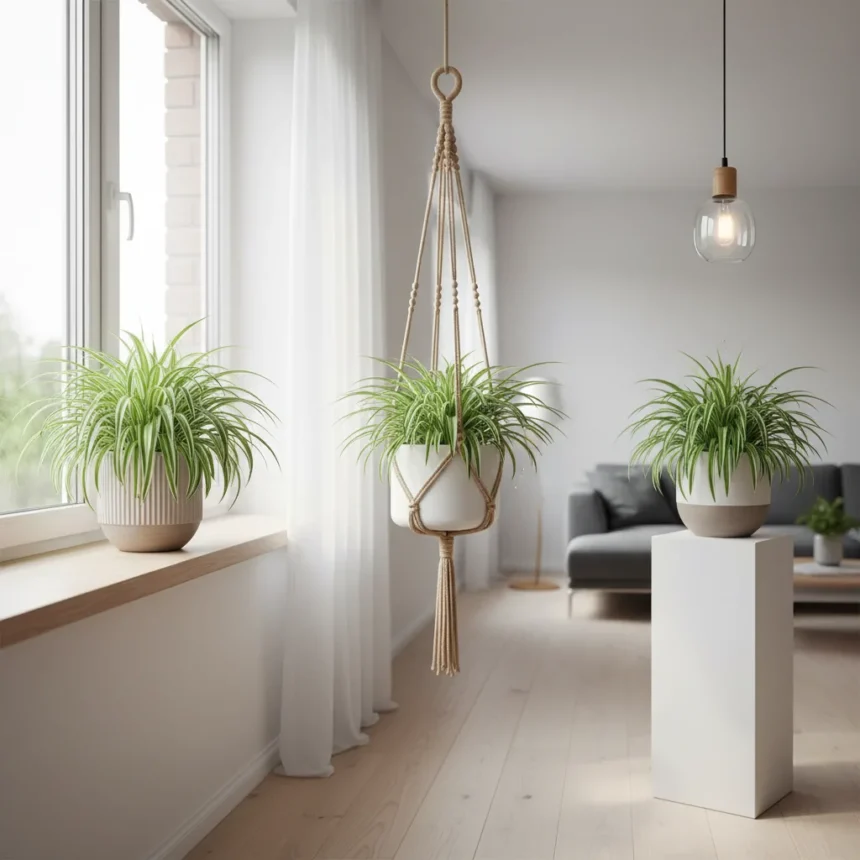
Spider plant placement is the single biggest factor separating thriving specimens from struggling ones, yet most people get it wrong from day one. Chlorophytum comosum, the spider plant, is native to South Africa and tropical regions where it evolved in bright, humid, indirect light conditions. Place yours in the wrong spot—direct sun, a drafty corner, or a dark shelf—and you’ll watch it slowly weaken instead of producing the prolific plantlets it’s famous for.
Key Takeaways
- Spider plants need bright, indirect light to thrive; direct sun scorches foliage, low light slows growth
- Temperature range of 13°C to 27°C (55°F to 80°F) is ideal; avoid drafts and extreme temperature swings
- Bathrooms and kitchens provide the humidity spider plants crave, with good air circulation
- North, east, and west-facing windows work best; south-facing windows expose them to harsh afternoon sun
- Spider plants produce plantlets faster in optimal locations with consistent warmth and moisture
Why Spider Plant Placement Fails Most Growers
The problem isn’t that spider plants are fussy—they’re remarkably adaptable. The problem is that common placement mistakes compound over weeks. A spider plant positioned in direct sunlight, especially from a south or west-facing window, will develop brown, papery leaf tips and edges within days. The foliage weakens, growth stalls, and the plant stops producing those characteristic plantlets. Similarly, placing a spider plant near a cold window, heating vent, or air conditioning outlet exposes it to temperature stress and drafts that the plant actively resents. Spider plants don’t like being cold; they’re tropical plants that evolved in warm, humid environments. Combine drafty conditions with low light and you get a pale, spindly specimen that looks like it’s given up.
The reason placement matters so much is that spider plants need specific environmental conditions to unlock their full potential. These aren’t demanding plants, but they do have preferences. When those preferences are met, they reward you with rapid growth, vibrant green foliage with white striping, and abundant plantlets that cascade down the sides of the pot. When they’re ignored, the plant survives but never truly thrives.
The Three Best Locations for Spider Plant Placement
The ideal spots for spider plant placement share three characteristics: bright, indirect light; warm, stable temperatures; and good air circulation with moderate to high humidity. Here are the three locations where spider plants consistently flourish indoors.


Bathrooms with good ventilation are among the top placements for spider plants. Bathrooms provide natural humidity from showers and baths, which spider plants love. The moisture in the air reduces the need for constant misting and creates the tropical environment the plant craves. Pair this with a bathroom window that receives indirect light—typically an east or north-facing window—and you have near-perfect conditions. The ventilation from exhaust fans keeps air moving without creating drafts. A spider plant on a bathroom shelf near a window with frosted glass or a sheer curtain will produce plantlets faster than almost any other indoor location.
Kitchens near indirect-light windows work equally well, especially if your kitchen gets east or west-facing light. Kitchens tend to have good air circulation and moderate humidity from cooking and water use. The key is positioning the plant near a window but not directly in the sun’s path. If your kitchen window faces south and receives harsh afternoon sun, hang a sheer curtain or place the plant slightly back from the window to filter the light. A kitchen counter or shelf near a north-facing window is ideal spider plant placement.


Living rooms or bedrooms with bright, indirect north or east-facing windows are the third winning spot. These rooms typically have stable temperatures away from heating vents and drafts, and north or east-facing windows provide consistent, gentle light without the intensity of afternoon sun. Position your spider plant on a table or shelf near the window but not touching the glass. This placement works particularly well if you’re willing to mist weekly to boost humidity, since living rooms and bedrooms are typically drier than bathrooms.
What to Avoid: Spider Plant Placement Mistakes
Direct sunlight, especially from south-facing windows, is the fastest way to damage a spider plant. The intense afternoon sun will scorch the leaf edges and tips, turning them brown and papery. If your only window option is south-facing, hang a sheer curtain or place the plant a few feet back from the window so it receives bright, filtered light rather than direct rays. Avoid placing spider plants in dark corners or low-light areas. While they can technically survive in low light, growth slows dramatically and the foliage becomes weak and pale. The plant won’t produce plantlets reliably, and you’ll miss out on the cascading display that makes spider plants so appealing.
Drafty locations near windows, doors, heating vents, and air conditioning units are equally problematic. Spider plants are sensitive to cold and temperature fluctuations. A plant positioned near a window that gets chilly at night or in winter will show stress within days. Similarly, avoid placing your spider plant directly in front of an air conditioning vent or heating duct. These create temperature swings that the plant actively dislikes. Finally, don’t tuck your spider plant into a cramped space without air circulation. Good ventilation prevents fungal issues and keeps the foliage healthy.
Temperature and Humidity: The Hidden Factors in Spider Plant Placement
Spider plants prefer temperatures between 13°C and 27°C (55°F to 80°F), or anywhere above 65°F if that’s comfortable for you. This is why bathrooms and kitchens excel as spider plant placement locations—they’re typically warmer and more humid than other rooms. If your home runs cool or you live in a dry climate, spider plant placement near a humidifier or in a room where you mist weekly will compensate. The plant’s humidity preference is why it produces plantlets faster in optimal spots; consistent warmth and moisture unlock its reproductive potential.



Frequently Asked Questions
Can spider plants survive in low light?
Spider plants can survive in low light but will grow slowly with weak, pale foliage and fewer plantlets. They’re not ideal for dark corners or rooms without windows. Bright, indirect light is essential for them to thrive and produce the dense, vibrant growth they’re known for.
What’s the difference between north and south-facing windows for spider plant placement?
North-facing windows provide consistent, gentle indirect light all day—ideal for spider plants. South-facing windows deliver intense afternoon sun that burns foliage. If you only have a south-facing window, use a sheer curtain to filter the light or position the plant away from the glass.
Do spider plants need humidity to produce plantlets?
Higher humidity accelerates plantlet production, which is why bathrooms and kitchens are such effective spider plant placement locations. You can still grow plantlets in drier rooms by misting weekly, but the plant will produce them more slowly and with less vigor.
Spider plant placement is not complicated, but it is consequential. Move your plant to a spot with bright, indirect light, stable warmth, and good air circulation—a bathroom window, kitchen shelf, or living room corner with north or east-facing light—and you’ll see the difference within weeks. The plant will green up, growth will accelerate, and those characteristic plantlets will start cascading down the pot sides. Get the placement wrong, and you’ll spend months wondering why your supposedly easy spider plant looks so tired. The plant itself isn’t the problem; the location is.
Where to Buy
17% OFFFelco F2 Pruning Shears$71.52$86.35shop now | Amazing StuffGarden Gloves$9.90shop now | 11% OFFGrampa's Weeder$39$44shop now
This article was written with AI assistance and editorially reviewed.
Source: Tom's Guide