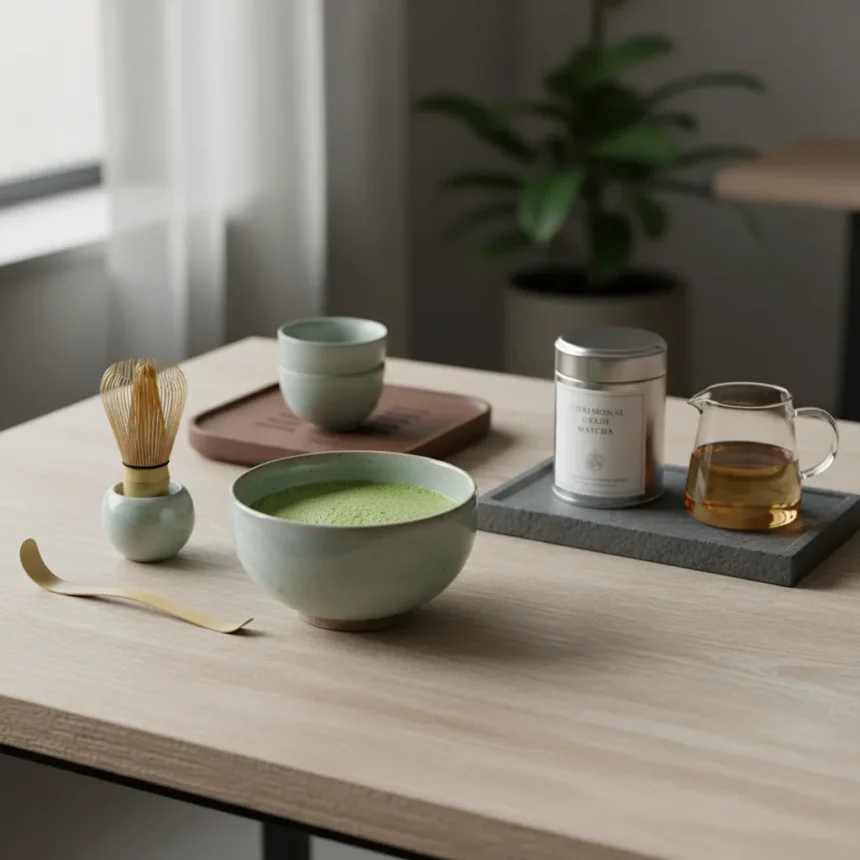
Matcha kits transform an ordinary tea break into a deliberate, meditative practice by bundling everything needed for ceremonial-grade brewing in one cohesive set. A complete matcha kit typically includes a chawan (ceramic bowl), chasen (bamboo whisk with 80-120 prongs), chashaku (bamboo scoop), and sometimes a furui (sifter) to prevent clumps. Premium versions add whisk holders, tea caddies, or electric frothers, but the fundamentals remain the same: quality tools paired with high-grade matcha.
Key Takeaways
- Matcha kits include chawan bowl, chasen whisk, chashaku scoop, and optional sifter for ceremonial brewing
- Ceremonial-grade matcha comes from young tender leaves, delivering vibrant green color and creamy umami flavor without bitterness
- Beginner kits cost 30–50 euros and include ceramic bowl, 80-prong whisk, and spoon
- Bamboo tools require gentle rinsing with lukewarm water and air-drying; never use a dishwasher
- Premium kits suit daily rituals, gift-giving, and authentic Japanese tea ceremony practice
What Makes a Matcha Kit Essential
A proper matcha kit elevates the brewing experience beyond simply mixing powder into water. Ceremonial-grade matcha, the highest quality available, is made from young tender leaves harvested before the main tea season, delivering a vibrant green hue and smooth, creamy texture with umami depth and zero bitterness. This grade is designed for drinking pure, unlike culinary matcha which works better in lattes and smoothies. To unlock these qualities, you need the right tools—each piece serves a specific purpose in the preparation ritual.
The chawan, or matcha bowl, is not merely decorative. Its wide, shallow shape allows the whisk to move freely and create the signature foam without splashing. The chasen whisk, hand-carved from a single piece of bamboo, features 80 to 120 delicate prongs that break up clumps and incorporate air into the powder. The chashaku scoop measures precisely—typically 1 to 2 grams of matcha per serving—ensuring consistency across each brew. Together, these tools create the ritual structure that transforms tea preparation from a task into a moment of intention.
Matcha Kits for Every Skill Level and Budget
Entry-level matcha kits start at 30–50 euros and include a ceramic bowl, 80-prong bamboo whisk, wooden scoop, and sometimes a sieve. These beginner sets, offered by brands like Thés & Traditions and Matchatori, contain everything a newcomer needs to brew ceremonial matcha correctly without overwhelming choice or expense. They prioritize functionality over aesthetics, though the ceramics remain handcrafted and beautiful.

Mid-range kits, like Element Matcha’s starter bundle valued at around $70, bundle the core tools with organic ceremonial-grade matcha (typically 40 grams) and a refillable tin, eliminating the need to source matcha separately. Premium kits from brands like Matcha.com add raku ceramics, 120-prong whisks (finer than standard), whisk holders, and dedicated tea caddies for storage. The investment scales with your commitment: a casual tea drinker needs only basics, while someone establishing a daily ritual benefits from premium ceramics and a complete accessory set.
Caring for Bamboo Tools Extends Their Life
Bamboo chasen and chashaku require specific care to prevent damage and mold. After each use, rinse the whisk gently with lukewarm water—never hot, which can warp the delicate prongs—and allow it to air-dry completely. Never submerge in a dishwasher; the high heat and moisture will split the bamboo and destroy the fine craftsmanship. Many kits include a whisk holder, which elevates the chasen during drying and prevents the prongs from bending under their own weight.



The scoop requires the same gentle approach. A quick rinse and air-dry preserve its shape and prevent the bamboo from becoming brittle over time. This maintenance ritual, though simple, reinforces the mindfulness that matcha practice cultivates—you are caring for tools that have been hand-carved, often from Japanese bamboo, and deserve respect.
Why Matcha Kits Matter More Than Loose Matcha Alone
Buying ceremonial matcha without proper tools is like owning a vinyl record without a turntable. The powder itself is only half the equation. Whisking matcha with a fork or blender produces a thin, grainy suspension rather than the silky, foam-topped beverage that defines the experience. The chasen’s prongs whisk vigorously back and forth to turn matcha into a fine creamy foam, a texture impossible to achieve with improvised equipment. Kits solve this by bundling everything, removing the friction of sourcing individual pieces and ensuring compatibility.
Beyond functionality, matcha kits serve as gateways to ritual. They signal intention—you are not grabbing instant coffee but setting aside time for a deliberate practice. Many people find that owning a complete kit motivates daily use, turning a one-time curiosity into an established habit. The aesthetic appeal matters too; beautiful ceramics and natural bamboo create visual appeal that encourages the tea break to become a sanctuary moment rather than another task.
Matcha Kits vs. Standalone Purchases
Buying tools individually—a bowl here, a whisk there—costs more and risks mismatched quality. A $15 whisk paired with a $40 premium bowl creates an uneven experience. Kits ensure that every component meets a consistent standard and works harmoniously. Brands like Nio Teas and Midori Spring design their kits as cohesive systems, with each tool proportioned for the others and the matcha quality they include. Additionally, kits eliminate decision paralysis; beginners do not need to research 50 whisk options or ceramic bowl styles—the kit has done that work.



Frequently Asked Questions
What is the difference between ceremonial and culinary matcha in a kit?
Ceremonial matcha comes from young, tender leaves and is highest quality—vibrant green, creamy, umami-rich, and bitter-free—meant for drinking pure. Culinary matcha is lower grade, more astringent, and designed for lattes and baking. Matcha kits always include ceremonial grade because the ritual and flavor depend on it.
Do I need a sifter in my matcha kit?
A sifter prevents clumps, but many ceremonial matcha kits omit it because premium matcha is often pre-sifted before packaging. Beginner kits sometimes include one for extra assurance. If your matcha seems lumpy, a sifter helps, but it is not essential.
Can I use an electric frother instead of a bamboo whisk?
Yes. Some premium kits include electric frothers as an alternative to traditional whisks. They are faster and require less technique, though purists argue the hand-whisking ritual is part of the experience. Both methods work for creating foam.
Matcha kits succeed because they remove barriers to ritual. By bundling tools, matcha, and sometimes instructions, they invite anyone—beginner or enthusiast—to experience the meditative practice of ceremonial tea preparation. Whether you choose a 30-euro starter set or invest in premium ceramics, a complete kit transforms your tea break from a caffeine grab into a moment of intention and beauty.
Where to Buy
15% OFFGBBGBlue Ceramic Matcha Kit$21.99$25.99shop now | 47% OFFvanmiyaCat Ceramic Matcha Set$9.99$18.74shop now | 20% OFFTEAYAMIGreen Floral Matcha Whisk Set$15.99$19.99shop now | 19% OFFTEANAGOOStone Matcha Whisk Set $28.98$35.99shop now | 20% OFFYumiPLUSDainty Flower Ceramic Matcha Set$18.39$22.99shop now
Edited by the All Things Geek team.
Source: Creativebloq