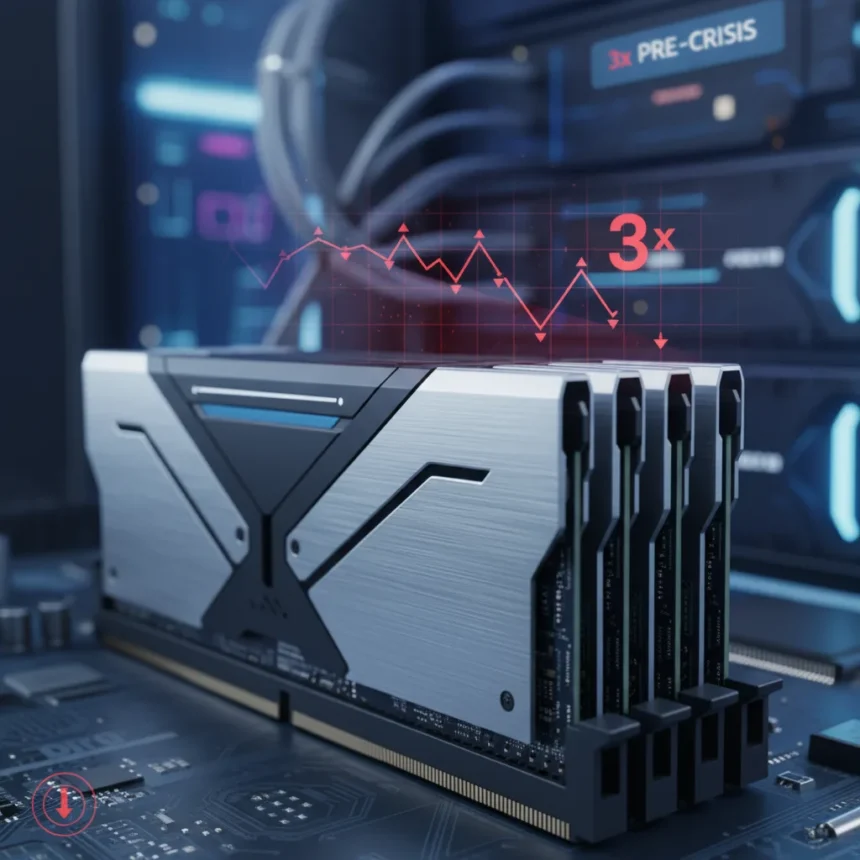
DDR5 RAM prices are finally dropping after months of relentless increases, but the relief is far more muted than the panic that preceded it. U.S. prices for 32GB DDR5 kits have fallen roughly 20% over the past month, with some bundles dropping $40 to $100, yet they remain stubbornly elevated compared to where they sat just six months ago.
Key Takeaways
- DDR5 RAM prices have tripled since October 2025 but show first monthly declines in weeks.
- A 32GB DDR5-6000 kit now costs $350–$529 in the U.S., down from recent peaks but still 3–4x higher than historical lows of $87–$110.
- AI demand, scalper bots, and reduced production are keeping prices artificially high despite minor drops.
- Manufacturers including Samsung and MSI are forecasting further price increases of 15–50% throughout 2026.
- DDR4 remains cheaper but is also rising, making memory upgrades expensive across the board.
The Price Drop That Isn’t Really a Recovery
The current decline in DDR5 RAM prices represents statistical noise rather than a genuine market reversal. Yes, a Corsair Vengeance RGB DDR5-6000 32GB kit dropped from $409 to $370, but its historical low was just $87—making the current price still four times higher than what buyers paid a year ago. In January 2026, the cheapest 32GB DDR5-6000 CL32 kits hit $251, down from $261 the month prior, but that figure still represents a 300% increase from the baseline prices seen in October and December 2025.
What’s happening now is a plateau, not a recovery. U.S. DDR5 prices show only a 1.7% decline over seven days and 2.3% over 30 days. This is the market clearing stock before the next wave of increases hits, not a sign that the memory crisis is ending. Scalpers and limited availability remain problems—some 32GB kits hit $4,000 on Newegg due to bots and hoarding.
Why DDR5 RAM Prices Remain Elevated
The supply crunch that sent prices through the roof in late 2025 shows no signs of abating. AI demand, particularly from data centers and large-scale compute operations, has kept manufacturers’ production lines prioritized for bulk orders rather than consumer retail stock. Scalper bots continue to snap up available inventory, further restricting what reaches the market at reasonable prices.


Worse, manufacturers are already signaling that this brief reprieve will not last. Samsung announced a DRAM price doubling to manufacturers in December 2025, and analysts are forecasting increases of 30–50% per quarter throughout the first half of 2026. MSI CEO Huang Jinqing confirmed that the company expects price increases between 15 and 30% across its entire range in 2026. These are not whispered concerns—they are public statements from major players preparing the market for another round of pain.
DDR5 Versus DDR4: Both Getting Expensive
Buyers hoping to sidestep DDR5 prices by reverting to DDR4 will find limited comfort. While DDR4 32GB kits remain cheaper at $150–$180 in January 2026, those prices are also rising. DDR4 production has been reduced as manufacturers shift capacity to the more profitable DDR5 market, and the older standard offers no escape hatch from the broader memory crisis.



Framework DDR5 modules illustrate the across-the-board pressure. They have climbed to $13–$18 per gigabyte, up from $10 per gigabyte at the end of 2025 and $12–$16 just last month. There is no memory tier—consumer, professional, or specialty—that has been spared.
What This Means for PC Builders in 2026
If you are planning a new build or upgrade, the current moment offers no meaningful advantage over waiting three months. Prices are not recovering; they are simply pausing before the next climb. The only reason to buy now is if you need the system immediately and can absorb the premium.
Avoid paying inflated prices for high-speed DDR5 kits above 6000 MHz unless you are serious about overclocking. A 7200 MHz DDR5 kit at $600–$700 offers marginal gaming gains over 6000 MHz and represents poor value in an already expensive market. Stick to mainstream speeds and accept that memory costs will remain a significant portion of your build budget throughout 2026.
Is the DDR5 price drop a sign things are improving?
No. The current decline is a temporary plateau before manufacturers implement the 15–50% increases they have already announced for 2026. Prices are stabilizing at elevated levels, not recovering to normal.



Should I buy DDR5 RAM now or wait?
If you need a system now, buy at current prices. If you can wait, expect memory to remain expensive through mid-2026 at minimum. There is no clear window where prices drop significantly below current levels in the near term.
Why is DDR5 RAM still so expensive compared to a year ago?
AI demand, scalper bots, reduced production capacity, and the industry shift from DDR4 to DDR5 have created sustained supply pressure. Manufacturers are also using this crisis to reset pricing expectations upward, meaning even when supply normalizes, prices may not return to 2024 levels.
The bottom line: celebrate the small price drops if you must, but do not mistake a plateau for recovery. DDR5 RAM remains in a state of artificial scarcity, and manufacturers have already telegraphed their intent to push prices higher in 2026. Buyers should budget accordingly and avoid the temptation to upgrade memory until genuine supply normalization occurs.
Where to Buy
Corsair’s Vengeance 32GB kit is now down to $369 on Amazon
Edited by the All Things Geek team.
Source: Tom's Guide