





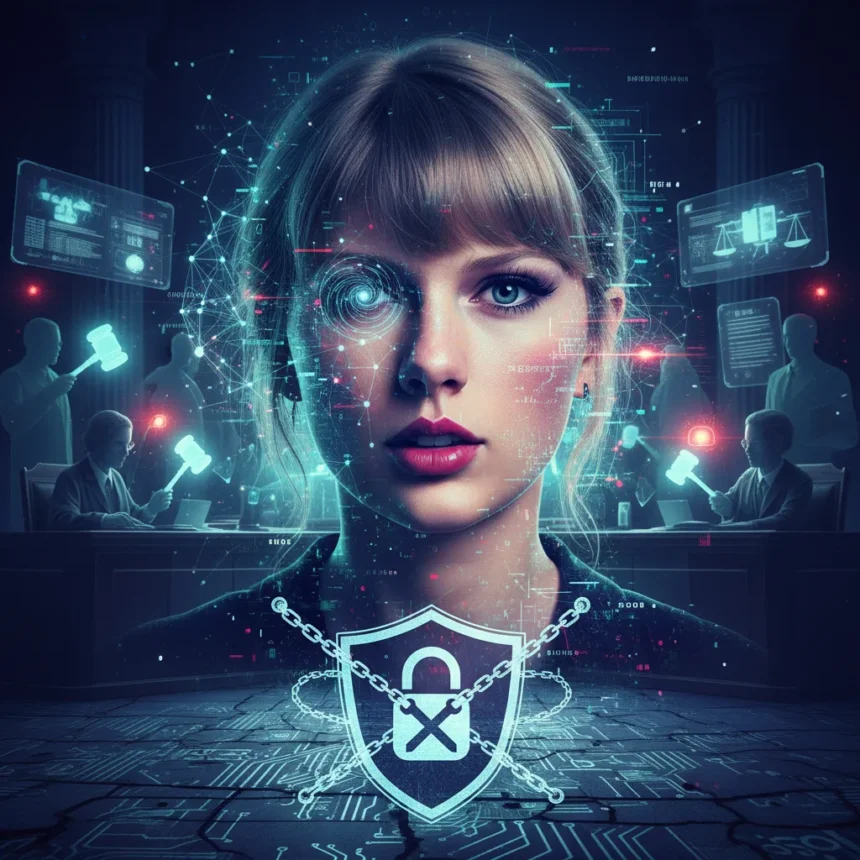
AI deepfakes represent one of the most pressing challenges facing digital platforms and celebrities today. The technology, which uses artificial intelligence to create convincing fake videos and images of real people, has moved from novelty to genuine threat. Recent cases involving high-profile targets like Taylor Swift demonstrate how deepfakes are being weaponized for financial fraud, impersonation, and reputational harm.
Key Takeaways
- AI deepfakes are being used in scams targeting celebrities and everyday users on social media platforms.
- Legal action is becoming a critical response to deepfake-based fraud and harassment.
- Platforms face mounting pressure to detect and remove deepfake content more effectively.
- The technology continues to improve faster than detection methods can keep pace.
- International regulation of deepfakes remains fragmented and incomplete.
How AI Deepfakes Are Being Used in Scams
Deepfake scams operate by creating convincing fake videos or images that impersonate trusted figures, then using those fakes to deceive audiences into clicking malicious links, sending money, or sharing sensitive information. The Taylor Swift TikTok scam exemplifies this pattern: fraudsters created fake videos of the artist endorsing cryptocurrency schemes or investment platforms, then distributed them across social media to reach millions of potential victims. The scams work because deepfakes exploit human trust in visual evidence and the speed at which content spreads on social platforms.
What makes these scams particularly dangerous is their scalability. A single deepfake can be cloned, reposted, and shared across multiple platforms within hours, reaching audiences far larger than traditional fraud attempts. Victims often do not realize they are interacting with fake content until they have already lost money or compromised their personal data. The psychological impact extends beyond financial loss—victims report feeling violated by the misuse of a celebrity’s likeness without consent.
Legal Responses and Celebrity Action
Celebrities targeted by deepfake scams are increasingly pursuing legal remedies. Taylor Swift’s case highlights the emerging legal strategy: holding platforms accountable for hosting deepfake content, pursuing the creators directly through criminal fraud charges, and demanding faster removal mechanisms. The challenge lies in the fragmented legal landscape—deepfake laws vary dramatically by jurisdiction, and international enforcement remains weak.



Some jurisdictions have begun criminalizing deepfake creation and distribution, particularly when used for fraud or non-consensual intimate imagery. However, many platforms operate globally while laws remain national, creating enforcement gaps. Swift’s legal action signals a broader trend: celebrities and their legal teams are no longer accepting platform excuses about the difficulty of detection. Instead, they are demanding proactive investment in detection technology and clearer removal timelines.
The Detection Challenge
Platforms struggle to detect AI deepfakes because the technology improves faster than detection methods. Traditional content moderation relies on human reviewers flagging suspicious content, but deepfakes often fool human eyes. Automated detection systems exist but are not yet reliable enough to catch all fakes without generating excessive false positives that would require human review anyway.



This creates a cat-and-mouse game: researchers develop detection tools, deepfake creators refine their techniques to evade detection, and platforms fall behind. The computational cost of scanning billions of videos daily for deepfake indicators is staggering. Some platforms have begun requiring verification for accounts claiming to represent public figures, but this is a reactive measure that does not prevent fakes from spreading in the first place.
Why Platform Accountability Matters
The Taylor Swift deepfake case underscores why platform accountability is essential. Social media companies profit from engagement and traffic, which means controversial or viral content—including deepfakes—generates revenue through advertising. Without legal or financial consequences, platforms lack strong incentives to invest heavily in detection or removal. The case demonstrates that celebrities and their legal teams are now willing to force accountability through litigation.
Platforms like TikTok, Instagram, and YouTube have published community guidelines prohibiting deepfakes used for fraud or non-consensual purposes, but enforcement remains inconsistent. Removal timelines vary from hours to days, during which a single deepfake can reach millions. The legal pressure from high-profile targets may finally push platforms to allocate serious resources to this problem.
What Happens Next?
The deepfake landscape will likely shift in three directions. First, legal frameworks will tighten—expect more jurisdictions to criminalize deepfake creation and distribution, particularly for fraud. Second, platform investment in detection will accelerate, driven by both litigation risk and regulatory pressure. Third, authentication technologies like digital watermarks and blockchain-based verification may become standard tools for confirming genuine content from public figures.


However, detection and legal action alone cannot solve the problem. Education matters too. Users need to develop healthy skepticism about viral videos, especially those making extraordinary claims. The ease with which deepfakes can be created means the technology will not disappear—instead, society must adapt by treating video evidence as less trustworthy than it once was.
Are deepfakes illegal?
Deepfakes used for fraud, impersonation, or non-consensual intimate imagery are illegal in many jurisdictions, but laws vary significantly by country and region. The United States has no comprehensive federal deepfake law, though individual states have begun criminalizing specific uses. The European Union is moving toward stricter regulation through the Digital Services Act. However, creating and sharing deepfakes for satire, parody, or artistic purposes remains a gray area legally.
How can I tell if a video is a deepfake?
Visual clues include unnatural eye movements, inconsistent lighting, audio that does not quite match lip movements, and glitchy artifacts around the face or edges. However, as deepfake technology improves, these tells become harder to spot. The safest approach is skepticism: if a video makes an extraordinary claim about a celebrity or public figure, assume it is fake until verified by multiple trusted news sources. Check the original account posting it and look for official statements from the person being impersonated.
What should I do if I encounter a deepfake scam?
Report the content immediately to the platform hosting it, providing a clear description of why you believe it is a deepfake. Do not click links or engage with the scam content. If you have lost money or personal information, contact local law enforcement and file a report with the FBI’s Internet Crime Complaint Center (in the US) or your country’s equivalent. Share your experience with others to prevent further victims.
The Taylor Swift deepfake scam is not an isolated incident—it is a warning. AI deepfakes are becoming easier to create and harder to detect, while their uses range from financial fraud to political manipulation. Legal action by celebrities matters, but it is only part of the solution. Platforms must invest in detection, users must develop skepticism, and governments must establish clear legal frameworks. Without urgent action on all fronts, deepfakes will become an even more destabilizing force in digital society.
Edited by the All Things Geek team.
Source: Creativebloq




