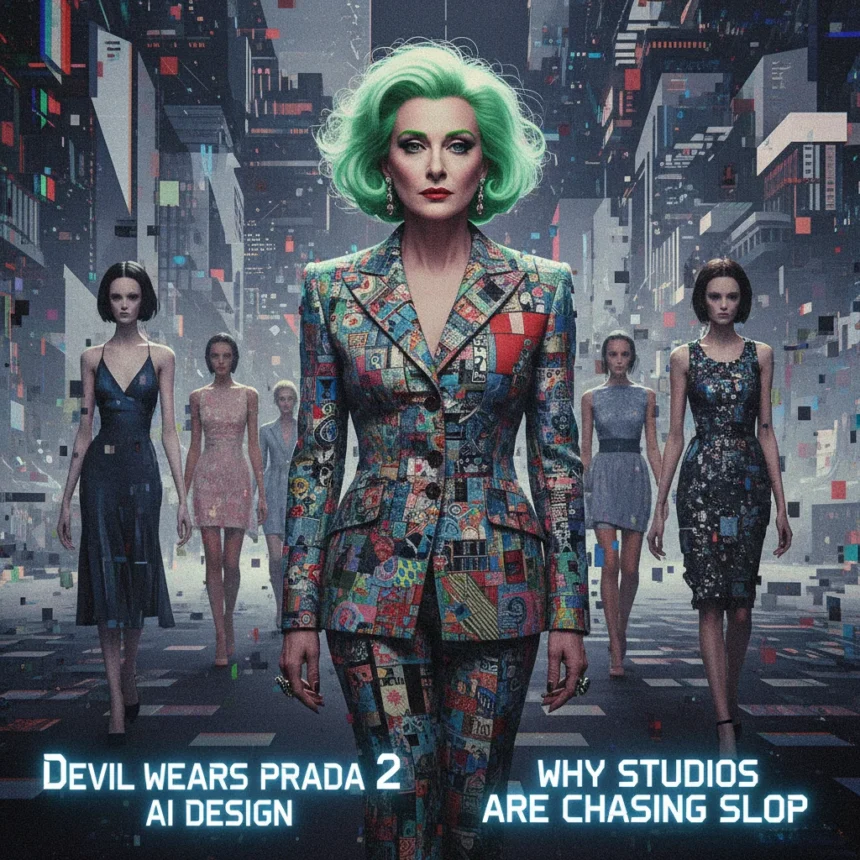
The Devil Wears Prada 2 production team recently made headlines for deploying AI-generated creative work in ways that exposed a larger industry problem: when studios prioritize speed and cost savings over genuine artistic vision. The film’s approach to design and branding collaboration reveals how AI-generated creative work has quietly become a shortcut mechanism in entertainment production, one that audiences and creative professionals are increasingly scrutinizing.
Key Takeaways
- Devil Wears Prada 2 used AI-generated creative work for design elements, raising questions about production shortcuts.
- The film’s branding strategy contrasts sharply with other recent movie collaborations that backfired spectacularly.
- AI-generated creative work in entertainment production prioritizes efficiency over artistic authenticity.
- Studios face mounting pressure from audiences who expect genuine creative partnerships, not algorithmic filler.
- The broader trend of AI adoption in film design signals a shift toward cost-cutting that may undermine brand trust.
How AI-Generated Creative Work Became Standard Practice
AI-generated creative work has infiltrated film production at a pace that few industry observers predicted. What started as a niche experiment has become a default solution for time-constrained projects. The Devil Wears Prada 2 production team’s decision to deploy AI tools for design elements was not anomalous—it was pragmatic, from a studio accounting perspective. When a blockbuster film faces tight schedules and competing creative demands, AI-generated creative work offers the illusion of productivity without the overhead of hiring additional designers or collaborators.
The appeal is obvious to producers: AI-generated creative work eliminates the negotiation, revision cycles, and unpredictability that come with human collaboration. A designer might push back on a concept. An AI model simply generates variations until one fits the brief. But this efficiency comes at a cost that extends beyond the production schedule. Audiences have grown accustomed to recognizing AI-generated creative work—the generic smoothness, the absence of idiosyncratic detail, the uncanny valley of design that looks professional but feels hollow.
Why Devil Wears Prada 2’s Approach Matters in Context
The Devil Wears Prada 2 situation gains significance when compared to the catastrophic brand failures that preceded it. Recent movie tie-in campaigns have stumbled badly. Wicked’s merchandise mishaps and branding oversights created viral moments of unintended comedy, while similar collaborations across the industry have devolved into embarrassing PR incidents. These failures occurred despite human oversight, yet studios have responded not by investing more heavily in creative direction, but by automating the process further.



This is where AI-generated creative work becomes insidious. Rather than treating high-profile brand partnerships as opportunities for genuine creative collaboration, studios increasingly view them as checkbox exercises. AI-generated creative work allows a production to produce dozens of design variations, select the least offensive option, and move on. The result is content that is technically competent but creatively inert—the opposite of what a fashion-centric film like Devil Wears Prada 2 should aspire to. Fashion demands taste, risk, and personality. AI-generated creative work, by definition, averages these qualities out of existence.
The Broader Industry Shift Toward Automation
The Devil Wears Prada 2 case exemplifies a troubling pattern: as production budgets tighten and release schedules compress, AI-generated creative work becomes the path of least resistance. Studios are not malicious in adopting these tools—they are responding to economic pressure. But the cumulative effect is a flattening of creative ambition across the entire entertainment ecosystem. When AI-generated creative work is acceptable for a prestige film like Devil Wears Prada 2, it becomes acceptable everywhere.



The irony is sharp: a film about the fashion industry, about taste and aesthetic judgment, outsourced aesthetic decisions to an algorithm. This contradiction is not lost on audiences. Social media conversations around the Devil Wears Prada 2 production have centered on the disconnect between the film’s thematic concerns and its creative process. Audiences sense when a brand partnership or design element has been assembled by committee and algorithm rather than crafted by someone with a point of view.
What Audiences Actually Want From Movie Tie-Ins
The backlash against AI-generated creative work in entertainment reveals what audiences genuinely value: specificity, risk, and evidence of human judgment. When a film like Devil Wears Prada 2 collaborates with a brand, viewers expect that collaboration to reflect the film’s aesthetic. They expect design choices that could not have been made by averaging thousands of training examples. They expect the kind of creative friction that produces something distinctive.
This expectation is not nostalgia or Luddism. It is a rational response to the fact that AI-generated creative work is, by construction, mediocre. It cannot be bold because boldness is statistically rare. It cannot be surprising because surprise requires deviation from the training data. When studios deploy AI-generated creative work for high-profile projects, they are essentially admitting that they do not believe the project warrants genuine creative investment. The message to audiences is clear: we are cutting corners.
Is AI-generated creative work acceptable for film production?
AI-generated creative work can handle routine design tasks—background elements, texture generation, preliminary mockups. But for visible, brand-facing creative decisions, AI-generated creative work is a liability. It signals cost-cutting and creative indifference. The Devil Wears Prada 2 experience demonstrates that audiences notice and resent the substitution of algorithm for artistry, especially in a film where aesthetic judgment is central to the narrative.


Why are studios increasingly using AI-generated creative work despite backlash?
Economic pressure and schedule constraints drive adoption. AI-generated creative work reduces labor costs and accelerates production timelines. Studios gamble that efficiency gains outweigh reputational risk—a calculation that recent high-profile failures suggest is wrong. But as long as quarterly earnings matter more than critical reception, the trend toward AI-generated creative work will persist.
Can AI-generated creative work ever match human design for major film projects?
Not in any meaningful sense. AI-generated creative work excels at producing competent variations within established parameters. It fails at originality, risk, and the kind of aesthetic conviction that defines memorable design. A human designer brings judgment informed by taste, cultural knowledge, and creative intention. AI-generated creative work produces statistical averages. For a film about fashion and taste, the difference is not academic—it is the entire point.
The Devil Wears Prada 2 situation is a canary in the coal mine. As AI-generated creative work becomes cheaper and faster, studios will be tempted to deploy it more broadly. But audiences are watching. They recognize the difference between a collaboration born of creative ambition and one born of algorithmic convenience. The film industry’s choice is stark: invest in genuine creative partnerships or accept that the work will feel hollow. There is no algorithmic shortcut to authenticity.
Edited by the All Things Geek team.
Source: Creativebloq