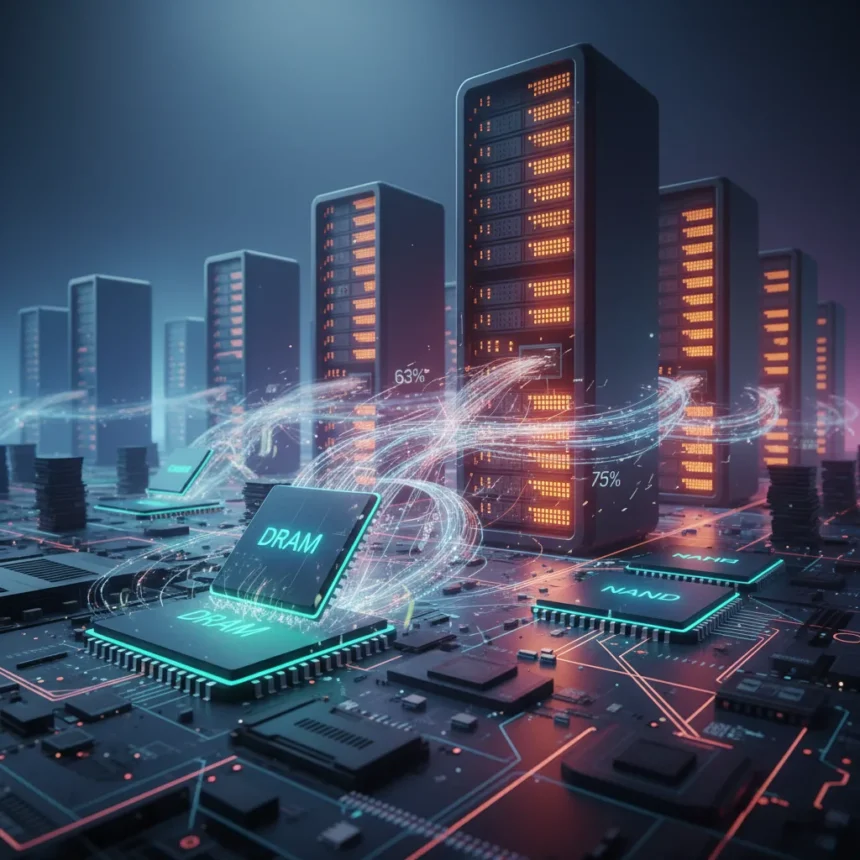
DRAM prices predicted to jump 63% quarter-over-quarter in Q2 2026, with NAND Flash climbing even steeper at 70-75%, according to TrendForce forecasts released in February 2026. These projections follow a brutal Q1, where conventional DRAM contract prices were revised sharply upward to a 90-95% increase—nearly double the prior estimate of 55-60%. The culprit is relentless: artificial intelligence servers and cloud data centers are consuming memory faster than manufacturers can produce it, giving suppliers unprecedented pricing power while the rest of the market starves.
Key Takeaways
- DRAM contract prices expected to rise 58-63% quarter-over-quarter in Q2 2026, following a 90-95% jump in Q1.
- NAND Flash prices projected to increase 70-75% in Q2, up from revised Q1 forecast of 55-60%.
- AI server and data center demand causing global memory supply-demand imbalance, boosting supplier pricing power.
- Winbond expects DRAM prices to jump nearly 4x by June 2026, with capacity fully booked through 2027.
- Manufacturers reallocating NAND production lines to DRAM for higher profit margins despite NAND order volumes exceeding capacity.
Why AI Servers Are Crushing Memory Supply
Cloud service providers and server manufacturers face acute DRAM shortages that show no sign of easing. Winbond President Pei-Ming Chen put it bluntly: the DDR4 supply gap is so large that it’s hard to see how it can be filled. The company expects DRAM prices to jump nearly 4x by June 2026, with its entire capacity booked through 2027. This is not a temporary blip. Bit shipments are projected to grow 30-40% year-over-year in 2026, while wafer starts increase just 10% annually—a structural mismatch that favors suppliers over buyers.
Manufacturers are making a cold calculation: AI server DRAM and enterprise SSDs command premium margins. Consumer PC DRAM and mobile memory do not. So they are reallocating NAND production lines to DRAM, despite NAND order volumes exceeding available capacity. PC DRAM prices alone are expected to at least double quarter-over-quarter in Q1 2026, a shock that will ripple through every consumer system builder and laptop manufacturer globally.
The Spot Market Betrayal: Prices Already Higher Than Contracts
Typically, contract prices lead spot prices upward. Not this time. As of March 2026, spot prices for conventional DRAM already exceed contract prices, signaling that buyers desperate for immediate supply are willing to overpay. DDR4 1Gx8 3200MT/s spot prices hit US$33.88 in early March, up 1.44% week-over-week. Samsung briefly paused DDR4 consumer chip price hikes in March, temporarily stalling spot increases before the Q2 contract rally accelerates.


The spot market is cautious. Ahead of Q2 2026 contract negotiations, buyers are holding back, knowing that higher contract prices will eventually drag spot prices even higher. This creates a tense standoff: accept brutal Q2 contracts now, or wait and pay even more on the spot market. Neither option favors the buyer.
NAND Flash Faces an Even Worse Shortage
If DRAM supply is tight, NAND Flash supply is catastrophic. SLC NAND faces an even larger shortage, with price increases outpacing DRAM entirely. Enterprise SSD orders are surging due to strong North American cloud service provider demand, with prices projected to jump 53-58% quarter-over-quarter in Q1 2026. The 512Gb TLC NAND wafer spot price climbed to US$23.00 in March 2026, reflecting the structural shortage.



Manufacturers are caught in a bind: NAND order volumes exceed production capacity, yet the profit margins on server-grade DRAM are so compelling that suppliers are shifting NAND production lines to DRAM anyway. This is a bet that data center demand will outlast consumer demand—and so far, that bet is paying off. PC manufacturers and mobile chipmakers are the collateral damage.
What This Means for PC and Mobile Buyers
If you were planning to upgrade your PC or buy a new laptop in Q2 2026, prices will hurt. PC DRAM is expected to at least double in cost from Q4 2025 levels. Manufacturers will either absorb these costs—cutting margins to unsustainable levels—or pass them to consumers. Most will pass them. Expect system prices to jump 15-25% across the board, even as processors and GPUs remain stable in cost.
Mobile devices will face similar pressure. Smartphone manufacturers depend on affordable commodity DRAM, and they have less pricing power than PC OEMs. Some may reduce DRAM allocations, cutting into performance or forcing design compromises. Others may simply accept thinner margins and hope for relief in 2027.
When Does This End?
Not soon. Winbond’s capacity is booked through 2027, and other suppliers are likely in similar positions. TrendForce’s Q2 forecast assumes continued AI server dominance and tight supply. The structural shift toward AI workloads is not temporary—it is the new normal. Until AI server demand moderates or manufacturers dramatically expand capacity, memory prices will remain elevated. Buyers should budget accordingly and avoid assuming Q1 2025 pricing will return anytime soon.



Will DRAM prices drop after Q2 2026?
No immediate relief is expected. Capacity is booked through 2027, and AI server demand continues to outpace supply. Prices may stabilize rather than fall if manufacturers can expand wafer starts, but a return to 2024-2025 levels is unlikely before 2027 at the earliest.
Why are manufacturers prioritizing AI servers over consumer PCs?
Server-grade DRAM and enterprise SSDs command 30-50% higher margins than consumer memory. Manufacturers reallocate production lines to high-margin AI server applications because the profit per unit is substantially higher, even if overall unit volumes are lower.
Is the spot market cheaper than contract prices right now?
No—the opposite. Spot prices for DRAM currently exceed contract prices as of March 2026, signaling desperate buyer demand for immediate supply. This is unusual and reflects the severity of the shortage.
The memory market in 2026 is defined by scarcity and power imbalance. Suppliers hold the cards. AI servers get first access to inventory and favorable pricing. Everyone else waits, pays more, or goes without. For PC and mobile manufacturers, the next 12-18 months will test margins, supply chain agility, and willingness to raise consumer prices. The era of cheap commodity memory is over.
Edited by the All Things Geek team.
Source: Tom's Hardware