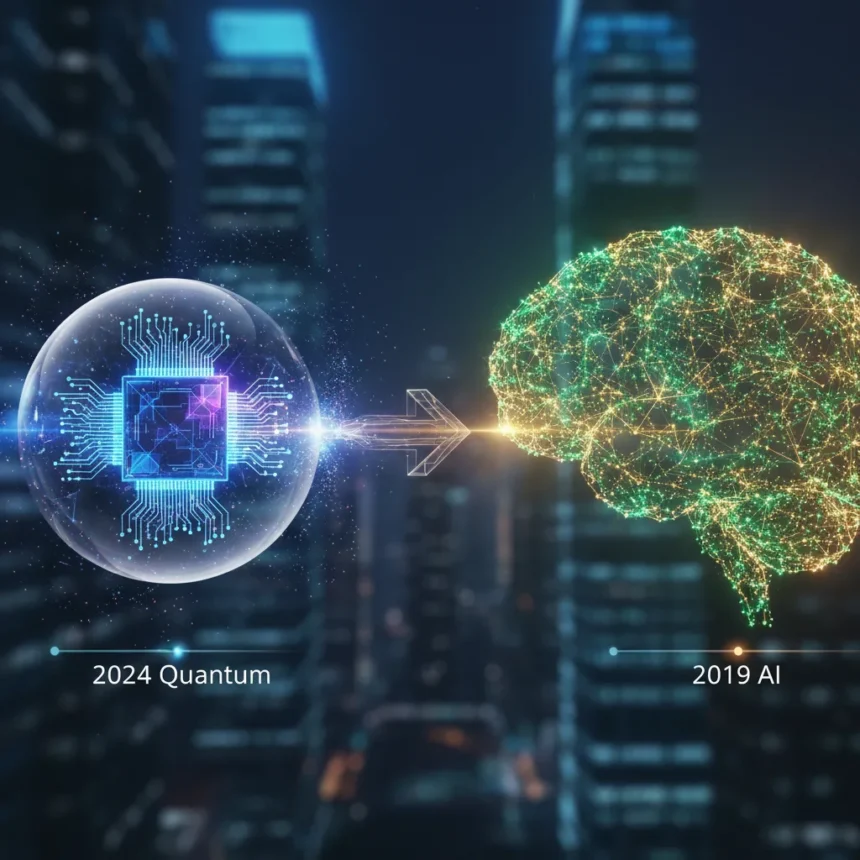
Quantum computing adoption timeline may follow the same pattern as artificial intelligence, according to Alphabet CEO Sundar Pichai. In a recent statement, Pichai compared the current state of quantum computing to where AI stood five years ago, suggesting the technology is still in its nascent stages despite growing industry attention. This comparison offers insight into how long quantum computing may take to reshape industries the way AI is doing now.
Key Takeaways
- Sundar Pichai argues quantum computing is at an earlier development stage than AI currently is
- The comparison suggests quantum may follow AI’s trajectory toward mainstream adoption
- Quantum computing is positioned as the next major technology frontier after AI
- Current quantum development mirrors AI’s state from approximately 2019-2020
- Industry observers view quantum as a long-term investment rather than an immediate disruption
Understanding Quantum Computing’s Current Position
Quantum computing adoption timeline refers to the projected pace at which quantum technologies will move from experimental laboratories into practical, widespread business applications. Pichai’s framing positions quantum computing not as an imminent revolution, but as an emerging field that has only begun its journey toward transformative impact. The comparison to AI’s earlier stage suggests quantum computing may require years of development before delivering the kind of industry-wide disruption that AI is currently enabling.
This positioning matters because it sets expectations for investors, researchers, and technology leaders. If quantum computing truly mirrors AI’s development arc, the technology likely remains in what could be called the research-and-proof-of-concept phase. AI five years ago was demonstrating impressive capabilities in narrow domains but had not yet achieved the level of integration and adoption seen across consumer and enterprise products today. Quantum computing appears to occupy a similar position now.
Why the AI Comparison Matters for Tech Strategy
Pichai’s statement reflects a broader industry sentiment that quantum computing represents the next frontier after AI has captured mainstream attention. The comparison serves as both a reality check and a roadmap. It acknowledges that quantum computing is genuinely important—important enough that a CEO of Alphabet, one of the world’s largest technology companies, is publicly discussing it—while simultaneously tempering expectations about immediate deployment and impact.



The implication is clear: organizations should begin investing in quantum computing research and infrastructure now, but should not expect quantum-driven transformations to occur overnight. This mirrors the advice technologists gave about AI in the late 2010s. Companies that invested early in AI capabilities built competitive advantages that became apparent only as the technology matured. The same logic applies to quantum computing, making Pichai’s comparison a strategic signal to the industry.
Quantum Computing vs. AI: Different Timelines, Similar Trajectories
The gap between where AI was five years ago and where it is today illustrates the acceleration curve that quantum computing may follow. AI five years ago was impressive but largely confined to research papers, specialized applications, and early-stage product integrations. Today, AI is reshaping how companies operate, how people work, and how technology is built. Quantum computing has not yet reached the point where AI was in that earlier era.



However, the comparison also highlights a crucial difference: quantum computing faces different technical and practical barriers than AI did. While AI’s path to adoption involved refining algorithms and scaling computational resources that already existed, quantum computing must first solve fundamental physics problems and build hardware that remains largely experimental. This suggests the timeline from quantum computing adoption timeline’s current state to widespread practical use may be longer than AI’s journey, even if the general trajectory is similar.
What This Means for the Next Five Years
If Pichai’s comparison holds, the next five years will likely see quantum computing move from pure research toward early commercial applications in specific, high-value domains. During this period, expect to see more announcements from tech companies about quantum breakthroughs, increased investment in quantum startups, and growing competition to develop quantum hardware and software that actually works at scale. The technology will remain expensive, specialized, and limited in scope—much as AI was in the early 2020s.
The practical applications will likely concentrate in areas where quantum computing’s unique strengths matter most: drug discovery, materials science, optimization problems, and cryptography. These are domains where classical computers hit hard limits and quantum approaches could theoretically offer genuine advantages. But these applications will remain niche for years, accessible only to well-funded research institutions and technology giants.
Is quantum computing ready for mainstream adoption?
No. Quantum computing remains in the experimental and early research phase, with limited practical applications outside specialized domains. According to Pichai’s assessment, the technology is approximately where AI was five years ago, meaning widespread mainstream adoption is likely still years away.


How does quantum computing compare to classical computing?
Quantum computing uses quantum mechanics principles to process information in fundamentally different ways than classical computers. While classical computers excel at sequential tasks and general-purpose computing, quantum computers could theoretically solve specific complex problems—like certain optimization and simulation tasks—far faster. However, quantum computers are not faster at everything; they are specialized tools for specialized problems.
Why is Sundar Pichai discussing quantum computing now?
Pichai’s comments reflect the technology industry’s growing recognition that quantum computing will eventually become strategically important, similar to how AI has become essential to modern tech companies. By publicly comparing quantum computing adoption timeline to AI’s earlier development, Pichai signals that Alphabet and the broader industry should treat quantum as a long-term priority worth sustained investment.
The quantum computing adoption timeline remains uncertain, but Pichai’s comparison offers a useful frame for understanding where the technology stands. Quantum computing is not the next big thing arriving this year or next—it is the technology after AI, the one that will reshape industries once it matures. For now, it remains a frontier worth watching and investing in, but not one ready to transform how most organizations operate.
Edited by the All Things Geek team.
Source: TechRadar