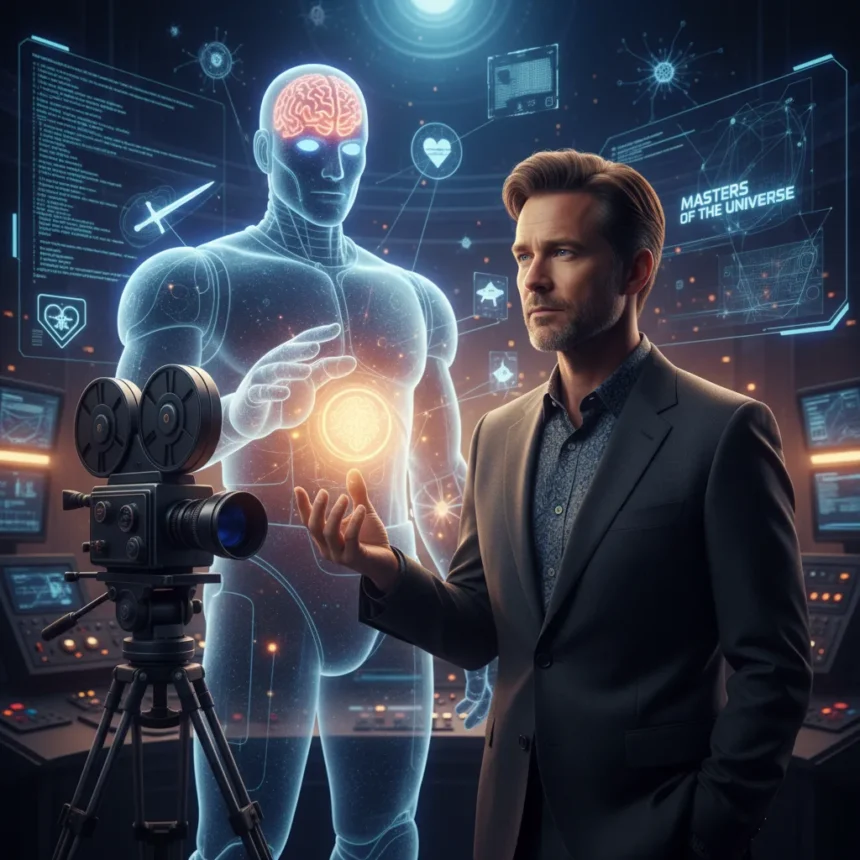
Travis Knight, director of Amazon’s Masters of the Universe, believes AI in filmmaking is not a technology worth fearing—but he’s equally clear that it will never replace the human creativity that gives movies their spirit and soul. His stance arrives at a moment when the film industry remains deeply divided over how artificial intelligence should fit into the creative process, and Knight’s measured perspective offers a middle ground that acknowledges both the tool’s potential and its limitations.
Key Takeaways
- Travis Knight says AI in filmmaking is not a technology we should fear
- Knight argues AI will never replace the human creators who give films their spirit and soul
- Masters of the Universe was made without AI, despite the broader industry debate
- Knight supports AI when applied correctly within the film industry
- The director’s view reflects a nuanced position between AI skeptics and enthusiasts
AI in filmmaking doesn’t have to be a threat, Knight argues
Knight’s position on AI in filmmaking rejects the binary thinking that has dominated much of the debate. He doesn’t dismiss the technology outright, nor does he suggest it should replace human filmmakers. Instead, he frames AI as a tool that, when applied correctly, can coexist with traditional creative work. This pragmatic stance contrasts sharply with industry voices that either treat AI as an existential threat to creative jobs or celebrate it as a panacea for production challenges.
The timing of Knight’s comments matters. As studios experiment with AI-assisted workflows—from script analysis to visual effects—filmmakers and crews worry about job displacement and creative dilution. Knight’s assertion that AI in filmmaking should be guided by respect for human contribution suggests a framework where the technology serves artists rather than replaces them. What that looks like in practice remains the unresolved question across Hollywood.
Masters of the Universe: A film made without AI
Masters of the Universe itself was produced without relying on AI tools. This detail underscores that Knight’s openness to the technology doesn’t stem from using it on his own project. Instead, his perspective appears rooted in a broader industry conversation—an acknowledgment that AI in filmmaking will become increasingly prevalent, and that filmmakers need to think carefully about how to integrate it without compromising the creative vision that audiences ultimately respond to.



The film’s production without AI also serves as a counterpoint to the hype surrounding generative tools in entertainment. It demonstrates that traditional filmmaking methods still produce commercially viable, studio-backed projects. Yet Knight’s willingness to discuss AI in filmmaking on favorable terms—provided it’s applied correctly—suggests he sees the technology as inevitable rather than optional for future productions.
Where AI in filmmaking fits: Knight’s framework
Knight’s view hinges on a critical distinction: AI in filmmaking can be a tool that enhances human creativity, but it cannot be the source of the creative vision itself. The people involved in filmmaking—directors, cinematographers, actors, composers, editors—are what give a movie its emotional resonance, its narrative coherence, its ability to move an audience. AI might accelerate certain technical processes or generate options for human creators to choose from, but it cannot replace the judgment, intuition, and artistic intent that defines filmmaking at its best.



This framework mirrors how other industries have integrated powerful technologies without eliminating the human element. Photographers don’t become obsolete when cameras gain computational features; they become more capable. The question for AI in filmmaking is whether the industry will use it to amplify human creativity or to reduce costs by cutting creative talent. Knight’s comments suggest he believes the former is possible—but only if the industry commits to it.
Why the spirit and soul of a film matter more than efficiency
Knight’s emphasis on spirit and soul—intangible qualities that audiences recognize but filmmakers struggle to define—points to why AI in filmmaking remains contentious. Efficiency and cost savings are measurable. Emotional impact is not. A studio might use AI to generate a thousand script variations or automate visual effects, but none of that matters if the final film lacks the coherence and emotional truth that comes from a director’s vision executed by skilled humans.
The concern among filmmakers is that pressure to use AI in filmmaking will prioritize the measurable gains (faster turnaround, lower budgets) over the unmeasurable ones (authenticity, emotional resonance, creative risk-taking). Knight’s insistence that AI will never replace the people who give films their spirit and soul is, in effect, a plea for the industry to remember what matters most when the technology becomes cheaper and more capable.
What does correct application of AI in filmmaking look like?
Knight mentions that AI in filmmaking should be applied correctly, but he doesn’t elaborate on what that means in concrete terms. From his comments, we can infer a few principles: AI should serve human creativity, not supplant it. It should be transparent about its use so audiences and crews understand what role it played. And it should preserve the jobs and creative input of the people who traditionally make films. Beyond those broad strokes, the specifics remain unclear—and that ambiguity reflects the industry’s broader uncertainty about where the line between tool and replacement should be drawn.



How does Knight’s view compare to other filmmakers’ positions on AI?
Knight’s stance occupies middle ground in a polarized conversation. Some filmmakers and unions have called for strict limitations on AI in filmmaking, fearing wholesale job displacement and the erosion of creative standards. Others have embraced the technology enthusiastically, arguing it democratizes filmmaking and accelerates innovation. Knight’s view—that AI in filmmaking is neither something to fear nor a replacement for human creativity—attempts to bridge that divide. Whether the industry can actually implement such a balanced approach remains to be seen.
Does Masters of the Universe use any AI tools?
No. Masters of the Universe was made without AI. The film represents traditional filmmaking practices, which makes Knight’s openness to AI in filmmaking all the more noteworthy—he’s not defending a choice he made on his own project, but rather advocating for a thoughtful industry approach to a technology he didn’t use.
Will AI replace directors and filmmakers?
Knight’s position is clear: AI will never replace the people who give films their spirit and soul. While AI in filmmaking may automate certain technical tasks or assist in pre-production work, the creative decisions that define a film—its emotional tone, narrative structure, visual language—require human judgment and artistic intent. That said, the economic pressures to use AI to reduce costs could still displace workers if studios prioritize efficiency over creativity.
What is Travis Knight known for besides Masters of the Universe?
While the research brief focuses specifically on Knight’s comments about AI in filmmaking in connection with Masters of the Universe, his broader filmmaking career extends beyond this project. His perspective on AI in filmmaking carries weight because he approaches it as an experienced director with a track record, not as a newcomer to the industry.
Travis Knight’s measured stance on AI in filmmaking—neither dismissive nor uncritical—offers the industry a useful framework as it navigates this transition. The real test will come when studios face pressure to cut costs and accelerate schedules. Will they use AI in filmmaking as Knight envisions, as a tool that serves human creativity? Or will they use it to replace the very people who give films their spirit and soul? Knight’s comments remind us what’s at stake in that choice.
Where to Buy
Amazon Prime Video – Free Trial | Amazon Prime – Monthly
Edited by the All Things Geek team.
Source: TechRadar