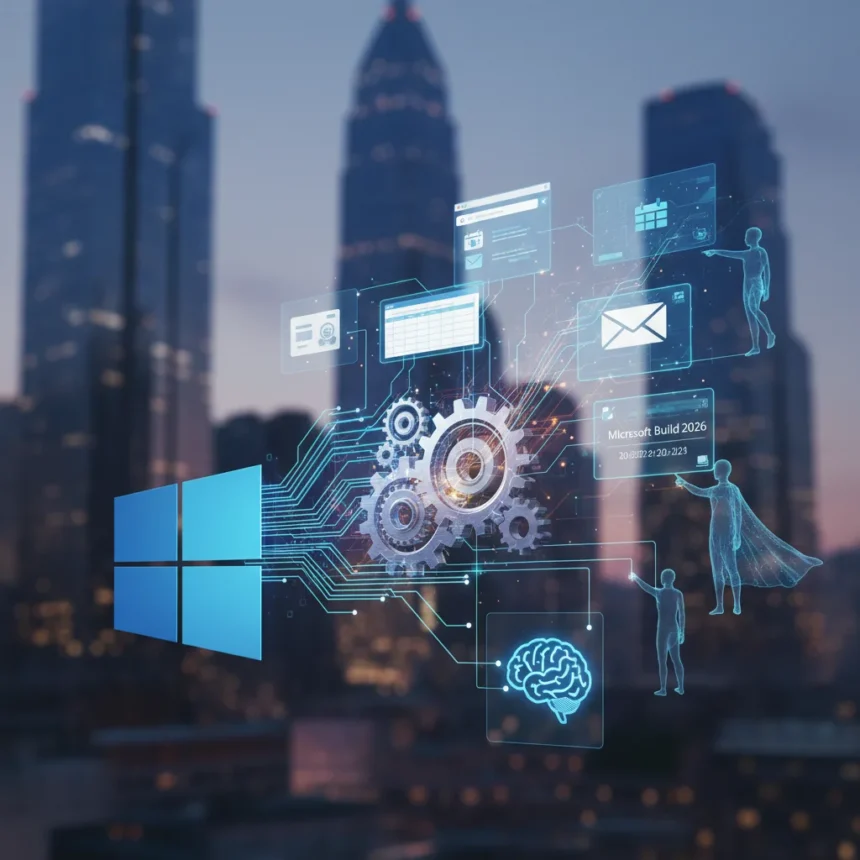
Agentic AI Windows 11 is not a product name yet—it is the operating system direction Microsoft is signaling at Build 2026, and it represents a fundamental shift in how Windows will work. Rather than Copilot sitting in a sidebar answering questions, Microsoft is building toward AI systems embedded into Windows that can resolve scheduling conflicts, collaborate with other agents, and handle complex tasks on your behalf. This is not incremental. This is a reframing of what an operating system does.
Key Takeaways
- Microsoft Build 2026 will showcase agentic AI as the next phase of Windows 11 development
- Agentic systems take proactive actions on users’ behalf rather than only responding to prompts
- Windows AI Foundry enables developers to run AI models locally on NPU, GPU, or CPU hardware
- On-device AI execution addresses privacy concerns for sensitive work that users prefer not to send to cloud servers
- Microsoft is pulling back on simply stuffing Windows 11 with AI, focusing instead on performance and reliability
What Agentic AI Windows 11 Actually Means
Agentic AI is fundamentally different from the chatbot model most people know. Instead of waiting for you to ask a question, agentic systems proactively identify problems and solve them. In a Windows 11 context, this means AI that can automatically reschedule conflicting calendar entries, coordinate with other AI agents to complete workflows, and handle routine tasks without human intervention. The distinction matters because it moves AI from assistant to agent—something that works independently on your behalf rather than something you direct.
Microsoft Foundry, the evolved version of Azure AI, is positioned as the platform underpinning this shift. Build 2026 sessions are expected to focus on agent orchestration and debugging, signaling that developers will need new tools to manage systems where multiple AI agents work together. This is not just a Copilot upgrade. It is a rearchitecture of how Windows handles automation.
On-Device AI Execution Changes the Privacy Equation
One of the most significant aspects of agentic AI Windows 11 is the emphasis on running AI models directly on your PC rather than sending everything to Microsoft’s servers. Windows AI Foundry allows developers to build applications that execute AI models on-device using the NPU, GPU, or CPU—whatever hardware your PC has available. For users handling sensitive information, this is a meaningful distinction. Financial data, medical records, legal documents—these stay local rather than traversing cloud infrastructure.



The on-device approach builds on Copilot+ PCs but extends the concept more broadly. Not every PC needs an NPU to run local AI; developers can target GPU or CPU execution as fallbacks. This democratizes on-device inference across a wider range of hardware, which is crucial because most Windows PCs in the wild do not have dedicated neural processing units yet. The implication is that agentic AI Windows 11 will not require new hardware purchases—it will work on machines already in use.
Developer Tools and What Comes Next
Build 2026 sessions are expected to cover on-device inference, WinUI 3 with agents, and WSL improvements. These are not flashy consumer features. They are the scaffolding developers need to build useful applications and features for regular users. GitHub Copilot is expected to become more capable of acting on developers’ behalf, not just assisting them. This mirrors the broader agentic shift—even the tools developers use are becoming agents themselves.



The timing reflects Microsoft’s attempt to restore trust in Windows 11 after criticism over performance and reliability issues. Rather than packing more AI into the operating system, Microsoft has signaled a focus on performance, reliability, and craft. The first round of improvements targeted quicker app launches, reduced visual flicker, smoother navigation, and more reliable file operations. Agentic AI Windows 11 sits atop this foundation—better OS performance enabling smarter, more capable agents running on top.
How Agentic AI Windows 11 Compares to Current Copilot Integration
Today’s Copilot in Windows 11 is largely reactive. You open the Copilot sidebar, ask a question, get an answer. Agentic AI Windows 11 inverts this model. The system identifies opportunities to help without being prompted. It coordinates across applications and services. It learns from patterns in your work and anticipates needs. This is not a minor feature addition—it is a different paradigm for how an operating system relates to its user.
The shift also sidesteps the criticism Microsoft faced over aggressive Copilot integration. By focusing on agentic systems that are genuinely useful rather than ubiquitous, Microsoft can avoid the perception of bloat while delivering real productivity value. An agent that actually saves you time is different from a chatbot that clutters the interface.
Is Agentic AI Windows 11 Ready Now?
No. Build 2026 is the announcement event for this direction, not the release date. The features discussed are anticipated sessions and future possibilities, not completed products shipping today. Microsoft has not committed to specific release dates for consumer availability of agentic systems in Windows 11. What Build 2026 signals is intent and architectural direction—developers should expect to build toward these capabilities, and users should expect Windows to evolve in this direction over the coming year or more.



Will Agentic AI Windows 11 Require New Hardware?
Not necessarily. While NPUs offer performance advantages for on-device AI inference, Windows AI Foundry supports GPU and CPU execution as well. This means developers can build agentic applications that run on existing hardware, though performance may vary depending on what accelerators are available.
How Does This Compare to macOS or Linux Approaches?
Microsoft Build is not positioned as flashy as Apple’s WWDC or Google I/O. The agentic AI Windows 11 direction is developer-focused and infrastructure-oriented rather than consumer-facing spectacle. This reflects Microsoft’s strength in enterprise and developer tooling, where depth matters more than marketing theater. The on-device execution model aligns with broader industry trends toward local AI, but Windows’ scale and installed base give it a unique position to drive adoption of agentic patterns across billions of devices.
The future of Windows 11 is not about more AI—it is about smarter AI that actually works on your behalf. Agentic AI Windows 11 represents Microsoft’s bet that the next evolution of computing is systems that anticipate and act, not systems that answer and wait. Build 2026 will show whether the company can deliver on that vision.
Edited by the All Things Geek team.
Source: Tom's Guide