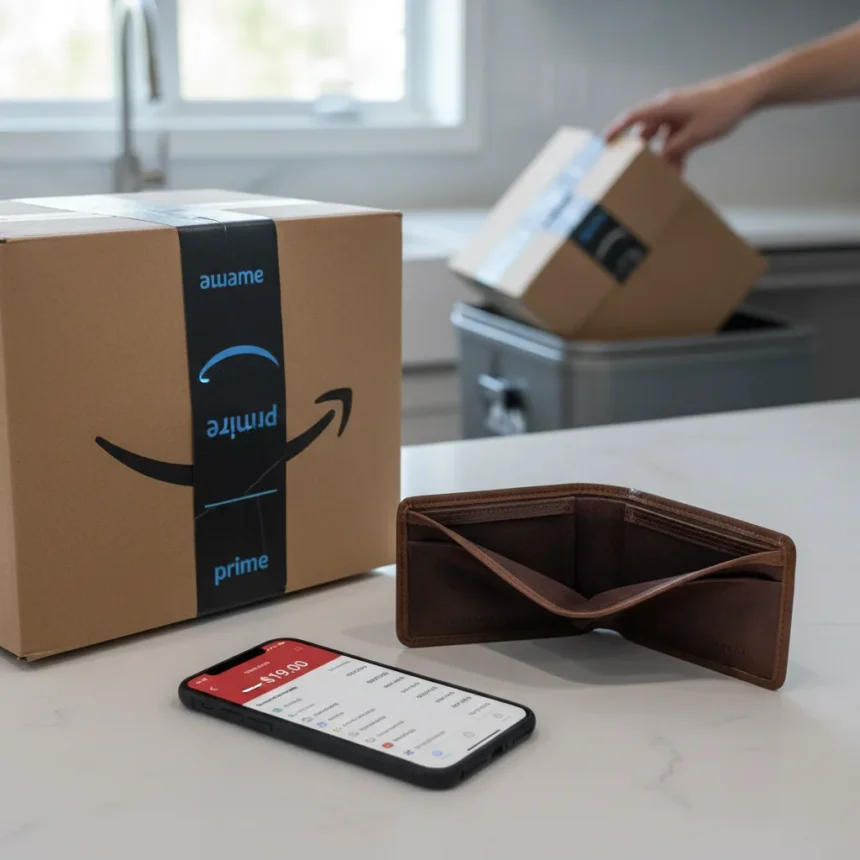
The decision to cancel Amazon Prime is becoming increasingly common among subscribers questioning whether a $139 annual membership still delivers genuine value. For years, Prime seemed like an obvious purchase—fast shipping, streaming video, music, and exclusive deals bundled into one service. But the math has shifted, and more people are walking away.
Key Takeaways
- Amazon Prime costs $139 per year and many subscribers report the value has declined significantly
- Prime Video’s content quality and exclusive offerings have become less compelling than competing platforms
- Free two-day shipping is now standard across retailers, reducing Prime’s core advantage
- Bundled services often go unused, making the annual cost difficult to justify
- Cancelling Prime is straightforward and can be done directly through Amazon account settings
The $139 Question: Is Prime Still Worth It?
Amazon Prime’s annual cost of $139 represents a genuine expense that deserves scrutiny. The service bundles shipping, video streaming, music, and shopping perks into a single subscription, but bundling only works if you actually use everything. For many subscribers, Prime Video sits unwatched, music features go untouched, and fast shipping becomes less relevant when most retailers now offer comparable delivery speeds. The value proposition that once felt obvious has become genuinely questionable.
When you break down what you’re actually using, the math often doesn’t work. If you’re primarily paying for fast shipping but buying from retailers who offer free two-day delivery anyway, you’re subsidizing services you don’t need. The streaming component alone—Prime Video—would cost significantly less as a standalone subscription, yet it’s bundled into the higher annual fee.
Prime Video’s Decline as a Streaming Draw
Prime Video has become a secondary streaming choice for many households, lacking the must-watch exclusives that keep people subscribed to Netflix, Disney Plus, or Apple TV Plus. The service still produces original content, but it no longer dominates the conversation or delivers the kind of prestige programming that justifies a premium subscription. Cancelling Prime makes particular sense if you’re already paying for multiple streaming services—another monthly fee just adds to subscription fatigue without meaningfully expanding your entertainment options.



The streaming landscape has fractured so completely that no single service can claim to have everything worth watching. Prime Video’s position as a bundled benefit rather than a standalone draw means it loses out when you’re evaluating your actual streaming habits. If you find yourself scrolling through Prime Video without finding anything to watch, that’s a clear signal the service isn’t earning its place in your budget.
Fast Shipping Is No Longer Prime’s Competitive Edge
Two-day shipping was genuinely revolutionary when Amazon Prime launched, but it’s now the baseline expectation across e-commerce. Target offers free two-day shipping on orders over a threshold. Walmart delivers quickly without membership fees. Even smaller retailers have competitive shipping options. The core advantage that once justified the annual fee has been commoditized by the entire retail industry.



This shift fundamentally weakens Prime’s value proposition. If you can get comparable shipping speeds without paying $139 annually, the membership becomes harder to defend. You’re paying for a service that was once differentiated but is now standard practice. That’s when cancelling Prime transitions from a radical idea to simple financial logic.
The Bundling Trap: Paying for Services You Don’t Use
Bundled subscriptions work brilliantly for the company selling them but often fail for the consumer. Amazon Prime bundles shipping, video, music, and shopping perks into one annual payment, counting on the fact that you’ll use at least some of them enough to justify the cost. But bundling also means you’re paying for services you ignore. Prime Music gets overshadowed by Spotify or Apple Music. Prime Reading sits unused. Exclusive deals require active hunting to find.
The psychology of bundling makes it easy to keep paying without questioning whether each component justifies its slice of the $139 fee. When you cancel Amazon Prime and evaluate each service separately, you often realize you’d never pay for most of them individually. That realization—that you’ve been subsidizing unused features—is often the final push toward cancellation.
How to Cancel Amazon Prime Without Friction
The actual process of cancelling Amazon Prime is straightforward, which removes one barrier that keeps people subscribed. You can cancel directly through your Amazon account settings without calling customer service or navigating confusing retention pages. Amazon will ask if you want to keep Prime Video separately (a paid option), but the membership itself cancels cleanly. The process takes minutes, and your cancellation takes effect immediately or at the end of your billing cycle depending on when you cancel.



The ease of cancellation matters because it removes the friction that often keeps people paying for services they’ve mentally checked out of. If cancelling were difficult, more people would stay subscribed out of sheer inertia. But since it isn’t, the decision becomes purely financial: does $139 justify what you actually use?
What Happens After You Cancel?
Cancelling Prime doesn’t mean losing access to Amazon shopping—you just lose the shipping benefits and membership perks. You can still buy from Amazon, but you’ll pay standard shipping rates or wait longer for delivery. Prime Video access disappears unless you pay separately for it. Music features vanish. The transition is clean and immediate, with no hidden gotchas or delayed consequences.
Many people find that cancelling Prime forces a useful reckoning with their shopping habits. Without free fast shipping as an incentive, you’re more deliberate about what you buy and where you buy it. You might discover that you were using Prime’s convenience as an excuse to shop more frequently, not because you needed things faster, but because the option was available. Removing that temptation can be surprisingly valuable.
The Bigger Picture: Subscription Fatigue Is Real
Cancelling Amazon Prime often fits into a larger pattern of subscription rationalization. As streaming services, music platforms, and shopping memberships accumulate, the cumulative cost becomes staggering. A household paying for Netflix, Disney Plus, Apple TV Plus, Spotify, and Amazon Prime is spending over $100 monthly just on entertainment and shopping perks. At that level, every subscription deserves to earn its place through genuine daily use.
Prime’s bundled nature makes it easy to overlook, but $139 annually is real money. Over five years, that’s $695. Over a decade, it’s $1,390. The opportunity cost of keeping a subscription you only partially use is significant, especially when that money could go toward subscriptions you actually love or toward savings.
Frequently Asked Questions
Can I cancel Amazon Prime anytime or only during specific periods?
You can cancel Amazon Prime at any time without penalties or waiting for a specific period. If you’re within a paid membership cycle, your cancellation takes effect at the end of that billing period. Amazon doesn’t lock you in or require you to wait until a renewal date to exit.
Will I lose my Amazon account if I cancel Prime?
Cancelling Prime does not affect your Amazon account in any way. You can still shop on Amazon, use your saved addresses and payment methods, and access your order history. You simply lose the membership benefits like free shipping and Prime Video access.
Is Prime Video available separately after cancellation?
Yes. Amazon offers Prime Video as a standalone subscription at a lower annual cost than the full Prime membership. If you want to keep streaming Prime Video content without the other Prime benefits, you can cancel the full membership and subscribe to Prime Video only.
Cancelling Amazon Prime makes sense when the $139 annual cost no longer reflects the value you’re receiving. For many subscribers, that moment has already arrived. The bundling that once felt like a bargain now feels like paying for services you’ve stopped using. Fast shipping is no longer a competitive advantage. Prime Video struggles to justify a premium subscription on its own merits. If you’re questioning whether Prime still belongs in your budget, the answer is often no—and the process of cancelling is simple enough that financial logic should win out over inertia.
Where to Buy
Edited by the All Things Geek team.
Source: Tom's Guide