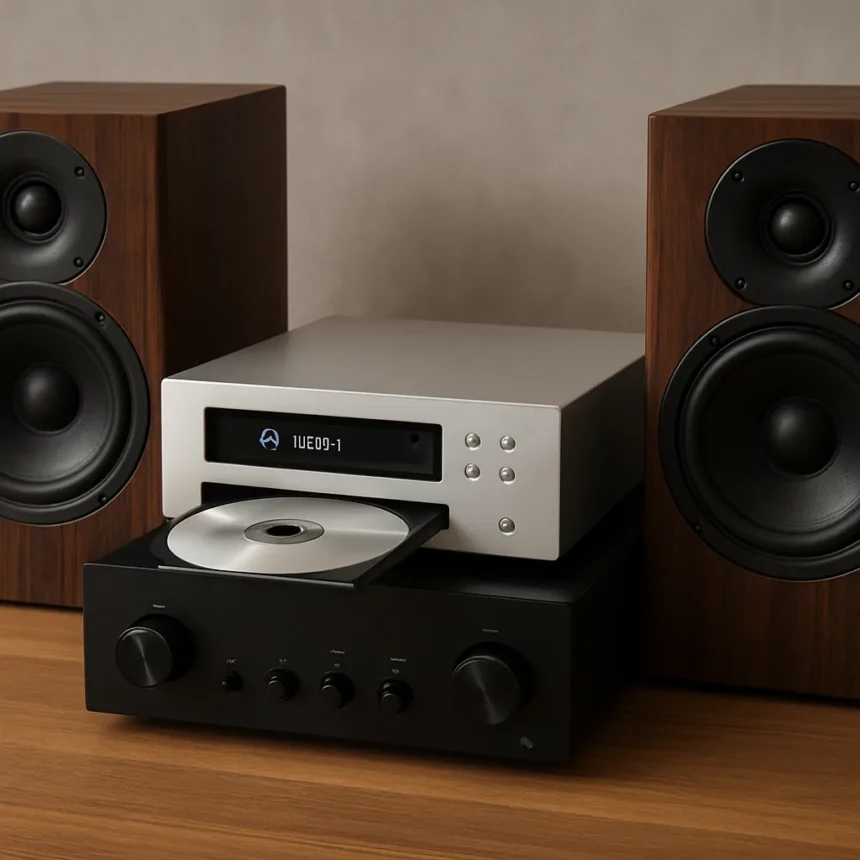
Hi-fi equipment revival is reshaping the premium audio market in unexpected ways. Manufacturers are launching innovative products—from mobile subwoofers to high-end CD players—while dormant audio brands are returning to the market with fresh ambitions. This resurgence signals a genuine shift away from convenience-first streaming toward listeners who prioritize sound quality and tactile engagement with music.
Key Takeaways
- Subwoofers with wheels are emerging as a practical solution for bass-heavy listening without permanent installation.
- Premium CD players are returning to the market, targeting audiophiles who value lossless audio and physical media.
- Established hi-fi brands are reviving dormant product lines and returning to active development.
- The hi-fi equipment revival reflects growing consumer demand for superior sound quality over streaming convenience.
- New product categories blend traditional audio engineering with modern mobility and design.
Subwoofers on Wheels: Mobility Meets Bass
The introduction of wheeled subwoofers represents a pragmatic response to a longstanding problem in home audio: powerful bass requires either permanent installation or awkward repositioning. Mobile subwoofers eliminate the need for fixed placement, allowing listeners to position bass-heavy equipment wherever acoustics demand it. This innovation appeals to renters, audiophiles with evolving listening spaces, and those unwilling to compromise on sound quality for convenience.
Wheeled designs maintain the acoustic performance of traditional subwoofers while solving the installation headache that has deterred many consumers from upgrading. The approach reflects a broader trend in hi-fi equipment revival toward practical solutions that don’t sacrifice audio fidelity. By making premium bass accessible without permanent commitment, manufacturers are lowering barriers to entry for serious listeners.
Premium CD Players Return to Hi-Fi Equipment Revival
CD players are staging an improbable comeback in the hi-fi equipment revival, with manufacturers launching premium models that cater to audiophiles skeptical of streaming quality. These players target listeners who value lossless audio, tangible album artwork, and the ritual of physical media. The resurgence reflects a fundamental disagreement with the streaming-first paradigm: that convenience should not override sound fidelity.



Premium CD players occupy a distinct niche within the broader hi-fi equipment revival. They appeal to collectors who already own extensive CD libraries, listeners who distrust compression algorithms, and enthusiasts who view the format as a bridge between digital precision and analog warmth. This segment proves that significant consumer demand exists beyond the mainstream streaming narrative.
Dormant Brands Return to the Hi-Fi Market
The hi-fi equipment revival includes the return of established audio brands that had stepped back from active product development. These companies recognize renewed consumer interest in premium sound systems and are launching new equipment to recapture market share. The reactivation of dormant brands signals confidence that the hi-fi market can sustain premium pricing and attract serious listeners.



Brand revival within the hi-fi equipment revival ecosystem brings engineering expertise and heritage credibility to a market increasingly fragmented by new entrants. Established manufacturers understand acoustic design principles, component sourcing, and the audiophile customer base in ways that newer competitors cannot replicate. Their return adds legitimacy to the broader shift toward sound quality as a primary purchasing criterion.
Why Hi-Fi Equipment Revival Matters Now
The resurgence of premium audio reflects a growing backlash against the convenience-at-all-costs mentality that has dominated consumer electronics for two decades. Listeners are rediscovering that superior sound quality enhances music enjoyment in measurable ways. Streaming services have democratized access to music catalogs, but they have not solved the underlying problem: compressed audio formats and low-quality playback hardware degrade the listening experience.
Hi-fi equipment revival taps into this dissatisfaction. Consumers willing to spend on premium speakers, subwoofers, and CD players are making a deliberate choice to prioritize enjoyment over convenience. This represents a meaningful shift in how listeners evaluate audio equipment—moving away from feature checklists and toward actual sound performance as the primary metric.
Is the hi-fi equipment revival sustainable long-term?
Yes, but within a defined market segment. The hi-fi equipment revival will remain strongest among enthusiasts, collectors, and listeners with disposable income. Mainstream consumers will continue prioritizing convenience and wireless connectivity. The revival succeeds not by converting casual listeners but by serving a dedicated audience that never abandoned the pursuit of superior sound quality.


What makes wheeled subwoofers different from traditional models?
Wheeled subwoofers maintain the acoustic performance of fixed installations while eliminating permanent placement requirements. This design solves the practical barrier that has prevented many listeners from upgrading to premium bass systems. The innovation makes hi-fi equipment more accessible to renters and those with flexible listening spaces.
Why are CD players returning if streaming offers more convenience?
CD players appeal to audiophiles who prioritize lossless audio quality and distrust compression algorithms used by streaming services. The format also attracts collectors with existing CD libraries and listeners who value the tactile experience of physical media. The return reflects a market segment that views sound fidelity as worth the inconvenience of physical formats.
The hi-fi equipment revival demonstrates that consumer preferences are more diverse than the streaming-dominant narrative suggests. Manufacturers investing in subwoofers, CD players, and brand revivals are betting that enough listeners care about sound quality to sustain a premium audio market. Whether this resurgence becomes a lasting trend or remains a niche phenomenon depends on how successfully these products reach beyond existing audiophiles and attract younger listeners seeking alternatives to convenience-first audio.
Edited by the All Things Geek team.
Source: What Hi-Fi?