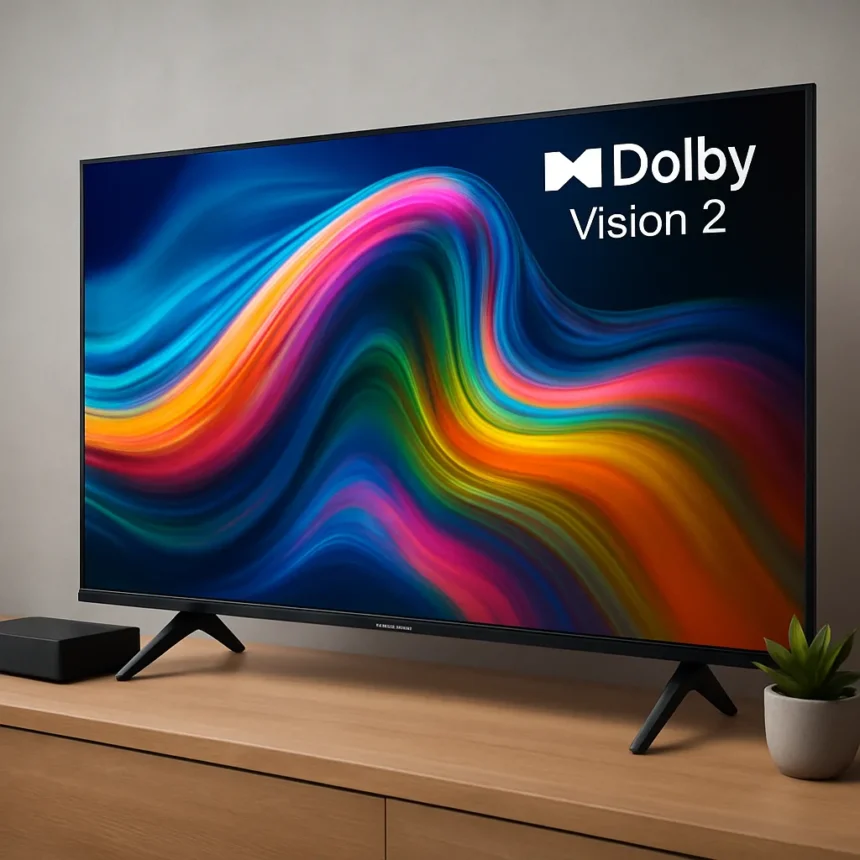
Philips 2026 TV lineup marks a significant pivot toward next-generation display technology and processing power. The Dutch manufacturer has confirmed new OLED models—the OLED811, OLED911, and OLED951—alongside a PUS9001 DLED series, all featuring Dolby Vision 2 support, a feature that LG’s current models do not yet offer. These TVs will be powered by the MediaTek Pentonic 800 processor paired with Philips’ P5 AI Processing engine, a combination designed to handle increasingly demanding content and upscaling tasks.
Key Takeaways
- Philips 2026 OLED models (OLED811, OLED911, OLED951) and PUS9001 DLED series support Dolby Vision 2
- MediaTek Pentonic 800 chip with P5 AI Processing engine powers all new models
- Key features include Precision Black, Light Sense 2, and Authentic Motion technologies
- Dolby Vision 2 support gives Philips an edge over LG’s current TV lineup
- 2026 lineup targets both premium OLED buyers and budget-conscious Mini LED shoppers
What Makes Philips 2026 TV Lineup Stand Out
The Philips 2026 TV lineup arrives at a critical moment. While OLED technology has matured significantly, the real differentiator now is processing power and software. Philips has paired the MediaTek Pentonic 800 with its proprietary P5 AI Processing engine, a move that signals confidence in computational upscaling and real-time image enhancement. This dual-processor approach matters because modern streaming content arrives in various formats—some 1080p, some 4K, some with HDR metadata that older processors struggle to interpret correctly.
The Dolby Vision 2 support across the entire 2026 lineup is the headline feature. This next-generation HDR format promises improved brightness, color accuracy, and tone mapping compared to the original Dolby Vision standard. For viewers accustomed to standard HDR10, the difference should be noticeable on bright scenes and in shadow detail—though real-world impact depends heavily on content availability and how well streaming services roll out Dolby Vision 2 material.
Precision Black, Light Sense 2, and Authentic Motion Explained
Three specific technologies define how the Philips 2026 TV lineup handles picture quality. Precision Black is Philips’ approach to contrast enhancement, likely involving zone-based dimming on the DLED models and inherent contrast advantages on OLED panels. Light Sense 2 represents an evolution of ambient light sensing—the TV adjusts brightness and color temperature based on your room’s lighting conditions, reducing eye strain during daytime viewing and maintaining color accuracy in the evening. Authentic Motion is the processor’s contribution to motion handling, smoothing frame interpolation without introducing the soap-opera effect that plagues cheaper TVs.



These three features work together to address the most common complaints about modern TVs: poor contrast in bright rooms, washed-out colors under artificial lighting, and jerky motion during sports or action sequences. Whether Philips executes these technologies better than Samsung, LG, or TCL remains to be seen in hands-on testing, but the architectural approach is sound.
OLED811, OLED911, OLED951 vs. PUS9001 DLED: Which Philips 2026 TV Lineup Model Fits Your Budget
The Philips 2026 TV lineup spans two distinct technologies, each with trade-offs. The three OLED models—OLED811, OLED911, and OLED951—deliver perfect blacks, infinite contrast, and zero blooming around bright objects on dark backgrounds. OLED technology is inherently superior for dark room viewing and film enthusiasts. The PUS9001 DLED series, meanwhile, uses Mini LED backlighting with RGB technology, meaning individual red, green, and blue LEDs provide more precise color control than traditional white LED arrays. DLED cannot match OLED’s contrast, but it typically offers higher peak brightness and lower burn-in risk, making it safer for content creators or anyone running static images for extended periods.



For most buyers, the choice comes down to budget and viewing habits. If you watch in a dark room and rarely have static images, OLED is the obvious choice. If you game competitively, work with static UI elements, or watch in bright daylight, the PUS9001 DLED’s higher brightness and burn-in resistance make it the pragmatic pick. Both will support Dolby Vision 2, so the fundamental HDR capability is identical.
How MediaTek Pentonic 800 Changes the Game
The MediaTek Pentonic 800 is a custom processor designed specifically for TV applications. Unlike smartphone chips that prioritize raw speed, the Pentonic 800 focuses on video decoding efficiency, AI-based upscaling, and real-time image processing. Paired with Philips’ P5 AI engine, this hardware should handle 8K content (if you ever encounter it), upscale lower-resolution streams intelligently, and apply complex image filters without lag. The combination is more powerful than what most TV makers deployed in 2025, though whether that translates to perceptible picture quality improvements depends on the content you watch and the room you watch it in.
Does the Philips 2026 TV Lineup Justify Its Price Tag?
Philips has not announced pricing for the 2026 lineup, so comparing value directly to competitors is premature. However, the feature set suggests positioning in the premium segment. Dolby Vision 2 support, dual processors, and advanced motion handling are not budget-TV features. If Philips prices these models competitively against Samsung’s QN90D or LG’s OLED G6 series, they could carve out market share among buyers who prioritize processing power and next-generation standards. If pricing skews high, the value proposition weakens—especially for DLED models, which face stiff competition from TCL and Hisense at lower price points.
Key Takeaway: The Philips 2026 TV Lineup Bets on Standards, Not Specs
The Philips 2026 TV lineup does not chase the highest brightness numbers or the thinnest bezels. Instead, it commits to Dolby Vision 2 support, modern processing architecture, and intelligent image enhancement. This strategy makes sense for a manufacturer that lost market share in the US but remains strong in Europe, where consumers value picture quality and future-proofing over raw specifications. The real test arrives when these TVs hit retail and reviewers can compare them side-by-side with LG, Samsung, and TCL models. Until then, the announcement reads as a credible attempt to compete in 2026 without revolutionary technology—just solid engineering and smart standards adoption.



When will the Philips 2026 TV lineup be available?
Philips has announced the 2026 models but has not disclosed a specific launch date or regional availability schedule. Typically, TV manufacturers announce lineups at CES in early January and begin rolling out products to retailers in February through April. Expect the Philips 2026 TV lineup to follow this pattern, though exact timing varies by region and retailer.
Will the Philips 2026 TV lineup support other next-generation features like HDMI 2.2?
The research brief does not specify HDMI version, variable refresh rate support, or other connectivity standards for the Philips 2026 TV lineup. These details typically emerge closer to launch. Focus on confirmed features—Dolby Vision 2, MediaTek Pentonic 800, P5 AI Processing, and the three motion and contrast technologies—rather than speculating on unannounced specs.
How does Dolby Vision 2 differ from standard HDR10?
Dolby Vision 2 is a proprietary HDR format that offers improved brightness, color accuracy, and dynamic tone mapping compared to standard HDR10. The key advantage is scene-by-scene metadata that tells the TV exactly how to display each frame, rather than using a single tone map for the entire content. Philips 2026 TV lineup models will support this format, though content availability remains limited—most streaming services have only begun rolling out Dolby Vision 2 material.
The Philips 2026 TV lineup represents a calculated bet on processing power, next-generation standards, and intelligent image enhancement rather than chasing raw specifications. Whether that strategy pays off depends on execution, pricing, and content availability—factors that will only become clear once these TVs arrive in stores and real-world testing begins.
Edited by the All Things Geek team.
Source: What Hi-Fi?