Roku and TCL are facing a class action lawsuit alleging that Roku software updates bricking TVs have left thousands of consumers with unusable devices. The case, Else v. Roku, Inc. et al. (Case No. 8:26-cv-748), was filed March 27, 2026, in California federal court, and it directly challenges the companies’ track record on update reliability.
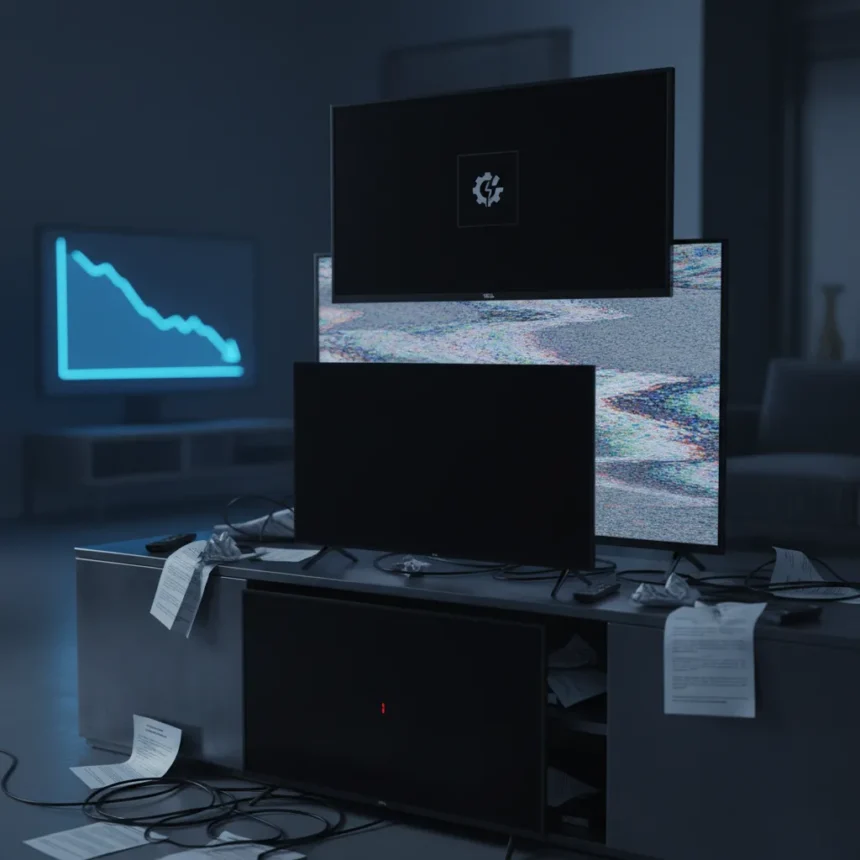
A 43-page complaint alleges that automatic over-the-air software updates have rendered Roku-powered smart TVs, including TCL Roku TVs from the 3, 4, 5, and 6 series, either completely unusable or substantially degraded. The defects manifest as black or blank screens, inability to load video, flashing screens, and repeated restart loops that trap devices in recovery mode.
Key Takeaways
- Class action filed March 27, 2026, in California federal court against Roku and TCL over defective software updates
- Affected devices include TCL Roku TVs (3/4/5/6 Series) and other Roku OS smart TVs
- Defect symptoms include black screens, boot loops, and complete device failure rendering TVs “bricked”
- Lawsuit invokes California Unfair Competition Law, Consumer Legal Remedies Act, and Song-Beverly Consumer Warranty Act
- Companies allegedly ignored user complaints on Roku Community Support Forum and directed users to ineffective troubleshooting
How Roku software updates bricking TVs became a legal issue
The lawsuit centers on a pattern of defective updates that allegedly control critical TV functions including boot processes, system stability, and video output. According to the complaint, these updates are rolled out automatically without adequate testing, yet Roku and TCL marketed their products as stable, long-term devices backed by the “#1 selling TV OS” with updates designed to enhance functionality. The reality, the lawsuit claims, has been the opposite.
What makes this case particularly damaging is the timeline. Many failures occur after the standard warranty period expires, leaving consumers unable to get free repairs or replacements. The complaint alleges that Roku and TCL were aware of these issues through direct complaints on the Roku Community Support Forum but chose to direct users toward self-troubleshooting steps that frequently failed, forcing consumers to pay out of pocket for repairs or new TVs.

The legal framework and what it means for consumers
The lawsuit invokes three California statutes: the Unfair Competition Law, the Consumer Legal Remedies Act, and the Song-Beverly Consumer Warranty Act. These laws protect consumers from misleading product representations and require manufacturers to stand behind advertised functionality. The complaint argues that Roku and TCL’s marketing claims about software support and update reliability were materially misleading given the documented pattern of failures.
The class action is being brought by Schonbrun Seplow Harris Hoffman & Zeldes, LLP, a California-based law firm. The case applies specifically to Roku-powered smart TVs and TCL Roku TVs, meaning owners of TCL Fire TV or TCL Google TV models would not be covered even if they experience similar issues. This distinction matters because it limits the scope of the lawsuit to Roku’s ecosystem, not TCL’s other TV operating systems.



Why this lawsuit matters beyond individual consumers
The timing of this filing—March 2026—reflects growing frustration with smart TV software quality across the industry. Unlike smartphones or laptops, where software updates are frequent and users expect occasional bugs, TVs are often purchased with the expectation that they will remain functional for a decade or more. A bricked TV is not a minor inconvenience; it is a complete loss of a major household appliance.
The lawsuit also highlights a broader tension in the smart TV market: manufacturers push automatic updates to add features and patch security vulnerabilities, but quality control failures can render devices permanently unusable. Consumers cannot easily roll back updates or choose to skip them, making the risk asymmetrical. Roku and TCL bear the responsibility for update quality, yet users bear the cost of failure.
What happened with previous TCL lawsuits?
TCL has faced class action litigation before. In an earlier case, the company was accused of misleading consumers about refresh rates, claiming 120Hz functionality on panels that only delivered 60Hz. That lawsuit was settled with final approval covering California purchasers from April 24, 2016, through December 31, 2021. A separate lawsuit also alleged that TCL TVs released from 2017 onward included Automatic Content Recognition (ACR) technology that monitored what users watched without proper disclosure.
These prior cases suggest a pattern of litigation around TCL’s transparency and product claims. The current Roku software update lawsuit adds another layer, this time targeting both TCL and Roku for what the complaint characterizes as a systemic failure in update quality and customer communication.


What happens next?
Class action lawsuits follow a predictable path: the complaint is filed, defendants respond, and if the case survives motions to dismiss, it proceeds toward discovery and potential settlement. The outcome could force Roku and TCL to offer repair programs, refunds, or replacement devices to affected consumers. It could also impose stricter testing requirements on future software updates.
For Roku TV owners currently experiencing black screens or boot loops, the lawsuit provides potential recourse, though class action settlements typically take years to resolve. In the meantime, consumers reporting these issues on the Roku Community Support Forum are documenting evidence that could support the broader class claims.
Can I join the class action if my Roku TV is bricked?
If you own a Roku-powered smart TV or a TCL Roku TV that has experienced a black screen, boot loop, or complete failure following a software update, you may be eligible to join the class action. The case covers substantially similar Roku OS devices, though the most specific mentions are TCL Roku TVs from the 3, 4, 5, and 6 series. You do not need to file anything immediately—class members are typically notified once the lawsuit reaches settlement or judgment.
What should I do if my Roku TV stopped working after an update?
Document the issue with photos or videos showing the black screen, boot loop, or error state, and note the date the problem began. Check your Roku Community Support Forum to see if other users reported similar issues around the same time, which strengthens evidence of a systemic defect. Contact Roku and TCL customer support to request repair or replacement, and keep records of all correspondence and costs. If you paid for repairs out of pocket, that documentation may support a claim for reimbursement in the class action.
The Roku software updates bricking TVs lawsuit represents a critical moment for smart TV accountability. Manufacturers have marketed automatic updates as a feature that enhances devices over time, but this case challenges whether that promise is being kept. For consumers who trusted Roku’s reputation as the “#1 selling TV OS,” the lawsuit offers both vindication and a path toward compensation.
Edited by the All Things Geek team.
Source: Tom's Guide