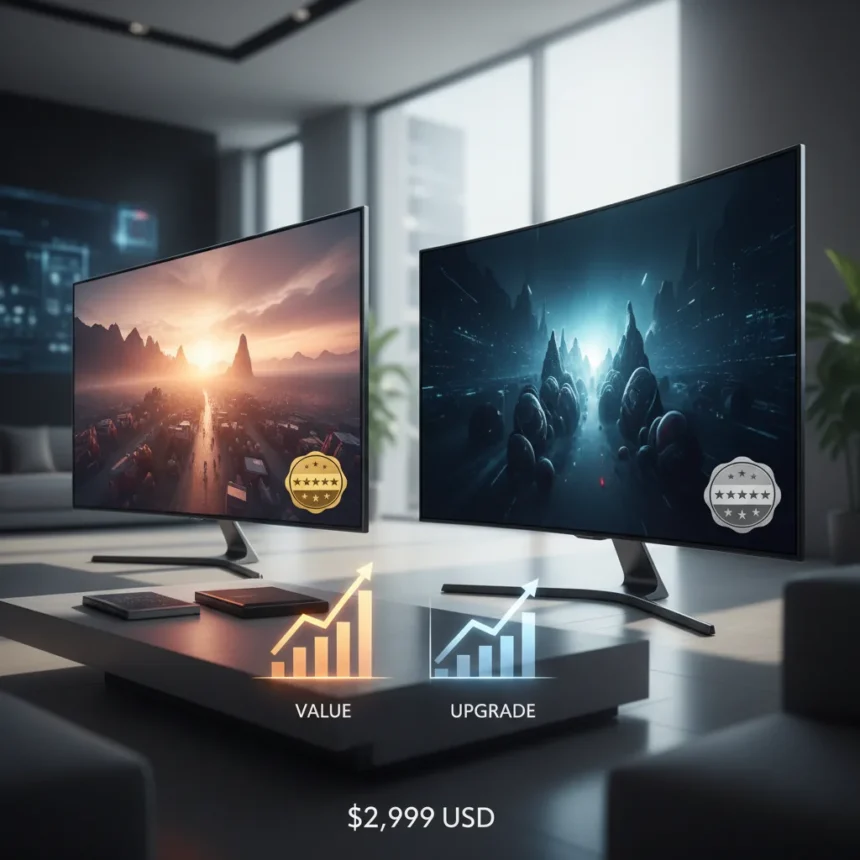
TV successors pricing for two five-star models just landed, and the news splits down the middle—some upgrades feel fair, others feel like a stretch. What Hi-Fi has confirmed pricing for successors to two previously five-star televisions, and the verdict is complicated. In a market where OLED displays dominate and competition intensifies, manufacturers are walking a tightrope between innovation and profitability.
Key Takeaways
- TV successors pricing reflects mixed value propositions across the 2024-2025 OLED market
- Some successor models deliver meaningful upgrades justifying price increases
- Others lean heavily on branding and minor refinements rather than substantial feature leaps
- What Hi-Fi comparisons show LG, Sony, and Panasonic competing aggressively on display quality
- Timing matters: predecessor models may still offer better value for budget-conscious buyers
Understanding TV Successors Pricing in Today’s Market
TV successors pricing has become a flashpoint for buyers because the generational jumps feel smaller than ever. When a predecessor earned five stars from What Hi-Fi, its successor faces impossible expectations—match the quality, add genuine improvements, but keep the price reasonable. That rarely happens. Manufacturers know they have an audience of loyalists willing to upgrade, and pricing reflects that leverage. The question is whether the improvements justify the premium.
What Hi-Fi’s track record comparing OLED televisions shows a pattern: each generation brings incremental brightness gains, slightly better processing, and marginal picture quality refinements. The Sony Bravia Theatre Quad, for instance, represents an evolution of home cinema integration rather than a revolutionary leap. Predecessors like the HT-A9 established the foundation, and successors build incrementally on that. For TV successors pricing specifically, this means buyers need to ask whether they are paying for genuine innovation or for the privilege of owning the latest model number.
Good News: Where TV Successors Pricing Delivers Value
Not every successor carries an unjustifiable premium. Some TV successors pricing reflects real engineering improvements that matter to picture quality and usability. When What Hi-Fi compares models like the LG G4 against the Panasonic Z95A, brightness and color accuracy emerge as meaningful differentiators. A successor that genuinely improves on these metrics—especially for OLED displays where brightness has historically lagged LCD—can justify a price bump.


The good news for buyers is that What Hi-Fi’s five-star reviews identify products where the engineering actually delivered. When a predecessor earned that rating, the successor often inherits that solid foundation and adds tangible upgrades. Processors that handle motion smoothing better, expanded size options, or improved upscaling algorithms are not marketing fluff—they change how you experience content. For TV successors pricing in this category, the cost reflects work done in the lab, not just a new case design.
Bad News: Premium Pricing on Modest Upgrades
Then there is the flip side. Some TV successors pricing climbs without corresponding jumps in performance. Panasonic and Sony have both released models where the improvements feel incremental—better software, slightly refined color grading, maybe a new remote. These are not nothing, but they do not justify a 15-20% price increase for many buyers. The risk is that predecessors remain competitive, leaving early adopters of the successor feeling shortchanged.



What Hi-Fi’s comparative reviews reveal this tension clearly. When the Sony A80L faced off against the LG C3, each had strengths, but the differences were nuanced rather than dramatic. Successors to five-star models often inherit that balanced quality, meaning the predecessor still holds its own. For TV successors pricing in this scenario, buyers should seriously consider whether the new model justifies the cost or whether a discounted predecessor remains the smarter buy.
Timing and Market Context Matter for TV Successors Pricing
The broader OLED market context shapes how reasonable TV successors pricing actually feels. In 2024-2025, competition among LG, Sony, and Panasonic has intensified, which should theoretically keep prices honest. Yet manufacturers also know that flagship OLED buyers care more about latest specs than budget constraints. This creates a pricing environment where good-news and bad-news coexist in the same product lineup.
What Hi-Fi’s deal coverage shows that savvy buyers can often find predecessors at significant discounts during promotional periods. This is crucial context for TV successors pricing—if a five-star model from the previous generation is available at 20-30% off, it might deliver better value than a successor priced at MSRP. The successor may be objectively better, but the gap may not justify the premium you are paying right now.
Should You Buy a TV Successor or Stick With the Previous Generation?
The answer depends on what matters to you. If brightness, size options, or processing power are critical, and the successor genuinely improves these areas, TV successors pricing may be worth it. If you are chasing the latest model number or marginal refinements, the predecessor at a discount is likely smarter. What Hi-Fi’s reviews provide the evidence you need—read the detailed comparisons between generations and decide if the differences align with your priorities and budget.



Are TV successors always more expensive than their predecessors?
Not always, but typically yes. Manufacturers position successors at or above the predecessor’s launch price, even if the predecessor has since discounted. However, waiting for sales on the successor or buying a discounted predecessor can flip the value equation entirely. Check What Hi-Fi’s deal coverage regularly to spot when five-star models drop in price.
How much better is a TV successor compared to its predecessor?
It varies significantly. Some successors deliver meaningful improvements in brightness, processing, or features. Others refine software and ergonomics without major performance jumps. Read What Hi-Fi’s side-by-side reviews to understand the specific generational leap before committing to TV successors pricing.
Is it worth upgrading to a TV successor if my current TV still works?
Only if the improvements address something that bothers you now. A five-star OLED from two years ago still produces excellent picture quality. Upgrading for minor gains does not make financial sense unless you are chasing a specific feature (like expanded size options or improved gaming performance) that the successor delivers and your current model lacks.
TV successors pricing reveals an uncomfortable truth about the modern television market: generational improvements matter less than they used to, yet prices climb anyway. The good news is that What Hi-Fi’s detailed reviews let you separate genuine upgrades from marketing. The bad news is that you will probably find the previous generation still delivers five-star quality at a more forgiving price. Choose based on evidence, not on the allure of the newest model number.
Edited by the All Things Geek team.
Source: What Hi-Fi?