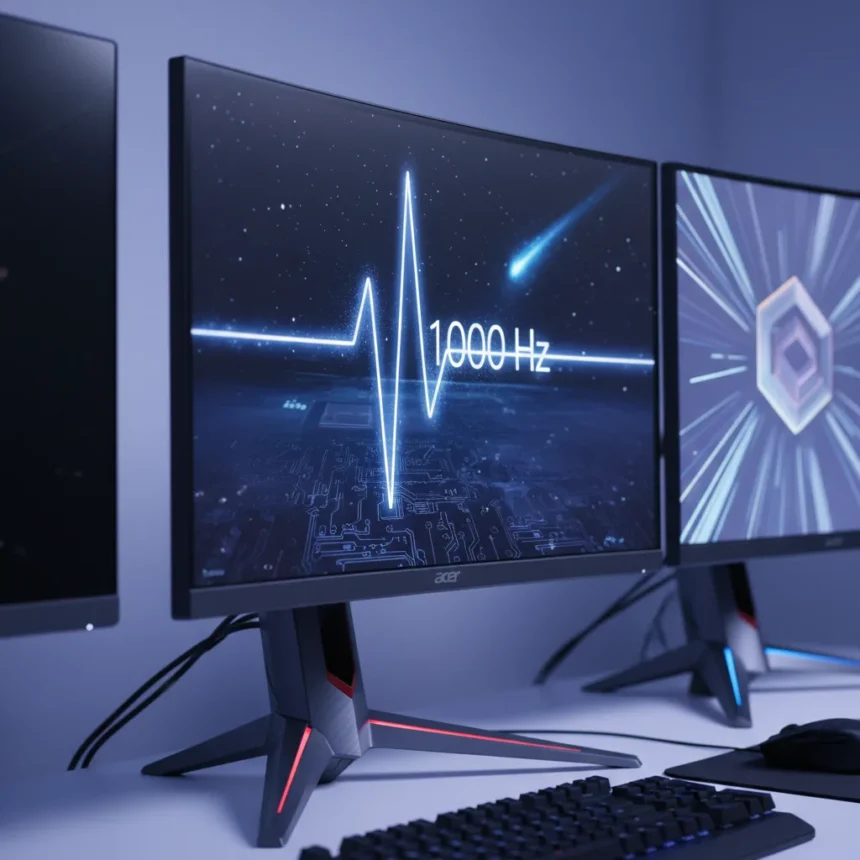
Acer Predator gaming monitor technology just took a leap forward. The company is introducing a new Acer Predator gaming monitor capable of reaching 1,000 Hz refresh rate, marking an aggressive push into ultra-high-frequency gaming displays. This latest model joins an expanded Predator lineup that also features QD-OLED panel variants and an immersive 3D display option, all unveiled at Computex.
Key Takeaways
- Acer’s new Predator gaming monitor achieves 1,000 Hz refresh rate, a significant leap in gaming responsiveness.
- The expanded Predator lineup includes multiple QD-OLED panel options for superior color and contrast.
- An immersive 3D display joins the Predator family, targeting next-generation gaming experiences.
- All models were announced at Computex, signaling Acer’s commitment to competitive gaming and enthusiast markets.
- The 1,000 Hz Acer Predator gaming monitor represents the cutting edge of refresh rate technology for gaming.
Acer Predator Gaming Monitor Reaches Unprecedented Refresh Rates
The standout announcement is the Acer Predator gaming monitor hitting 1,000 Hz. This refresh rate shatters conventional gaming monitor ceilings—most premium displays top out at 240 Hz or 360 Hz. A 1,000 Hz Acer Predator gaming monitor theoretically reduces input lag to sub-millisecond levels, appealing to competitive esports players where every frame matters. At this frequency, the monitor refreshes its entire display ten times per millisecond, eliminating ghosting and motion blur that plague slower panels.
Reaching 1,000 Hz requires aggressive engineering. Panel response times must be extraordinarily fast, power delivery must be rock-solid, and the GPU connection must support the bandwidth. Whether Acer achieves this across the entire color gamut or only in specific modes remains unconfirmed by the available specifications. The technical achievement alone positions this monitor as a flagship device for the most demanding competitive gamers.
QD-OLED Panels Expand the Predator Lineup
Beyond the 1,000 Hz model, Acer is introducing multiple Acer Predator gaming monitor variants with QD-OLED technology. QD-OLED (Quantum Dot OLED) combines the brightness and color accuracy of quantum dots with the perfect blacks and infinite contrast of OLED panels. For gaming, this means richer colors, deeper blacks, and superior HDR performance compared to traditional LCD or standard OLED displays.


QD-OLED adoption in gaming monitors has been limited until recently, making this expansion significant. The technology eliminates backlight blooming and delivers pixel-perfect control, critical for both competitive shooters (where visibility matters) and single-player games demanding visual fidelity. Acer’s decision to offer multiple QD-OLED variants suggests different size and refresh-rate combinations, though specific configurations remain unannounced.
3D Display Technology Enters the Predator Family
The third pillar of Acer’s Computex announcement is an immersive 3D display joining the Acer Predator gaming monitor lineup. 3D gaming monitors have existed for years but remain niche due to the requirement for active shutter glasses or autostereoscopic technology. The immersive nature of the new offering suggests Acer is targeting depth perception and spatial gaming experiences that traditional flat displays cannot deliver.



3D displays appeal to specific gaming genres—flight simulators, racing games, and VR-adjacent titles benefit from stereoscopic depth cues. However, adoption depends on game support and consumer willingness to invest in additional hardware. Whether this Acer Predator gaming monitor requires external glasses or uses glasses-free autostereoscopic technology will determine its mainstream appeal.
Competitive Positioning and Market Context
The Acer Predator gaming monitor announcement reflects intense competition in the high-end gaming display market. Competitors like ASUS ROG, MSI MPG, and other gaming-focused brands have pushed refresh rates and panel technologies aggressively over the past two years. A 1,000 Hz Acer Predator gaming monitor positions Acer as a serious contender for enthusiasts unwilling to compromise on responsiveness, while QD-OLED variants appeal to players prioritizing visual quality.
The simultaneous push across three distinct technology vectors—extreme refresh rates, premium panels, and immersive 3D—suggests Acer recognizes that gaming monitor buyers are increasingly segmented. Competitive esports players want 1,000 Hz. Single-player and creative professionals want QD-OLED. Niche audiences want 3D. By offering all three, Acer avoids betting on a single trend.
What We Still Don’t Know
Acer has not yet disclosed pricing, exact panel sizes, resolution specifications, or launch availability for the new Acer Predator gaming monitor models. The 1,000 Hz variant’s resolution is particularly important—1,000 Hz at 4K requires significantly more GPU power than 1,000 Hz at 1440p, affecting the monitor’s practical audience. Similarly, whether the QD-OLED variants maintain high refresh rates or prioritize visual fidelity over responsiveness remains unclear.



Regional availability and the number of models in the expanded lineup are also unconfirmed. Computex announcements often precede detailed specifications by weeks or months, leaving enthusiasts to speculate on final configurations and pricing.
Is the Acer Predator gaming monitor 1,000 Hz worth the investment?
That depends on your priorities. For competitive esports players, the 1,000 Hz Acer Predator gaming monitor could provide a measurable edge in input responsiveness. For casual or single-player gamers, the visual benefits of QD-OLED models may offer better value. Most players will not perceive a difference between 360 Hz and 1,000 Hz, making the 1,000 Hz variant a luxury rather than a necessity.
Which Acer Predator gaming monitor should I choose?
Choose based on your primary use case. Competitive gamers should prioritize the 1,000 Hz model once full specifications are available. Visual fidelity-focused players should wait for QD-OLED variant details. 3D gaming interest remains niche unless you specifically play titles supporting stereoscopic depth.
When will the Acer Predator gaming monitor lineup launch?
Acer has not announced official launch dates or pricing. Computex announcements typically precede availability by several weeks to months. Monitor availability often varies by region, so checking local retailers for pre-order information closer to the event will provide clearer timelines.
Acer’s Computex announcement positions the Acer Predator gaming monitor lineup as a comprehensive answer to fragmented gaming display demands. Whether the 1,000 Hz model delivers practical benefits or remains a specification bragging right will become clear once independent testing begins. Until then, the announcement signals that gaming monitor innovation is far from stagnant.
Edited by the All Things Geek team.
Source: Tom's Hardware