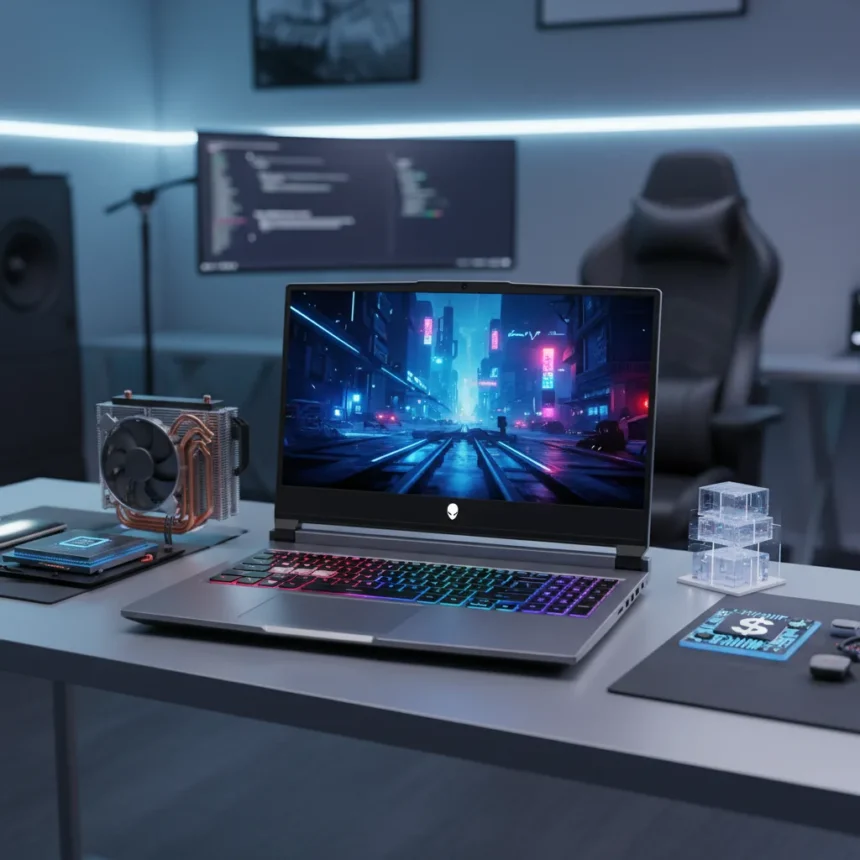
The Alienware 15 2026 is a gaming laptop announced at CES 2026 that pairs Intel Core Ultra 200HX series CPUs with an all-new OLED display, positioned as a relatively affordable entry into high-performance gaming without the premium price tag of its siblings. After hands-on testing, the machine delivers smooth gaming performance but forces deliberate compromises that define its appeal—and its limitations.
Key Takeaways
- Alienware 15 2026 announced at CES 2026 with Intel Core Ultra 200HX CPUs and new OLED panel
- Delivers smooth gaming performance in a 15-inch form factor designed for affordability
- Makes intentional trade-offs to balance performance with accessible pricing
- Competes directly with premium rivals like Razer Blade 16 and creative-focused alternatives like Asus Flow Z13
- Expected availability Q1/Q2 2026 via Dell and Alienware channels
What Makes the Alienware 15 2026 Stand Out
The Alienware 15 2026 tackles a specific market gap: gamers who want genuine performance without the five-figure price tag. The addition of Intel’s latest Core Ultra 200HX mobile processors represents a meaningful step forward in mobile gaming silicon, bringing efficiency and gaming-focused architecture to the mid-range segment. The new OLED display is the real story here—OLED panels have become the gold standard for gaming laptops, delivering perfect blacks, infinite contrast, and near-instantaneous pixel response times that LCD screens simply cannot match.
What separates this machine from its Alienware siblings is intentional restraint. Rather than pack every possible component into a chassis, Dell has engineered the Alienware 15 2026 to hit a specific performance target while keeping the overall package accessible. That is the entire philosophy: smooth gaming at a price point that does not require selling a kidney.
How the Alienware 15 2026 Compares to Rivals
The competitive landscape matters here. The Razer Blade 16 sits at the opposite end of the spectrum—a slim, gorgeous machine with a stunning OLED panel and premium build quality that commands premium pricing. It is the true luxury gaming experience, but you pay for every millimeter of thinness and every design flourish. The Alienware 15 2026, by contrast, prioritizes value without chasing minimalism as an aesthetic goal.


The Asus Flow Z13 represents a different kind of alternative entirely. This 2-in-1 gaming laptop runs an AMD Ryzen AI Max+ 395 CPU with Radeon 8060S integrated graphics and 128GB DDR5X RAM, positioning itself as a creative powerhouse for 4K video editing and content creation. It excels at those tasks but struggles with ray-traced gaming—a trade-off built into its architecture. The Alienware 15 2026 does not attempt this creative pivot; it stays laser-focused on gaming performance.
The Necessary Compromises
The title of the hands-on preview—”almost right”—hints at the deliberate choices baked into this design. A truly premium gaming laptop would include every possible feature: top-tier CPU, maximum GPU power, premium audio, extended battery life, and a chassis that weighs nothing. The Alienware 15 2026 does not try to be that machine.



Instead, it asks: what do gamers actually need to play modern titles smoothly at reasonable settings? The Intel Core Ultra 200HX delivers sufficient multi-threaded performance for gaming workloads without the thermal complexity of a desktop-class chip. The OLED display handles the visual experience flawlessly. The 15-inch form factor keeps the machine portable without shrinking the screen to the point of frustration. These choices create a coherent product rather than a feature-checklist laptop.
The compromises are not flaws—they are design decisions. A gamer shopping at this price point understands the trade-offs and values the result. That clarity of purpose is what separates a good product from a confused one.
When to Buy the Alienware 15 2026
This laptop makes sense for gamers who play at 1440p or lower resolutions and prioritize consistent frame rates over ultra-high settings. It is ideal for someone moving from console gaming to PC and wanting genuine performance without the learning curve of tuning settings on a $3,000 machine. It also works well for esports titles, indie games, and anything that does not demand maximum graphical fidelity.
The Alienware 15 2026 is not the right choice if you need workstation-class performance for 3D rendering, video production, or machine learning tasks. The Asus Flow Z13 would be a better fit there. It is also not the machine to buy if you absolutely must have the thinnest, lightest gaming laptop on the market—the Razer Blade 16 owns that space.



Availability and Timeline
The Alienware 15 2026 was announced at CES 2026 and is expected to become available in Q1 or Q2 2026 through Dell and Alienware’s official channels. Specific regional availability and exact pricing have not been confirmed, though the “relatively affordable” positioning suggests a starting point well below the $2,000+ threshold of premium gaming laptops.
Does the Alienware 15 2026 have a touchscreen?
The research brief does not specify whether the new OLED display includes touchscreen capability. This detail will likely be confirmed closer to release or in full spec sheets on Dell’s website.
How does the Intel Core Ultra 200HX compare to previous Alienware CPUs?
The Intel Core Ultra 200HX represents Dell’s first implementation of Intel’s latest high-performance mobile architecture in the Alienware 15 line. This generation brings improved gaming efficiency and thermal management compared to older mobile processors, though specific performance metrics will emerge once independent reviewers run full benchmark suites.
What is the expected battery life of the Alienware 15 2026?
Battery life specifications have not been detailed in available materials. Gaming laptops with OLED displays and high-performance CPUs typically deliver 4-6 hours of mixed use, though heavy gaming drains batteries much faster. Official specs from Dell will clarify expectations for this model.
The Alienware 15 2026 is a refreshingly honest gaming laptop. It does not pretend to be everything to everyone, and it does not try to compete on aesthetics or ultra-premium positioning. Instead, it asks a simple question: how do we deliver smooth gaming performance at a price that makes sense? The answer, based on hands-on experience, is to make deliberate choices and commit to them. That is almost right—and for most gamers, almost right is exactly right.
Edited by the All Things Geek team.
Source: Tom's Guide