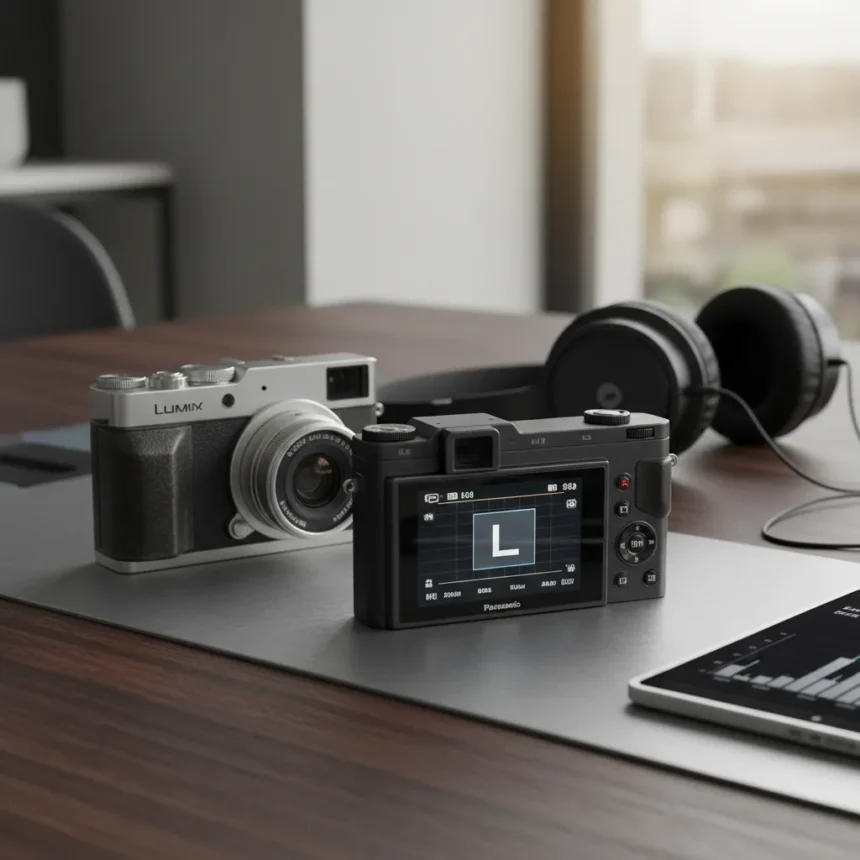
The Panasonic Lumix L10 is a premium compact camera that resurrects Panasonic’s iconic L-series line, equipping it with the company’s most powerful sensor and processor to date. This marks a significant moment in the broader resurgence of compact cameras—a category many wrote off as dead when smartphones conquered everyday photography. But bringing back a legendary name with modern guts does not automatically guarantee success, and the Lumix L10 faces a credibility test that extends far beyond its specifications.
Key Takeaways
- The Lumix L10 revives Panasonic’s premium L-series compact camera line after years of dormancy.
- The camera integrates the company’s most advanced sensor and processor technology to date.
- Compact cameras are experiencing a genuine resurgence as photographers seek alternatives to smartphone limitations.
- The revival positions the Lumix L10 against modern competitors and its own historical reputation.
- Premium compact cameras occupy an increasingly crowded space between smartphones and interchangeable-lens systems.
Why Panasonic Brought Back the L-Series Now
The compact camera category never truly vanished—it evolved. Smartphones killed the casual point-and-shoot market, but a dedicated segment of photographers never stopped wanting dedicated cameras with optical zoom, manual controls, and sensor sizes larger than smartphone sensors. The broader photography market has watched this shift closely. Compact camera resurgence reflects a real shift in how photographers think about gear: not as status symbols, but as tools designed for specific jobs that phones handle poorly.
Panasonic’s decision to resurrect the L-series with flagship internals signals confidence in this trend, but it also carries risk. Nostalgia alone does not move premium products. The Lumix L10 must prove that the L-series name still resonates with photographers who either used the original models or who care enough about camera heritage to pay a premium for it. That is a narrower audience than Panasonic might hope.
What Makes the Panasonic Lumix L10 Different
The Lumix L10 distinguishes itself through engineering choices, not just marketing. Panasonic equipped this compact with its most powerful sensor and processor, a combination that should translate to faster autofocus, better low-light performance, and more sophisticated computational photography features than previous compact offerings. The engineering commitment here is real—this is not a rebranded older model.


Where the Lumix L10 stands relative to competitors matters more than its internal specs alone. Compact cameras now compete across three distinct tiers: ultra-compact smartphones with computational advantages, premium compacts like this one, and entry-level interchangeable-lens cameras that offer flexibility at similar price points. The Lumix L10 must justify its position by excelling in scenarios where both smartphones and mirrorless cameras struggle. That means superior optical zoom without the bulk of a larger body, manual controls that feel native rather than bolted-on, and a form factor that actually fits in a jacket pocket.
The Heritage Problem and Modern Expectations
Reviving a defunct product line creates a narrative problem. Photographers who owned original L-series compacts are now older, potentially less active in the market, and may have already migrated to smartphones or mirrorless systems. Younger photographers know the L-series only as history. The Lumix L10 must therefore appeal to two groups simultaneously: legacy users willing to pay for nostalgia, and new users who care only about performance and form factor. That is a difficult balance.



The compact camera resurgence is real, but it is not a return to 2005. Modern compact camera buyers expect features that did not exist in the original L-series era: computational photography, wireless connectivity, 4K video, and sensor performance that rivals cameras ten times the size. The Lumix L10 must deliver on all of these fronts while maintaining the simplicity and portability that made compacts appealing in the first place. Panasonic’s choice to pack in flagship technology suggests they understand this challenge, but technology alone does not guarantee market success.
Positioning Against Modern Alternatives
The premium compact market has fragmented significantly since the original L-series dominated. Dedicated compact cameras from Sony, Canon, and Ricoh now occupy this space, each with loyal followings and proven track records in the modern era. Smartphone flagships have also improved dramatically, offering optical zoom, night mode, and manual controls that would have seemed impossible a decade ago. The Lumix L10 enters a market where every alternative has momentum and established users.
The question is not whether the Panasonic Lumix L10 is technically competent—Panasonic’s engineering pedigree suggests it will be. The question is whether resurrecting a brand name from a dormant product line justifies the premium pricing that always accompanies heritage revivals. Compact camera buyers today are pragmatists. They want the best tool for the job, not the most historically significant one.
Does the Lumix L10 Justify Its Existence?
The Panasonic Lumix L10 arrives at a moment when compact cameras are genuinely relevant again, but that relevance is fragile and competitive. The camera’s success depends entirely on execution: whether its sensor and processor deliver measurably better results than alternatives, whether its controls feel intuitive rather than cramped, and whether its price reflects genuine value rather than brand nostalgia. A flagship sensor and processor are necessary conditions for success, not sufficient ones.



Panasonic took a real risk by bringing back the L-series instead of launching an entirely new line. That decision signals confidence in the brand’s heritage and the company’s engineering. It also signals that Panasonic believes photographers still care about camera lineage and design continuity. That bet may pay off, but only if the Lumix L10 performs at the level its specifications promise and its price demands. The compact camera resurgence is real. Whether the Lumix L10 leads it or merely rides its coattails remains to be seen.
Is the Panasonic Lumix L10 worth buying if I already have a smartphone?
The Lumix L10 makes sense if your smartphone’s camera frustrates you in specific scenarios: low light where you need manual control, optical zoom without digital degradation, or video stabilization better than software-based solutions. If your smartphone satisfies your everyday photography, the Lumix L10 is a luxury, not a necessity. The decision hinges on whether dedicated optical hardware solves problems your phone cannot.
How does the Lumix L10 compare to entry-level mirrorless cameras?
Entry-level mirrorless cameras offer interchangeable lenses and larger sensors, but they sacrifice portability and simplicity. The Panasonic Lumix L10 prioritizes pocket-ability and fixed-lens convenience. Choose the Lumix L10 if you want a camera that always travels with you. Choose mirrorless if you want flexibility and are willing to carry more gear.
Why did Panasonic revive the L-series instead of creating a new compact line?
Heritage sells in the premium market. Reviving the L-series taps into nostalgia and design continuity, giving the Lumix L10 a narrative advantage over an entirely new product. Whether that advantage justifies the premium remains an open question that only market performance will answer.
The Panasonic Lumix L10 represents a genuine bet on compact cameras’ future. Whether Panasonic’s engineering and heritage are enough to win in a market crowded with capable alternatives is the only question that matters. Nostalgia is a starting point, not a destination.
Edited by the All Things Geek team.
Source: TechRadar