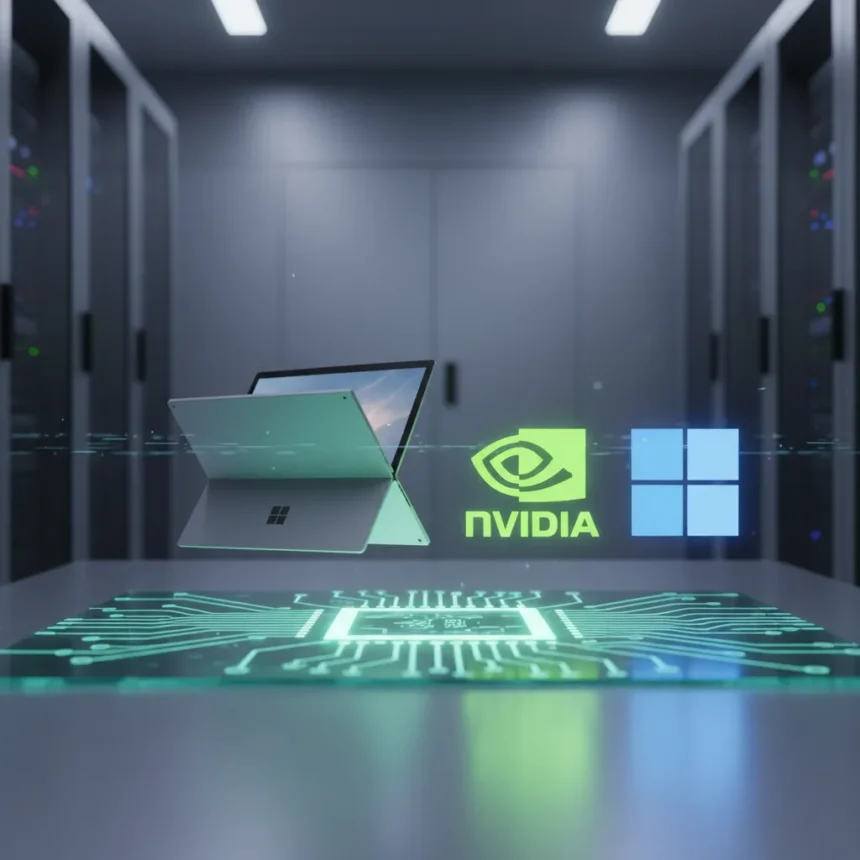
The next-generation PC era appears to be arriving, and Microsoft’s Surface line could finally reclaim the spotlight it lost over the past few years. Coordinated teaser activity from Microsoft and NVIDIA suggests something significant is brewing, with hints pointing toward the N1X chip and major announcements at industry events.
Key Takeaways
- Microsoft and NVIDIA are running a coordinated teaser campaign hinting at a major PC platform shift.
- The N1X chip is expected to take center stage at upcoming industry events.
- Surface hardware has struggled to maintain relevance but could emerge as a flagship product in this new era.
- Computex and Build conferences are likely venues for major announcements.
- The teaser campaign suggests a broader transformation in how PC computing will work going forward.
Surface’s Long Struggle for Relevance
Microsoft’s Surface line has spent years playing second fiddle to competitors. While the brand once represented latest hybrid computing, it gradually lost momentum as the PC market shifted and consumer attention fragmented. The company’s own messaging sometimes seemed to work against the hardware—positioning Surface as disposable rather than desirable. That narrative appears poised for a dramatic reversal if the current teaser campaign delivers on its promises.
The timing matters. PC hardware has stagnated in consumer perception for years, with incremental upgrades failing to justify replacement cycles. A genuine platform shift—one that fundamentally changes how people interact with their machines—could reset that dynamic entirely. Surface, positioned as a flagship device for this new era, would benefit enormously from such a moment.
What the N1X Chip Signals
The N1X chip represents the hardware foundation for whatever Microsoft and NVIDIA are planning. While details remain scarce from the available information, the fact that both companies are coordinating teaser activity around this component suggests it is not merely an incremental upgrade. The chip is expected to be prominently featured at Computex and Build, two venues where major platform announcements typically occur.


Chipset announcements at these events usually signal broader ecosystem shifts. When NVIDIA and Microsoft coordinate messaging, it typically means they are aligned on a vision for what comes next. For Surface, this could mean hardware that is purpose-built for capabilities that current-generation PCs cannot deliver, creating genuine differentiation rather than relying on marginal performance gains.
Why This Moment Matters for Microsoft
The next-generation PC era represents a chance for Microsoft to reset the Surface narrative. Rather than competing on incremental specs against established players, the company can position Surface as the device designed from the ground up for whatever transformative capability the N1X chip enables. That is a fundamentally different competitive position than playing catch-up on processor speed or battery life.



For consumers, this matters because Surface has historically been a testing ground for new form factors and interaction models. If the next-generation PC era requires rethinking how devices work, Surface’s history as an innovation platform becomes an asset rather than a liability. The question is whether the teased announcements deliver on that potential or merely represent incremental marketing.
What to Expect at Computex and Build
Both events serve specific purposes in the tech industry calendar. Computex is where hardware vendors and chip makers typically showcase new platforms. Build is where Microsoft demonstrates software strategy and developer tools. The fact that both events are expected to feature N1X-related announcements suggests a coordinated hardware and software rollout, not a one-off product launch.
This dual-event strategy implies something more fundamental than a new laptop model. It suggests a platform shift—new capabilities, new development approaches, and new ways of thinking about what a PC should do. Surface, if positioned correctly, could be the flagship device that demonstrates this shift to consumers.
Is Surface actually making a comeback?
The teaser campaign certainly suggests Microsoft believes Surface is ready for a comeback. Whether that belief is justified depends entirely on what the N1X chip delivers and how Surface hardware is designed around it. Teasers are not guarantees—they are promises that must be fulfilled at launch.



When will the N1X chip be officially announced?
Based on the teaser activity, Computex and Build are the expected venues for major announcements, though exact dates are not confirmed in available information. These events typically occur in late spring, suggesting announcements could come within the next few months.
How does this compare to previous Surface launches?
Previous Surface launches often focused on design refinement or processor upgrades. A next-generation PC era positioning suggests something fundamentally different—not just a better version of what exists, but a new category or capability altogether. That represents a genuine shift in strategy if the announcements deliver on the teaser’s promise.
Microsoft’s Surface line has spent too long playing it safe. The coordinated teaser campaign with NVIDIA signals the company might finally be ready to take a real risk on something transformative. Whether that risk pays off depends on what happens at Computex and Build. For now, the momentum is real, and Surface’s moment to reclaim relevance appears to be arriving.
Where to Buy
Edited by the All Things Geek team.
Source: Windows Central