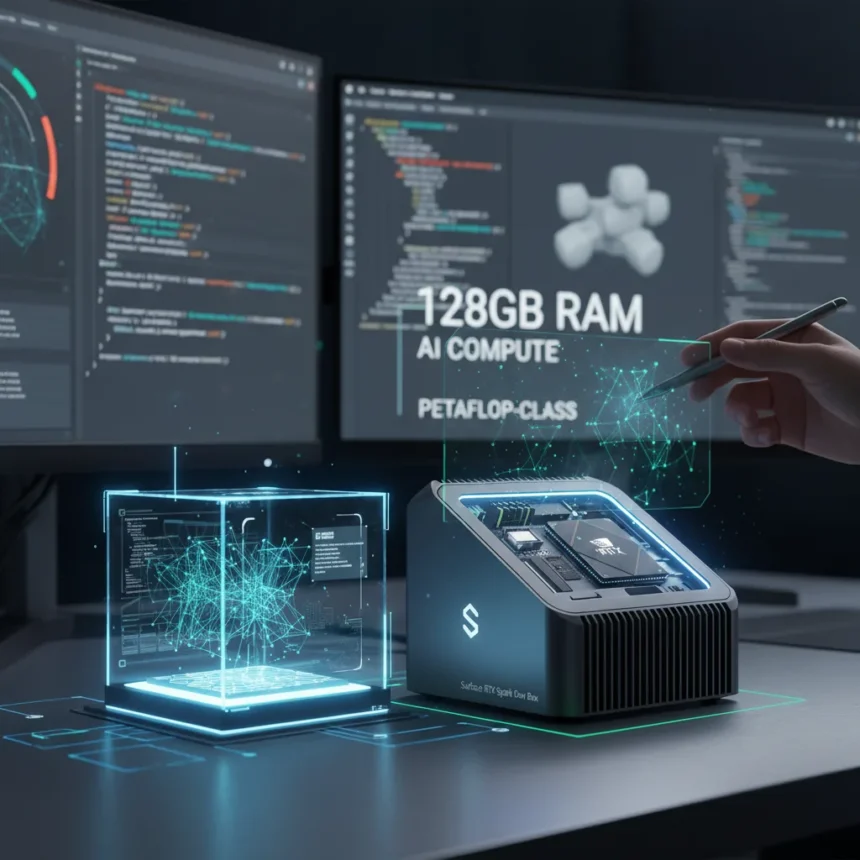
The Surface RTX Spark Dev Box is Microsoft’s first Surface-branded mini PC, built specifically for developers adopting NVIDIA’s new RTX Spark platform for local AI workloads. The system packs 128GB of RAM and one petaflop of AI compute power, arriving later this year as part of a coordinated push by Microsoft and NVIDIA to establish a new class of developer-focused AI hardware.
Key Takeaways
- Microsoft’s first Surface mini PC targets developers building local AI applications, not general consumers.
- The Surface RTX Spark Dev Box features 128GB RAM and petaflop-class AI compute power.
- RTX Spark is positioned as a Windows on Arm platform that runs every Windows application ever made, according to NVIDIA.
- The device represents a shift toward workstation-class performance for AI development on Windows Arm systems.
- Availability is planned for later this year as part of the Build/Computex announcement cycle.
What Makes the Surface RTX Spark Dev Box Different
The Surface RTX Spark Dev Box is not a consumer laptop or a typical Copilot+ AI PC. It is a developer workstation designed around NVIDIA’s RTX Spark platform, which emphasizes local AI inference and training without cloud dependency. The machine brings what Windows Central describes as workstation-class performance to Windows on Arm, a significant departure from the lighter-weight AI PCs that Qualcomm and other chip makers have positioned for everyday users.
The distinction matters because developers need raw compute power and memory capacity to train models, run inference at scale, and iterate quickly without latency. A standard AI PC with 16GB or 32GB of RAM and consumer-grade GPU performance cannot handle these workloads. The Surface RTX Spark Dev Box’s 128GB memory footprint and petaflop-scale compute address that gap directly, putting serious AI development capability on a developer’s desk instead of requiring cloud infrastructure.
RTX Spark and Windows on Arm Compatibility
NVIDIA CEO Jensen Huang claimed at Computex that RTX Spark will run every Windows application ever made, meticulously optimized for Arm architecture. That promise is central to the platform’s appeal. Developers have long resisted Arm-based Windows systems because legacy software, development tools, and frameworks often did not run natively or ran poorly through emulation. RTX Spark aims to eliminate that friction by ensuring backward compatibility while delivering native Arm performance.


The underlying hardware combines a 20-core Arm CPU complex with an RTX 5070-class GPU and 128GB of LPDDR5X memory, according to related reporting on the RTX Spark/N1X platform. That configuration is designed to handle both traditional Windows workloads and the memory-intensive demands of local AI development. Microsoft and NVIDIA’s coordinated messaging around Build 2026 and Computex suggests this is part of a broader Windows on Arm push, not just a one-off developer device.
Developer Focus and AI Agent Integration
Microsoft has signaled that the Surface RTX Spark Dev Box will showcase how AI agents can be used to build modern Windows applications and how developers can port existing Windows software to run natively on Arm. This positions the device not just as hardware but as a platform for demonstrating Microsoft’s vision of AI-assisted development and cross-architecture optimization. Developers who adopt RTX Spark early gain hands-on experience with tools and workflows that Microsoft plans to make central to Windows development.



The mini PC form factor is deliberate. It is small enough to fit on a developer’s desk alongside other equipment but powerful enough to handle serious workloads locally. This contrasts with cloud-based AI development, where latency, cost, and privacy concerns can slow iteration. A petaflop of local compute power means developers can experiment rapidly without spinning up expensive cloud instances.
How It Compares to Existing AI Developer Hardware
Current Qualcomm-based Arm Windows devices prioritize battery life and thinness for mobile users. The Surface RTX Spark Dev Box abandons those priorities in favor of pure performance and memory capacity. Existing developer workstations—whether Mac Studios, Linux boxes, or high-end Windows desktops—remain viable, but they do not integrate Microsoft’s push toward Windows on Arm and RTX Spark optimization. Early adopters of the Surface RTX Spark Dev Box gain access to a platform engineered specifically for the intersection of Windows development and local AI workloads.
Timing and Broader Implications
The announcement timing around Build 2026 and Computex is no accident. Microsoft and NVIDIA are signaling a coordinated shift in the AI hardware landscape. Rather than letting cloud providers dominate AI infrastructure, both companies are betting that developers want local, high-performance AI compute on their desks. The Surface RTX Spark Dev Box is the flagship product for that vision, but it will not be the only one—related reporting suggests multiple RTX Spark-based devices may launch from various manufacturers.
The broader Windows on Arm strategy depends on developer adoption. If developers trust RTX Spark to run their tools and workflows, enterprises will follow. Microsoft and NVIDIA are betting that the Surface RTX Spark Dev Box’s combination of memory, compute power, and compatibility will make that trust justified.



Is the Surface RTX Spark Dev Box for me?
The Surface RTX Spark Dev Box is exclusively for developers building AI applications, training models, or running inference workloads locally. If you are a general consumer, a content creator, or a business user, this device is not designed for you. It is a specialist tool for a specific audience.
When will the Surface RTX Spark Dev Box be available?
The device is coming later this year, with the announcement expected around Microsoft Build 2026 and NVIDIA’s Computex keynote. Exact pricing and regional availability have not been confirmed in available reports.
How does RTX Spark differ from standard AI PC platforms?
RTX Spark emphasizes local, petaflop-scale AI compute and workstation-class performance on Windows Arm, whereas standard AI PCs like Copilot+ systems prioritize efficiency and everyday productivity with lighter AI features. RTX Spark is built for developers; standard AI PCs are built for consumers.
The Surface RTX Spark Dev Box represents a genuine inflection point in how Microsoft and NVIDIA see AI development hardware. Rather than asking developers to choose between Windows compatibility and Arm efficiency, they are promising both—backed by serious compute power and memory. Whether that promise holds up in practice will determine whether RTX Spark becomes the standard for local AI development or remains a niche platform for early adopters.
Edited by the All Things Geek team.
Source: Windows Central