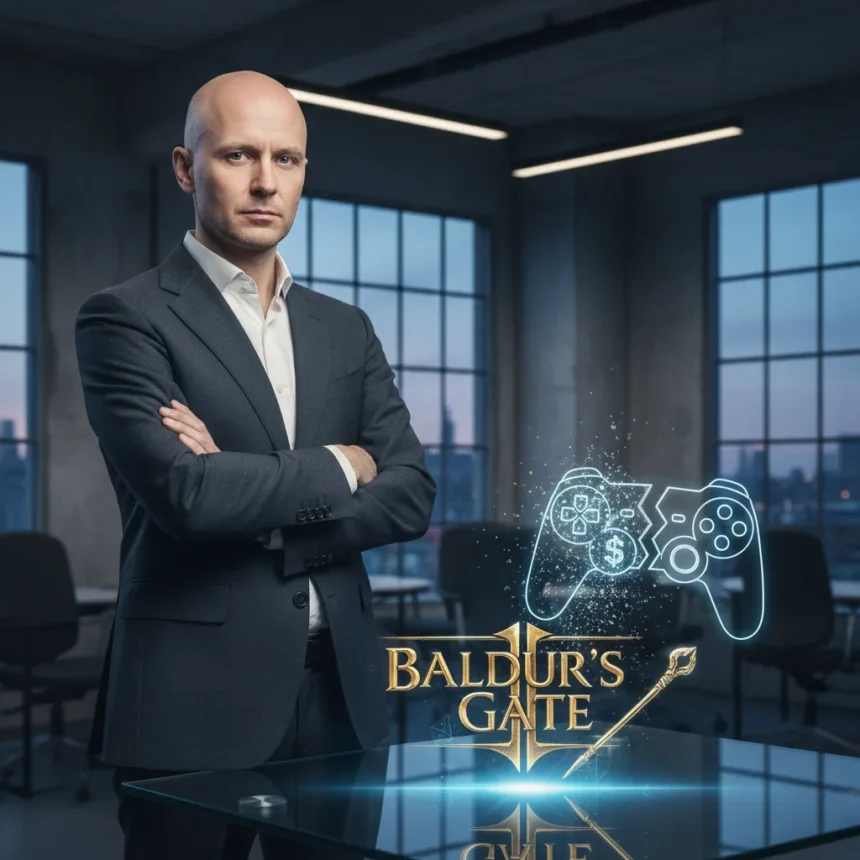
Swen Vincke, director of Baldur’s Gate 3 at Larian Studios, has publicly opposed Microsoft’s reported consideration of cheaper Xbox Game Pass tiers, declaring that “I don’t think race to the bottom needs a renaissance”. His Game Pass pricing strategy critique arrives as Microsoft’s new leadership explores lower-cost subscription options following widespread backlash over October 2025’s aggressive tier restructuring.
Key Takeaways
- Swen Vincke warns that cutting Game Pass prices would trigger an unsustainable “race to the bottom” in subscription gaming.
- Microsoft raised Game Pass Ultimate 50% to $29.99/month in October 2025, eroding perceived value.
- Current tiers range from Essential at $9.99/month to Ultimate at $29.99/month with 400+ games.
- Rumors of ad-supported free cloud tiers and PC/Premium mergers circulate, but no confirmed 2026 price cuts exist.
- Developers fear cheaper subscriptions compress margins and force unsustainable production costs.
Why Developers Fear Game Pass Pricing Strategy Cuts
The Game Pass pricing strategy debate centers on a fundamental tension: lower prices attract subscribers but reduce per-user revenue, forcing studios to either cut costs or abandon the platform entirely. Vincke’s concern reflects broader developer anxiety that Microsoft’s exploration of cheaper tiers would accelerate this squeeze. When Game Pass Ultimate jumped from $19.99 to $29.99 monthly in October 2025—a 50% increase—the subscription already faced criticism for eroding value. Now, with new Xbox leadership reportedly considering price reductions to reverse subscriber losses, developers worry they will be caught between unsustainable economics and competitive pressure to participate.
The timing of Vincke’s pushback is significant. Baldur’s Gate 3 became a breakout success partly through strategic exclusivity and marketing partnerships that emphasized premium positioning. A race to the bottom in Game Pass pricing contradicts that positioning and signals to the market that subscription content is commodified rather than valuable. For a studio like Larian, which invested years and substantial resources into Baldur’s Gate 3, cheaper subscription tiers threaten to devalue their work and set precedent for future projects.
Microsoft’s October 2025 Restructuring and Current Game Pass Pricing Strategy
To understand Vincke’s opposition, the context of Microsoft’s October 2025 overhaul is essential. Game Pass pricing strategy shifted dramatically when Microsoft renamed and repriced all tiers. Essential now costs $9.99 monthly with 50+ games and basic cloud; Premium sits at $14.99 monthly with 200+ games and Xbox titles added within 12 months; PC Game Pass remains $16.49 monthly; Ultimate climbed to $29.99 monthly with 400+ games, EA Play, Ubisoft+ Classics, and Fortnite Crew access (added November 2025). The Ultimate hike proved particularly controversial—doubling down on premium pricing just as competitors like PlayStation Plus and Game Pass itself faced subscriber fatigue.


Third-party discounts partially offset the sticker shock. Amazon and CDKeys offer Game Pass subscriptions at 20-40% discounts, stackable to 13 months of coverage, while Microsoft Rewards and seasonal promotions (like December 2025’s Discord Quest offering 14 free Premium days) provide alternative pathways to cheaper access. Yet these workarounds do not address the structural problem: Microsoft’s official pricing had become aggressive enough that executives began exploring lower-cost tiers to restore appeal.
Game Pass Pricing Strategy Rumors and the Ad-Supported Tier Question
Reports from February 2026 indicate Microsoft is weighing multiple options to broaden Game Pass appeal without slashing official prices. One rumored approach involves merging PC Game Pass and Premium into a unified cross-platform tier, eliminating redundancy and simplifying the product line. Another concept under consideration is an ad-supported free cloud tier, positioning Game Pass as a freemium service with optional premium upgrades. Neither option has been confirmed by Microsoft, and both carry risks that Vincke likely anticipates. An ad-supported tier could cannibalize full-price subscriptions, while a merged PC/Premium tier might alienate customers who value platform-specific pricing.

Vincke’s “race to the bottom” framing suggests he views all these options as variations on the same problem: devaluing game content through aggressive pricing or ad-supported models. His position aligns with industry concerns that subscription services, if they become the dominant distribution channel, must maintain healthy margins or risk collapsing under unsustainable development costs. Without sufficient per-user revenue, studios cannot justify investing in AAA-scale projects, leading to a contraction in ambition and scope across the industry.
What Vincke’s Stance Reveals About Developer Leverage
Baldur’s Gate 3’s success gives Vincke credibility that smaller studios lack. The game became a cultural phenomenon despite launching on PlayStation 5 and PC first, with Xbox versions arriving later—a choice that underscored Larian’s independence from Game Pass exclusivity. When Vincke speaks against Game Pass pricing strategy shifts, he speaks from a position of strength: Baldur’s Gate 3 succeeded because of its quality, not because it was bundled into a subscription service. That leverage allows him to critique Microsoft publicly without fear of retaliation, setting an example for other studios considering their own Game Pass participation.
His comments also reflect a generational shift in how major studios view subscriptions. Early Game Pass adopters treated the service as a marketing tool and revenue supplement. Now, as subscriptions mature and competition intensifies, studios increasingly view Game Pass participation as a strategic negotiation rather than a default choice. Vincke’s pushback signals that developers expect better terms, not worse ones, as Game Pass evolves.
Can Microsoft Satisfy Both Subscribers and Developers?
The core tension is irreconcilable without compromise. Subscribers want lower prices; developers want higher per-user revenue. Microsoft’s October 2025 price increases favored developers over subscribers, generating backlash that prompted leadership to explore cheaper alternatives. Yet cheaper alternatives, as Vincke warns, compress developer margins further and risk triggering the exact “race to the bottom” scenario that destabilizes the entire ecosystem.


One possible resolution involves tiered developer payouts tied to engagement metrics rather than flat per-subscriber revenue. Another involves hybrid models where ad-supported free tiers coexist with premium subscriptions, with developer compensation adjusted accordingly. Neither approach has been announced, and both require transparency and negotiation that Microsoft has not publicly committed to. Without such frameworks, Game Pass pricing strategy remains a zero-sum game where lower prices for consumers directly translate to reduced developer support and reduced investment in ambitious projects.
Is Game Pass pricing strategy headed toward a cheaper tier in 2026?
No confirmed cheaper tier has been announced by Microsoft as of February 2026. Reports suggest exploration of ad-supported free cloud and potential PC/Premium mergers, but these remain unconfirmed rumors. Microsoft’s new leadership is reportedly considering lower-cost options to reverse subscriber losses after the October 2025 price hike, but no official pricing cuts have been committed to.
Why does Swen Vincke oppose cheaper Game Pass tiers?
Vincke argues that cutting Game Pass prices would trigger a “race to the bottom” that undermines game development economics. Lower subscription revenue forces studios to reduce budgets, scope, or abandon the platform entirely, ultimately shrinking the diversity and ambition of games available to players. His concern reflects broader developer anxiety that Microsoft prioritizes subscriber growth over sustainable developer compensation.
How much did Game Pass Ultimate increase in 2025?
Game Pass Ultimate increased 50% in October 2025, rising from $19.99 to $29.99 monthly. The hike also included tier restructuring, with Essential at $9.99, Premium at $14.99, and PC Game Pass at $16.49, plus the addition of EA Play, Ubisoft+ Classics, and Fortnite Crew access to the Ultimate tier.
Vincke’s stance represents a rare moment of developer transparency about the economics underlying subscription gaming. Most studios avoid public criticism of major platforms out of fear of commercial retaliation. That Vincke felt compelled to speak suggests the anxiety among developers is genuine and widespread. Whether Microsoft listens—and whether it can thread the needle between subscriber affordability and developer sustainability—will define Game Pass pricing strategy for years to come.
Where to Buy
Edited by the All Things Geek team.
Source: Windows Central