Final Fantasy VII Rebirth Switch 2 proves that large-scale RPGs don’t need to shrink to fit portable hardware. Square Enix’s second chapter in its remake trilogy launches on Nintendo Switch 2 on June 3, 2026, with what developers describe as very few compromises despite the game’s expanded scope compared to the first entry. For players juggling 30 to 90 hours of gameplay across story completion and post-game content, the handheld format isn’t a concession—it’s an advantage.
Key Takeaways
- Final Fantasy VII Rebirth launches on Nintendo Switch 2 on June 3, 2026, with minimal visual compromises.
- The game spans 30-90 hours depending on playstyle and whether you tackle Intermission DLC.
- Director Naoki Hamaguchi calls Nintendo’s Game Key Cards “a really fantastic idea for us developers”.
- Switch 2 version prioritizes portability and pacing over PS5-level graphics performance.
- Combat system and story remain intact, designed for both short sessions and extended play.
Final Fantasy VII Rebirth Switch 2 Balances Scale With Portability
The core challenge of bringing Final Fantasy VII Rebirth to Switch 2 was straightforward: the game is bigger than its predecessor. Yet Square Enix resisted the temptation to strip features or significantly scale back ambition. Instead, the port makes smart visual compromises that preserve the RPG experience while embracing what portable play actually demands. The story, combat, and exploration remain intact—the trade-off is measured in frame rates and texture fidelity, not in content.
This approach matters because Final Fantasy VII Rebirth isn’t designed as a binge experience. The game’s pacing actually benefits from portable sessions, allowing major story moments to breathe rather than blur together in marathon play. A player might spend 45 minutes on the commute exploring a region, then return to it later with fresh perspective. That rhythm suits portable gaming far better than a compressed, visually perfect console experience ever could.
How Game Key Cards Solve the Hardware Problem
Nintendo’s Game Key Cards—physical cards containing only a download key rather than full game data—emerged as a practical solution to Switch 2’s cartridge loading limitations. Director Naoki Hamaguchi acknowledged the hardware constraint directly: cartridge loading speeds are tied to Switch 2’s technical specs, not Nintendo’s reluctance to improve them. Game Key Cards sidestep that bottleneck entirely, allowing developers to ship ambitious games without fighting cartridge architecture.

Hamaguchi’s endorsement carries weight because it comes from someone actually shipping a major AAA title on the hardware. He called the cards “a really fantastic idea for us developers” because they remove a genuine technical barrier. For Final Fantasy VII Rebirth, this means faster load times and smoother transitions—quality-of-life improvements that compound across a 30-90 hour adventure. The format remains divisive among players concerned about ownership and the shift toward digital distribution, but from a developer’s standpoint, it enables ports that wouldn’t otherwise be feasible.
Switch 2 vs. PS5: Different Strengths, Not a Downgrade
Comparing the Switch 2 version directly to the PS5 original reveals the trade-off clearly. The PS5 version offers superior graphics and performance stability, making it the best choice for players prioritizing visual fidelity. But that’s not the full story. The Switch 2 port of the related Final Fantasy VII Remake Intergrade is described as “the second-best way to play,” with the first-best being the PS5 version. That ranking acknowledges a simple fact: portability has value that graphics alone cannot quantify.
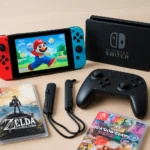
For a 30-90 hour game, convenience matters. A player with limited time at home but a long commute gains something the PS5 cannot offer—the ability to play when and where life happens. The Switch 2 version runs with lower visual quality and occasional frame drops compared to PS5, but the core experience—story, characters, combat depth—remains intact. It’s a genuine choice between competing priorities, not a compromised port of a superior version.
Combat and Story Hold Up in Handheld Form
Final Fantasy VII Rebirth’s combat system was built to accommodate both quick portable sessions and extended play. The game balances energetic action with moments requiring smart tactical choices, meaning 15-minute sessions feel purposeful rather than interrupted. You’re not constantly loading between encounters or watching cutscenes cut short—the game respects the portable format’s constraints while delivering the strategic depth players expect from a Final Fantasy title.
Story pacing also benefits from the handheld approach. Narrative beats that might feel rushed in a single 12-hour console session gain weight when experienced over days or weeks of portable play. Major character moments have space to settle. Plot developments resonate more because players aren’t fatigued from marathon sessions. This isn’t a weakness of the Switch 2 port—it’s a hidden strength that players will discover once they start playing.
Is the Switch 2 version worth playing over PS5?
If you own a PS5 and prioritize visuals and performance, the PS5 version remains the better choice. But if you travel frequently, have limited time at home, or simply prefer playing games portably, the Switch 2 version delivers the full Final Fantasy VII Rebirth experience with acceptable visual compromises. The question isn’t whether it’s “as good”—it’s whether portability justifies the visual step down for your lifestyle.

What’s the playtime for Final Fantasy VII Rebirth?
Final Fantasy VII Rebirth takes 30 to 90 hours depending on how you play. Story-focused players will finish in roughly 30-40 hours, while completionists tackling all side content and Intermission DLC can push toward 90 hours. That range makes the portable format especially appealing—it’s long enough to justify carrying with you, short enough to actually finish on a handheld device.
When does Final Fantasy VII Rebirth launch on Switch 2?
Final Fantasy VII Rebirth arrives on Nintendo Switch 2 on June 3, 2026. That’s the same day the game launches on the new hardware, giving Switch 2 owners immediate access to one of the year’s most anticipated RPGs. Pre-orders will likely use Nintendo’s Game Key Card format, allowing players to download the full game on day one rather than waiting for cartridge delivery.
Final Fantasy VII Rebirth on Switch 2 isn’t a compromise—it’s a different experience optimized for how modern players actually game. Square Enix recognized that a 90-hour RPG belongs in your pocket as much as on your TV, and built accordingly. Launch day, June 3, 2026, will prove whether that bet pays off.
Edited by the All Things Geek team.
Source: TechRadar