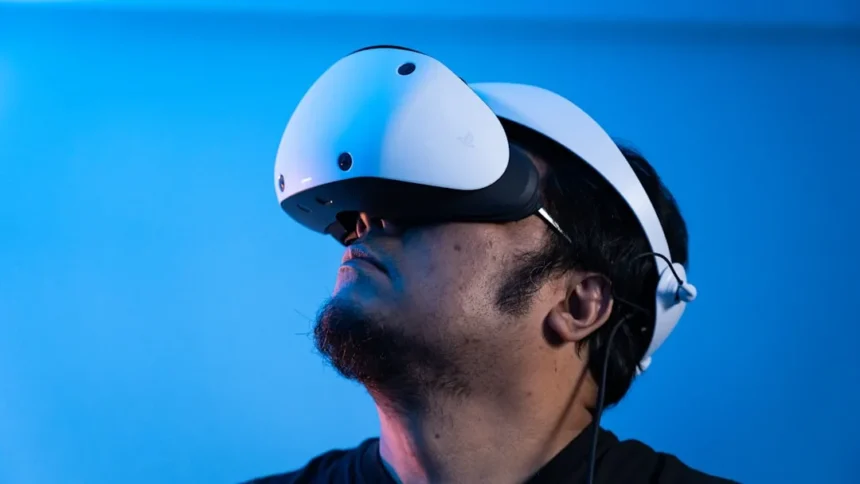
Free-to-play VR games are redefining what succeeds on Meta Quest, and the data tells a story that contradicts everything the industry expected five years ago. Studios once bet on premium single-player blockbusters modeled after franchises like Assassin’s Creed, Batman, and The Walking Dead. Instead, the Quest ecosystem is being dominated by social, multiplayer, arcade-style experiences that cost nothing to download. UG, a free-to-play title released less than six months before its rapid rise to prominence, exemplifies this shift with 1.2 million unique users, more than 100,000 daily active users, and peak concurrent sessions of 40,000. That is not a niche success—that is a fundamental market recalibration.
Key Takeaways
- UG has attracted 1.2 million unique users and averages over 100,000 daily active users since launch
- Meta’s 2026 developer messaging confirms that free-to-play and social games earn millions in revenue on Quest
- The Quest audience has shifted toward younger users who prefer multiplayer and free-to-play experiences over premium titles
- Mobile hardware limitations make arcade-style and multiplayer games a better fit for VR than large single-player adventures
- Games like The Thrill of the Fight 2 and UG prove multiple genres can find massive audiences on Quest
Why Free-to-Play VR Games Won the Platform War
The rise of free-to-play VR games on Meta Quest reflects a hard truth: the installed base does not want what early VR evangelists were selling. Quest runs on mobile hardware with real technical constraints. Large, sprawling single-player campaigns designed for high-end PC VR do not translate well to a device with those limitations. Free-to-play VR games sidestep this problem entirely by embracing arcade sensibilities, short play sessions, and multiplayer interaction. Players can jump in for five minutes or stay for an hour. The social element keeps them coming back.
UG’s success is not an outlier. Meta’s own 2026 developer messaging pairs UG with The Thrill of the Fight 2 as examples of games earning millions in revenue, demonstrating that this is not a single-title phenomenon but a platform-wide pattern. The Quest ecosystem is increasingly populated by younger users who grew up on free-to-play mobile games and expect that model on VR hardware too. Premium games still exist on Quest, but they no longer define the platform’s identity.
The Shift Away from Premium VR Blockbusters
Five years ago, the industry consensus was that VR needed AAA-quality experiences to justify the hardware investment. Publishers poured resources into premium titles meant to showcase VR’s cinematic potential. That strategy did not resonate at scale. The Quest audience proved it wanted accessibility, not prestige. Free-to-play VR games remove the barrier to entry entirely—there is no $40 or $60 commitment required to try a new experience. Once players are in, the social mechanics and competitive elements create retention without aggressive monetization.

This represents a philosophical inversion. Earlier VR assumed the audience would be hardcore enthusiasts willing to pay premium prices for premium experiences. Instead, the actual Quest user base behaves like mobile gamers. They expect free entry, social connection, and regular content updates. Games designed around those expectations succeed. Games designed around premium single-player narratives do not, regardless of their production value.
What Free-to-Play VR Games Reveal About Quest’s Real Audience
The popularity of free-to-play VR games exposes a mismatch between industry assumptions and market reality. The Quest audience skews younger and price-sensitive. These users do not have the disposable income to buy multiple $40 premium titles, and they do not prioritize cinematic storytelling over social interaction and competitive gameplay. UG succeeds because it delivers what that audience actually wants: a fun, accessible, multiplayer experience they can share with friends.
This does not mean premium VR games are dead. It means they are no longer the platform’s center of gravity. The future of VR on Quest is built on free-to-play foundations, social connectivity, and arcade-style design. Developers who understand this shift—who recognize that mobile VR hardware and a younger, price-conscious audience require a fundamentally different approach than PC VR—are the ones finding massive audiences and generating significant revenue.
Can Premium VR Games Still Compete?
Premium single-player VR titles can still find audiences, but they are increasingly niche experiences rather than platform tentpoles. The economics have shifted. A free-to-play game with in-app purchases and a large, engaged player base generates more revenue than a premium game with a smaller, more dedicated audience. Meta’s developer messaging validates this by highlighting the revenue success of free-to-play titles, not premium ones. The platform has chosen its winners, and they are not the blockbusters the industry expected.
Is UG the only free-to-play VR game finding success on Meta Quest?
No. Meta’s 2026 developer materials cite both UG and The Thrill of the Fight 2 as games earning millions in revenue on Quest, indicating that multiple free-to-play and social titles are finding massive audiences. The pattern is broader than any single game.
Why are free-to-play VR games more popular than premium titles on Meta Quest?
Free-to-play VR games remove the financial barrier to entry, appeal to younger and price-sensitive users, and leverage social and multiplayer mechanics that mobile hardware can support effectively. Premium single-player experiences require larger upfront investments and do not align as well with how Quest’s actual audience prefers to play.


Will Meta continue prioritizing free-to-play games over premium VR experiences?
Meta’s 2026 developer messaging emphasizes that multiple genres can succeed on Quest, but the revenue and engagement data clearly show free-to-play and social games are the platform’s growth engine. Expect the ecosystem to continue favoring that model.
The VR industry spent years building toward a future that never arrived. Premium blockbusters were supposed to drive adoption and justify expensive hardware. Instead, millions of Quest owners are playing free-to-play games like UG, and that shift is permanent. The industry did not fail—it simply misread its own audience. The real future of VR on Quest belongs to developers willing to embrace free-to-play models, social connectivity, and the constraints of mobile hardware as features, not limitations.
Where to Buy
Meta Quest 3S | Syntech Hard Carrying Case Compatible
Edited by the All Things Geek team.
Source: Android Central