





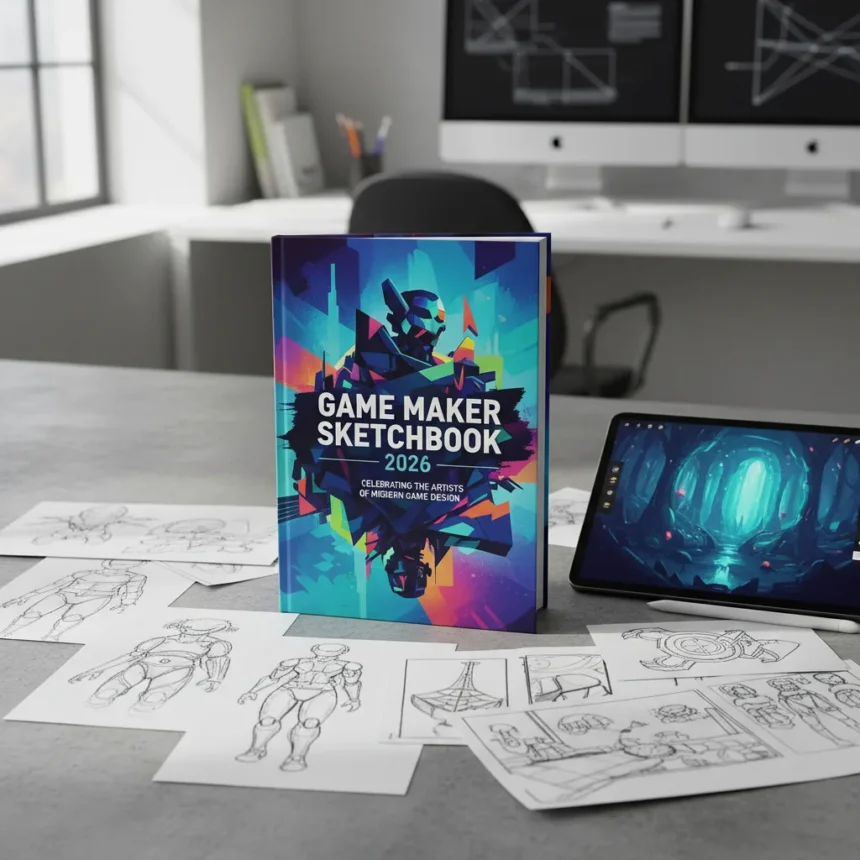
The Game Maker sketchbook 2026 celebrates game art creators whose work rarely receives mainstream recognition, despite shaping the visual identity of modern video games. While narrative designers and programmers often claim the spotlight, the artists behind character design and environment art remain the unsung heroes driving the industry’s creative evolution.
Key Takeaways
- Game art creators are frequently overlooked despite defining visual game aesthetics.
- The 2026 sketchbook highlights both character design and environment art disciplines.
- Game art spans iconic character creation and richly detailed world-building.
- Recognition of game artists strengthens the industry’s creative foundation.
- Curated showcases like the sketchbook elevate emerging and established artists alike.
Why Game Art Creators Deserve Recognition
Game art creators operate in the shadows of the gaming industry, producing work that players experience for dozens of hours but rarely attribute by name. Character designers craft the protagonists, antagonists, and NPCs that players emotionally invest in across entire campaigns. Environment artists build the worlds those characters inhabit—forests, cities, dungeons, and alien landscapes rendered in painstaking detail. Yet when a game succeeds, credit flows toward the director, the writer, the composer. The artists who made those worlds visually compelling remain largely invisible.
This visibility gap matters. Game art is not decoration layered atop functional game design—it is foundational. A character’s silhouette communicates their role before dialogue begins. Environmental details telegraph danger, safety, or narrative significance. Without skilled game art creators, even mechanically sound games feel hollow. The 2026 Game Maker sketchbook exists precisely to correct this imbalance, elevating artists whose contributions are essential but underrecognized.
Character Design and Environment Art: Two Pillars of Game Aesthetics
The 2026 selections span two distinct but equally critical disciplines. Character design demands understanding anatomy, silhouette, color theory, and the technical constraints of real-time rendering. A game character must read clearly on screen at multiple distances, animate smoothly, and convey personality through visual design alone. Environment artists face different challenges: creating cohesive worlds that feel lived-in, navigable, and visually distinctive while maintaining performance budgets that allow games to run smoothly across hardware tiers.


Both disciplines require technical knowledge alongside artistic vision. Modern game art creators must understand not only drawing and sculpture but also 3D modeling software, texture mapping, lighting systems, and the performance implications of their creative choices. They collaborate with programmers and designers to ensure art serves gameplay, not the reverse. This hybrid skill set—part artist, part engineer—defines contemporary game art practice.
Game Art Creators vs. Concept Artists: Understanding the Distinction
A common misconception conflates game art creators with concept artists. Concept artists generate exploratory designs and visual direction early in development. Game art creators take those concepts and build production-ready assets: models, textures, animations, and environmental layouts that ship in the final game. A concept artist might spend weeks exploring a character’s silhouette; a game artist spends months refining that silhouette into a rigged, textured, animatable model that performs within technical budgets. Both roles are essential, but they demand different skill sets and operate on different timelines.
The 2026 sketchbook celebrates both exploratory work and production art, recognizing that innovation happens at every stage of the pipeline. Early concept work establishes visual direction; production art executes that vision at scale. Neither exists without the other.
Why 2026 Matters for Game Art Recognition
The timing of the 2026 Game Maker sketchbook reflects a broader industry shift toward crediting and celebrating the artists who build games. As game budgets have grown and visual fidelity has become a core selling point, the role of game art creators has become impossible to ignore. Players increasingly seek out artist portfolios, follow individual creators on social media, and demand credits that name the teams behind their favorite games.
This recognition benefits the industry structurally. When game art creators gain visibility and career momentum, more talented artists pursue the discipline. Studios compete for top talent by offering better working conditions, creative autonomy, and public credit. The result is a virtuous cycle: better artists produce better games, which attract more artists to the field. The 2026 sketchbook accelerates this cycle by showcasing work that might otherwise remain visible only to industry insiders.
What Makes Game Art Stand Out in 2026
Contemporary game art reflects technological advancement and stylistic diversity. Some creators push photorealism, leveraging real-time ray tracing and advanced rendering techniques to blur the line between game graphics and film. Others embrace stylization—cel shading, hand-painted textures, and exaggerated proportions that prioritize clarity and personality over realism. Still others blend disciplines, combining 2D illustration with 3D assets or integrating procedural generation to create dynamic, evolving environments.


The 2026 selections likely showcase this range, celebrating artists working across engines, genres, and aesthetic philosophies. A character designer working on an indie pixel-art game deserves the same recognition as one building AAA photorealistic models. The sketchbook’s curation affirms that excellence in game art transcends budget, scope, or technology choice.
How Game Art Creators Shape Player Experience
Game art creators influence player experience in ways that extend far beyond aesthetics. A well-designed character model that animates smoothly reduces player frustration during combat or platforming sequences. Environmental art that clearly distinguishes walkable surfaces from obstacles improves navigation and reduces accidental deaths. Color palettes that shift subtly between safe and dangerous zones provide intuitive feedback without explicit UI elements. These are not cosmetic choices—they are functional design decisions that game art creators make in service of gameplay.
The best game art is invisible in the sense that it works so smoothly that players never consciously notice it. They simply feel that the game world is cohesive, responsive, and alive. That invisibility is precisely why game art creators remain unsung. When art succeeds, it feels inevitable, not like a deliberate creative choice. The 2026 sketchbook makes visible the intentionality behind that apparent inevitability.
Frequently Asked Questions
What is the difference between concept art and game art?
Concept art explores visual direction and design possibilities early in development, often as 2D illustrations. Game art comprises production-ready assets—3D models, textures, animations, and environments—that actually appear in the finished game. Concept artists establish the vision; game artists execute it within technical constraints.
Why are game art creators often overlooked?
Game art creators work behind the scenes on technical tasks that players experience but do not consciously attribute. Unlike narrative or music, visual art is often perceived as a technical requirement rather than a creative achievement. Greater industry recognition and dedicated showcases like the 2026 sketchbook are gradually correcting this imbalance.
Can a game succeed with mediocre art?
Rarely. Even mechanically excellent games feel unpolished and unmemorable without skilled game art. Visual cohesion, clear communication through design, and aesthetic distinctiveness are competitive advantages. As player expectations rise and visual fidelity becomes a standard feature, the quality of game art increasingly determines whether a game stands out or fades into obscurity.
The 2026 Game Maker sketchbook represents a turning point in how the industry acknowledges its visual creators. By celebrating game art creators alongside narrative designers and programmers, the gaming community moves closer to recognizing that great games are built by multidisciplinary teams where every role—including art—is essential. These artists deserve their moment in the spotlight, and the sketchbook ensures they receive it.
Edited by the All Things Geek team.
Source: Creativebloq




