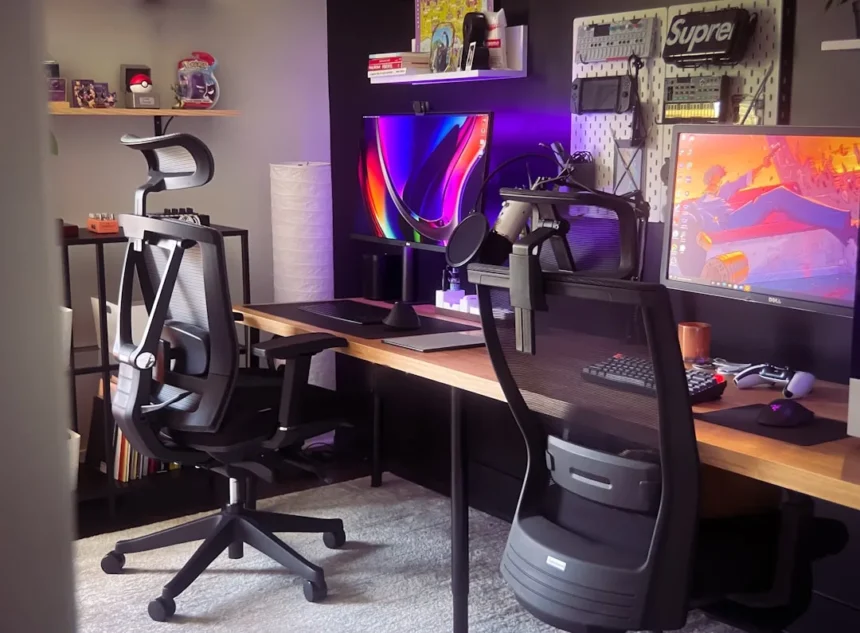
Gaming chair design home office seating represents a fundamental shift in how manufacturers approach workplace comfort and durability. Lin Zhou, CEO of AndaSeat, argues that the company’s two decades of gaming-chair engineering directly translates to creating office furniture that withstands real-world punishment far better than conventional home-office pieces.
Key Takeaways
- AndaSeat applies gaming-chair stress-testing protocols to home office furniture design and validation.
- Lin Zhou claims the company performs tests that would destroy standard office furniture.
- Gaming chairs undergo durability testing far more rigorous than typical office seating standards.
- The shift into home office represents AndaSeat’s expansion beyond the gaming market.
- Durability and ergonomic engineering from gaming chairs address home office worker needs.
How Gaming Chair Design Transforms Home Office Durability
The central premise of AndaSeat’s home office strategy is straightforward: gaming chairs are built to survive punishment that would snap conventional office furniture. Lin Zhou, speaking to TechRadar Pro, emphasized that the company performs stress tests that would destroy standard office furniture. This is not marketing hyperbole—it reflects a fundamental design philosophy. Gaming chairs must survive hours of daily use, aggressive repositioning, and the kind of abuse that office workers inflict on seating without thinking. A standard office chair, designed for moderate daily use in a corporate environment, simply cannot match this durability threshold.
The testing regimen AndaSeat applies to gaming chairs focuses on real-world failure points: armrest welds, base-plate joints, gas-cylinder integrity, and upholstery stress under repeated motion. When these same protocols are applied to home office furniture, the result is seating that outlasts competitors by years. This is not a marginal difference. A gaming chair built to survive 10,000 hours of intense use will perform reliably for home office workers who might use their chair for 4,000 to 6,000 hours annually. Standard office furniture, designed for lighter duty cycles, fails at stress points that gaming-grade engineering eliminates entirely.
Gaming Chair Design Home Office: Why Ergonomics Matter Beyond Gaming
The home office worker faces a different ergonomic challenge than a gamer, yet both groups spend hours seated in the same posture. This overlap is where gaming-chair expertise becomes relevant to home office seating. Gamers demand lower-back support, adjustable armrests, and seat-height precision because poor ergonomics degrade performance in competitive environments. Office workers need the same features because poor posture during an eight-hour workday causes chronic pain and productivity loss.


AndaSeat’s positioning frames gaming-chair design as inherently superior to conventional office seating because the gaming market demands solutions that corporate furniture manufacturers have never prioritized. A gaming chair with poor lumbar support will be rejected by users within weeks. An office chair with the same flaw might persist in a corporate environment for years because workers accept it as standard. By applying gaming-market standards to home office products, AndaSeat argues it is creating seating that meets a higher ergonomic bar than what workers typically encounter.
The Testing Philosophy Behind Gaming Chair Durability
What separates gaming-chair manufacturers from traditional office-furniture makers is not just design—it is the severity of testing protocols. Lin Zhou’s statement that the company performs tests that would destroy standard office furniture reflects a real methodological difference. Gaming-chair manufacturers stress-test components to failure, then redesign to survive 2-3 times that failure threshold. Office furniture testing, by contrast, typically validates compliance with industry standards that set much lower durability targets.



This gap between gaming-chair and office-furniture standards is the core of AndaSeat’s value proposition. A conventional office chair might be tested to support 250 pounds for 5,000 hours. A gaming chair undergoes testing that validates it can support heavier loads, withstand more aggressive repositioning, and survive years of continuous use without structural failure. When AndaSeat applies this same rigor to home office seating, it is not simply rebranding gaming chairs—it is bringing a superior testing and design methodology to a market segment that has historically accepted lower durability standards.
Frequently Asked Questions
What makes gaming chair design relevant to home office furniture?
Gaming chairs are engineered for durability and ergonomic support under intensive daily use. These same design principles—reinforced joints, adjustable lumbar support, and stress-tested components—directly address the needs of home office workers who spend 6-8 hours daily in their chairs. The testing rigor applied to gaming chairs exceeds standard office furniture durability requirements.
How does AndaSeat’s testing approach differ from standard office furniture?
AndaSeat performs stress tests designed to identify failure points in components like armrest welds, gas cylinders, and base plates. According to Lin Zhou, these tests are severe enough to destroy conventional office furniture. Standard office seating is typically tested to industry compliance standards that set lower durability thresholds, making gaming-chair testing protocols significantly more rigorous.
Is gaming chair design home office seating actually more comfortable than traditional office chairs?
Comfort is subjective, but gaming chairs prioritize lumbar support, adjustable armrests, and seat-height precision—features that office workers also value. Because gaming-chair manufacturers face more competitive pressure to deliver ergonomic solutions, their designs often exceed the comfort standard of conventional office furniture. The durability advantage is measurable; the comfort advantage depends on individual preference.


AndaSeat’s expansion into home office furniture represents a broader market recognition that gaming-chair engineering solves real problems for anyone who spends hours seated daily. By bringing stress-testing rigor and ergonomic design standards from gaming into the home office space, the company is challenging the assumption that office and gaming seating are fundamentally different categories. For workers tired of replacing chairs every few years, this engineering shift matters.
Edited by the All Things Geek team.
Source: TechRadar