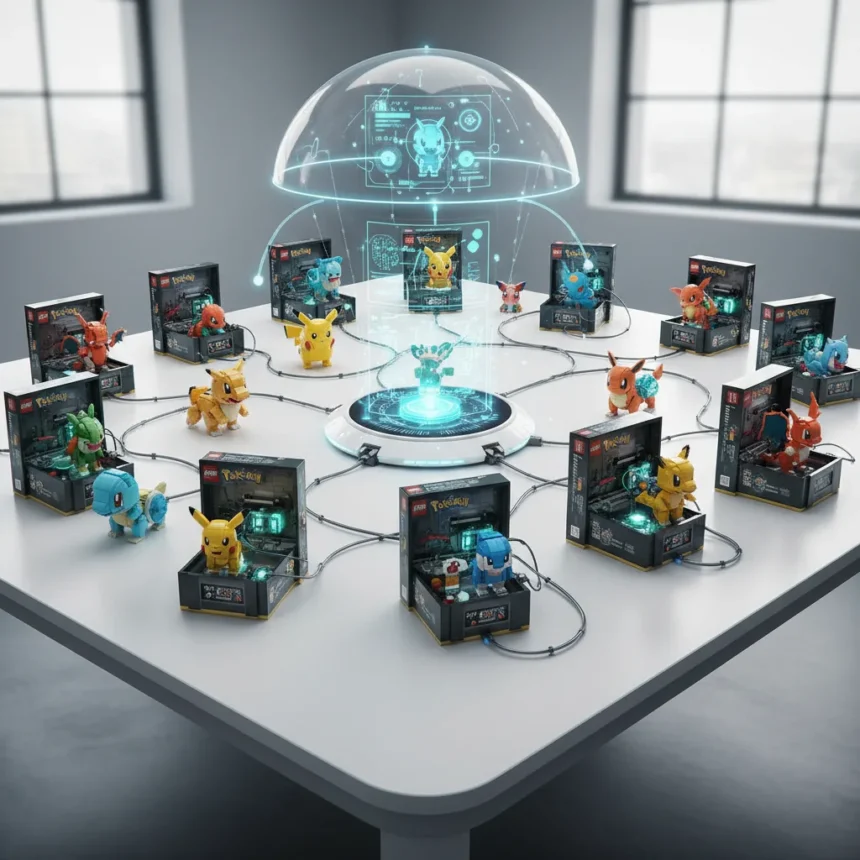
Lego Smart Play Pokémon represents a significant shift in how the Danish brick maker approaches licensed intellectual property. Twelve new sets announced that interact with each other signal Lego’s commitment to blending physical construction with connected digital-style gameplay, moving beyond traditional static brick sets.
Key Takeaways
- Lego Smart Play Pokémon includes 12 new sets designed to interact with each other
- The sets represent a connected ecosystem approach rather than standalone products
- Lego has precedent with interactive play through its Super Mario brick system
- The partnership positions Pokémon as a flagship property for Lego’s interactive play platform
- Physical building combines with game-like mechanics in the Smart Play concept
What Makes Lego Smart Play Pokémon Different
Lego Smart Play Pokémon departs from traditional licensed brick sets by emphasizing interaction between individual products. Rather than releasing a collection of standalone sets, the company has engineered twelve sets that communicate and respond to each other during play. This interconnected approach transforms the building experience from isolated construction into a cohesive ecosystem where each set enhances the others.
The precedent for this strategy already exists within Lego’s portfolio. The company’s Super Mario brick system combines physical building with sensor-based gameplay, where the Mario figure recognizes different terrain colors and activity blocks as children traverse levels, effectively role-playing a video game through brick construction. This proven model demonstrates that Lego audiences embrace hybrid physical-digital experiences when executed thoughtfully.
How Lego Smart Play Pokémon Fits the Larger Ecosystem
The announcement of twelve interconnected sets suggests Lego views this as a platform rather than a limited product run. By designing multiple sets to interact with each other, the company creates incentive for collectors and players to acquire multiple products, building a deeper engagement ecosystem. This differs fundamentally from traditional Lego releases, where each set functions independently.


Pokémon as a property carries inherent advantages for this approach. The franchise’s existing game mechanics—catching, training, and battling creatures—translate naturally into interactive brick-building scenarios. Players already understand progression systems and collection mechanics from the video games and trading card games, making the leap to interactive physical sets less conceptually demanding than introducing such mechanics to unfamiliar properties.
Why Lego Smart Play Pokémon Matters Now
The timing of this announcement reflects broader industry trends toward experiential, connected play. Lego Smart Play Pokémon arrives as toy makers increasingly recognize that static products compete poorly against digital entertainment. By embedding interaction and progression into physical sets, Lego positions its Pokémon line as a compelling alternative to screen-based play rather than a supplement to it.
The twelve-set announcement also signals confidence in the partnership’s commercial potential. Lego does not typically launch ecosystem-sized product families unless the company expects sustained consumer interest. This scale of investment suggests both Lego and The Pokémon Company view the interactive brick concept as a long-term revenue driver rather than a novelty release.
Lego Smart Play Pokémon vs. Traditional Lego Sets
Traditional Lego sets reward builders for following instructions and creating static displays or basic play scenarios. Lego Smart Play Pokémon inverts this model by rewarding interaction, combination, and progression. A child building one set gains basic play value; building multiple sets unlocks additional mechanics unavailable in isolation. This design philosophy encourages deeper investment and repeated engagement rather than one-time construction satisfaction.
The distinction matters for parents and collectors evaluating purchase decisions. A traditional Lego set’s value remains constant regardless of what other sets you own. Lego Smart Play Pokémon sets appreciate in value—functionally and experientially—as your collection grows. This creates a different financial and emotional calculus than conventional brick purchases.
What We Still Don’t Know About Lego Smart Play Pokémon
The announcement confirms the existence of twelve interconnected sets but leaves crucial details unconfirmed. Specific set names, individual pricing, release dates, and the precise mechanics governing set interaction remain undisclosed. Whether the sets use sensors similar to the Super Mario system or employ a different technological approach is not yet public. These details will determine whether Lego Smart Play Pokémon represents genuine innovation or a cosmetic refresh of existing interactive play frameworks.

Are the sets available now?
The announcement of Lego Smart Play Pokémon sets has been made, but specific release dates and availability windows have not been confirmed in available sources. Interested buyers should monitor official Lego and Pokémon channels for launch timing and pre-order information.
How do the sets interact with each other?
The specific interaction mechanics between Lego Smart Play Pokémon sets have not been detailed in available announcements. The sets are designed to connect and respond to each other during play, but whether this involves sensors, app connectivity, or physical building combinations remains unconfirmed.
How many sets are in the Lego Smart Play Pokémon line?
Twelve new sets have been announced as part of the Lego Smart Play Pokémon launch. These sets are specifically designed to interact with each other, forming a connected ecosystem rather than standalone products.
Lego Smart Play Pokémon represents an ambitious attempt to redefine licensed brick play for an audience raised on interactive digital experiences. By designing an entire ecosystem of interconnected sets rather than isolated products, Lego signals that the future of physical toys lies in seamless integration with game-like progression and reward mechanics. Whether the execution matches the ambition will determine whether this becomes a template for future Lego partnerships or a one-off experiment.
Where to Buy
Lego The Mighty Bowser (71411) | Lego UCS Millennium Falcon (75192) | Lego Ghostbusters ECTO-1 (10274)
Edited by the All Things Geek team.
Source: T3