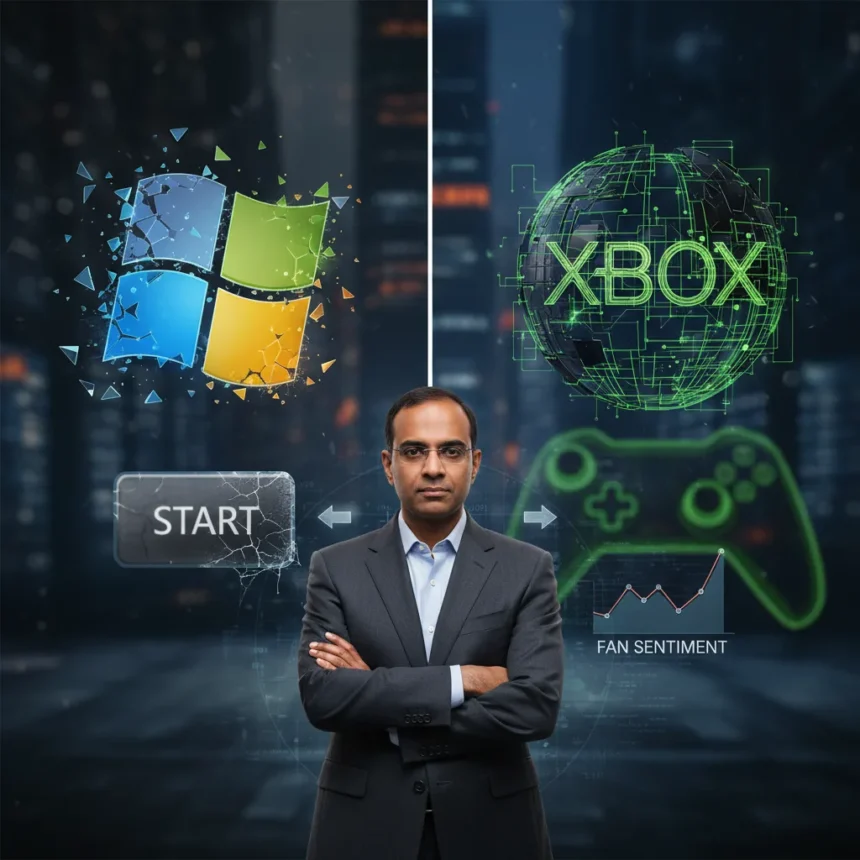
Microsoft’s Windows and Xbox rebuild represents the company’s most explicit acknowledgment yet that years of strategic missteps and user frustration have damaged its relationship with consumers. CEO Satya Nadella recently declared that Microsoft is “doing the work required to win back fans across Windows and Xbox,” signaling a shift toward rebuilding trust through foundational changes rather than incremental tweaks.
Key Takeaways
- Satya Nadella committed to foundational changes for Windows and Xbox to rebuild fan trust after years of backlash.
- Microsoft reorganized Windows leadership under a new “Experiences & Devices” structure to prioritize user feedback over legacy support.
- Xbox strategy shift includes porting exclusives to PlayStation, confusing fans and contradicting Nadella’s past positions on console gaming.
- Internal Q&A with Xbox leadership acknowledged online backlash and missteps as core problems requiring systemic fixes.
- Fan skepticism remains high—many view the timing of Microsoft’s pivot as reactive rather than proactive.
What Nadella Actually Means by Foundational Changes
When Nadella says Microsoft is making foundational changes, he is not talking about cosmetic updates or marketing repositioning. In recent internal discussions with Xbox leadership, including Xbox CEO Asha Sharma, Nadella explicitly acknowledged that gaming is a “core part” of Microsoft and that the company is “long on gaming”. This matters because it directly contradicts years of messaging that treated gaming as secondary to cloud and enterprise priorities. The Windows and Xbox rebuild is not about new features—it is about restructuring how decisions get made.
The company has reorganized its Windows team into a new “Experiences & Devices” division under Rajesh Jha, signaling a fundamental shift away from legacy system support toward new hardware and user-centric design. Nadella has also sent internal memos prioritizing security above all other concerns, stating: “If you’re faced with the tradeoff between security and another priority, your answer is clear: Do security.” This reframes Windows development around stability rather than feature chasing.
Why Fans Don’t Trust the Pivot Yet
Microsoft’s credibility problem runs deeper than recent announcements. For years, Nadella has made contradictory statements about gaming and console strategy. In 2017, he quoted Alan Kay to justify hardware investment: “If you’re serious about your software, you make your own hardware”. Yet Microsoft then began porting Xbox exclusives to PlayStation, a move that alarmed core fans and suggested the company was deprioritizing its own ecosystem. Call of Duty revenue grew 5% year-over-year in FY25 Q3, partly driven by multi-platform availability, but this strategy has confused Xbox loyalists about Microsoft’s long-term commitment.


Fan skepticism about timing is justified. Microsoft’s shift toward user feedback and fan-focused messaging comes after years of criticism, not before it. Observers note that the company’s recent announcements feel reactive—responding to backlash rather than anticipating user needs. One widely circulated claim that Nadella gave Xbox CEO Asha Sharma a “blank check” to fix Xbox was explicitly denied by Microsoft’s chief communications officer Frank Shaw, who stated the quote was inaccurate. This correction itself signals how fragile trust remains—fans are now fact-checking Microsoft’s own internal messaging.
The Historical Context: From Needing Windows to Loving It
Nadella has been clear about his vision for Microsoft’s consumer products since 2015, when he stated: “We want to move from people needing Windows to choosing Windows, to loving Windows. That is our goal”. Nearly a decade later, Windows 11 adoption has been sluggish, and Xbox has lost ground to PlayStation and Nintendo in key markets. The gap between aspiration and execution is the real story of the Windows and Xbox rebuild.
Microsoft’s challenge is not announcing change—it is proving that change sticks. The company faces a competitor set ranging from Apple’s tightly integrated hardware-software ecosystem to Sony’s PlayStation dominance in gaming. Unlike those competitors, Microsoft has historically treated consumer products as secondary to enterprise revenue, a strategic imbalance that Nadella must genuinely reverse, not just rhetorically acknowledge.
What Success Would Actually Look Like
For the Windows and Xbox rebuild to succeed, Microsoft needs to demonstrate three things: sustained investment in user experience without feature-chasing, transparent communication about long-term strategy, and willingness to admit and fix past errors. The security-first memo is a step toward the first goal. The internal Q&A with Xbox leadership addresses the second. The third remains untested.
Nadella’s recent statements suggest he understands the stakes. Gaming is no longer positioned as a side business but as core to Microsoft’s identity. Windows is being restructured around user needs rather than technical debt. These are not small shifts. But words are cheap in tech. Fans have heard promises before. The Windows and Xbox rebuild will be judged not on Nadella’s quotes but on whether Microsoft actually ships products that users choose to love, not merely tolerate.
Is Microsoft really committed to gaming long-term?
Nadella’s recent internal statements and reorganization suggest genuine commitment, but his past contradictions—particularly around console exclusives and gaming investment—have eroded trust. The company’s porting of exclusives to PlayStation, while driving revenue growth, signals a shift away from console-exclusive strategy that some interpret as de-prioritization rather than expansion.

Why did Microsoft reorganize Windows leadership?
The restructure into “Experiences & Devices” under Rajesh Jha prioritizes user feedback and new hardware development over legacy system maintenance. This reflects Nadella’s memo prioritizing security and stability, signaling a fundamental shift in how Windows decisions are made and evaluated.
What does the Windows and Xbox rebuild mean for consumers?
Consumers should expect slower feature rollouts but more stable systems, greater focus on user feedback in product design, and a clearer commitment to gaming as a core Microsoft business. However, skepticism is warranted—Microsoft’s credibility on consumer products depends on sustained execution, not announcements.
The Windows and Xbox rebuild is Microsoft’s attempt to reset its relationship with consumers after years of missteps. Nadella’s acknowledgment of fan backlash and commitment to foundational change is significant. But in tech, intentions matter far less than outcomes. Microsoft will be judged on whether its products actually improve, not on how many times leadership repeats the word “foundational.”
Where to Buy
Edited by the All Things Geek team.
Source: Windows Central