





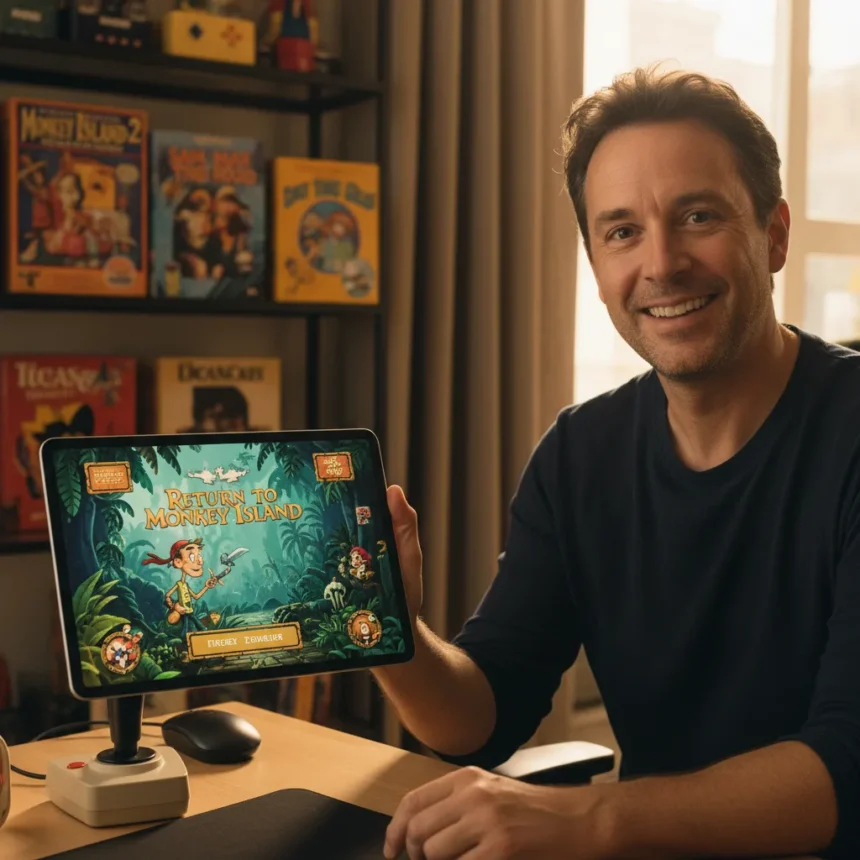
Point-and-click adventure games defined a generation of gaming in the 1990s, and Return to Monkey Island—the sixth entry in the Monkey Island franchise, released in 2022—proves the genre’s nostalgic pull remains surprisingly strong. For players who spent their youth hunting for pixel-perfect inventory combinations and witty dialogue trees, the return to Melee Island feels less like revisiting the past and more like coming home.
Key Takeaways
- Return to Monkey Island launched in 2022 as the sixth game in the Monkey Island series.
- Point-and-click adventure games shaped gaming culture through the 1990s with titles like The Secret of Monkey Island and Day of the Tentacle.
- The genre’s resurgence reflects growing player appetite for narrative-driven, puzzle-focused gameplay over action-heavy mechanics.
- Modern point-and-click adventures balance accessibility with the challenge and charm that defined the LucasArts era.
- Nostalgia alone does not drive Return to Monkey Island’s appeal—the game’s design philosophy respects both legacy and contemporary expectations.
Why Point-and-Click Adventure Games Matter Now
Point-and-click adventure games represent a distinct philosophy: story and puzzle-solving take precedence over reflexes and twitch mechanics. The genre thrived in the late 1980s and 1990s, when LucasArts defined the format with titles like The Secret of Monkey Island and Day of the Tentacle. These games rewarded curiosity, lateral thinking, and patience. A player might spend hours examining every object in a room, talking to every character, and trying absurd inventory combinations—and the game would reward them with humor, plot advancement, or both.
That design sensibility has largely vanished from mainstream gaming, replaced by open-world exploration, real-time combat, and cinematic presentation. Point-and-click adventure games occupy a niche, yet Return to Monkey Island’s 2022 release suggests that niche is growing. Players hungry for slower-paced, dialogue-heavy experiences are returning to a genre that respects their intelligence and rewards exploration over reflexes. The game’s existence is itself a statement: there is still an audience willing to pay for games built around conversation, mystery, and comedy rather than combat and progression systems.
Return to Monkey Island and the Legacy of LucasArts
Return to Monkey Island does not exist in isolation. It arrives as a direct heir to The Secret of Monkey Island and Day of the Tentacle, two games that shaped how players expected adventure games to feel. Those games were funny—genuinely funny, with writing that treated players like adults capable of appreciating absurdist humor and pop culture references. They were also challenging without being punishing. If you got stuck, the game did not mock you; it offered hints, alternative paths, or simply waited until you tried the right combination.


The sixth Monkey Island game inherits this philosophy. Playing it now triggers immediate recognition in anyone who spent hours with its predecessors. The interface feels familiar. The pace feels deliberate. The writing still aims for humor. But Return to Monkey Island also understands that modern players have different expectations. The game respects accessibility without sacrificing depth, a balance that earlier point-and-click adventures could not always achieve. This is not a carbon copy of the 1990s—it is a thoughtful evolution of what made those games matter in the first place.
The Broader Resurgence of Story-Driven Gaming
Return to Monkey Island arrives during a broader shift in player preferences. While blockbuster studios chase engagement metrics and live-service mechanics, independent developers and smaller publishers have found success with narrative-focused, puzzle-driven games. Players are increasingly willing to slow down, read dialogue, and think about problems rather than react to them. This shift is not nostalgia alone—it is a genuine hunger for games that respect player intelligence and offer experiences that do not require constant mechanical skill.
Point-and-click adventure games benefit from this shift because they were always built around these principles. They do not compete with action games on reflexes; they compete on writing, puzzle design, and world-building. Return to Monkey Island taps into both the specific nostalgia of the Monkey Island franchise and this broader appetite for games that prioritize story and thought over speed and reflexes. A player discovering the game for the first time experiences it differently than a player returning after decades away, but both find value in the same design philosophy: exploration, conversation, and clever puzzle-solving as the core of the experience.
How Return to Monkey Island Compares to Its Predecessors
The original Secret of Monkey Island, released in 1990, established the template: point-and-click inventory puzzles, witty dialogue, a protagonist with clear goals, and a world that rewarded curiosity. Day of the Tentacle, released in 1993, expanded the formula with multiple playable characters and time-travel mechanics. Both games became touchstones because they balanced accessibility with depth. A casual player could enjoy the humor and story; a dedicated player could spend hours hunting for every joke and secret.
Return to Monkey Island, arriving 32 years after the original, faces a different landscape. Modern players expect higher production values, more intuitive interfaces, and faster pacing. The game cannot simply recreate the 1990s experience—it must honor that experience while meeting contemporary expectations. By all accounts, it succeeds. The game feels like a natural continuation of the series, not a museum piece. It understands what made the originals work and applies that understanding to a modern context. This is harder than it sounds. Many nostalgic revivals fail because they either slavishly copy the past or abandon it entirely. Return to Monkey Island finds a middle path.
What Makes Point-and-Click Adventures Timeless
At their core, point-and-click adventure games are about agency and discovery. You interact with a world by clicking on objects and people. The game responds based on what you clicked and what you carry. This simple mechanic creates a feedback loop: you explore, you find items, you try them on problems, you progress. The satisfaction comes not from executing a difficult maneuver but from understanding the puzzle designer’s logic and finding the right solution. This type of satisfaction does not age. A puzzle that was clever in 1990 is still clever in 2024.


The writing matters equally. Point-and-click adventures live or die by dialogue quality and character voice. Monkey Island games succeeded because they were funny. The jokes were smart, the characters had personality, and the script respected the player’s intelligence. This too does not age. Good writing is good writing. Return to Monkey Island inherits this tradition. If the writing is strong—if the jokes land, if the characters feel alive, if the story engages—then the game succeeds regardless of when it was released or how many sequels came before it.
Is Return to Monkey Island worth playing for newcomers?
Yes. You do not need to have played the original Monkey Island games to enjoy Return to Monkey Island. The sixth game tells a story that stands on its own while rewarding longtime fans with callbacks and references. If you enjoy narrative-driven games, puzzle-solving, and witty dialogue, the game is worth your time. The point-and-click adventure genre is built for players who prefer thinking to reflexes, and Return to Monkey Island is a solid entry point to that philosophy.
How does Return to Monkey Island connect to Day of the Tentacle?
Both games are LucasArts-era point-and-click adventures that prioritize humor, clever puzzle design, and character-driven storytelling. Day of the Tentacle was released in 1993, a few years after The Secret of Monkey Island. While the games are separate franchises with different characters and settings, they share a design philosophy and a comedic sensibility. Players who loved Day of the Tentacle will recognize the approach in Return to Monkey Island, though the games do not require each other to make sense.
What platforms is Return to Monkey Island available on?
The research brief does not contain specific platform availability information for Return to Monkey Island. To find current platform availability, check the game’s official publisher website or major digital storefronts.
Return to Monkey Island proves that point-and-click adventure games are not a relic of the 1990s—they are a distinct design philosophy that remains relevant whenever a developer commits to it with intelligence and care. The game’s success suggests that players are hungry for experiences that value story, humor, and puzzle-solving over mechanical skill and constant action. In a gaming landscape increasingly dominated by live-service mechanics and engagement-focused design, a game that trusts players to slow down and think feels genuinely subversive. For anyone who spent their youth with The Secret of Monkey Island or Day of the Tentacle, Return to Monkey Island is a reminder of what made those games special. For newcomers, it is an invitation to discover a genre built on principles that never go out of style.
Edited by the All Things Geek team.
Source: TechRadar




