





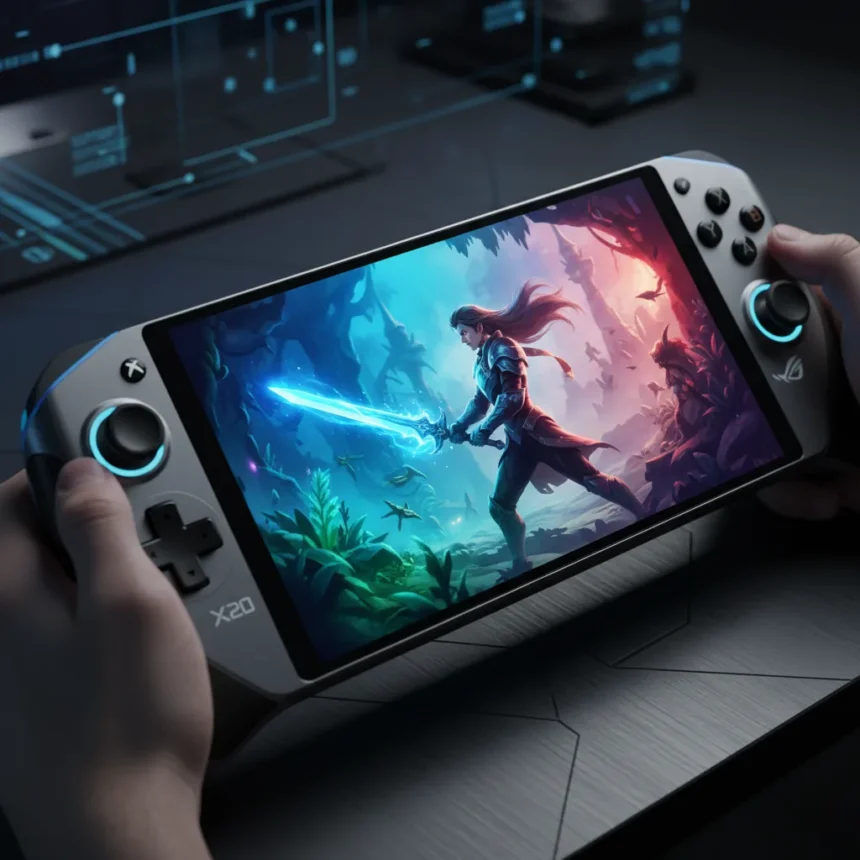
The ROG Xbox Ally X20 OLED finally answers the question that’s haunted the handheld gaming space for years: what if you paired serious processing power with a display that could actually show it off? Using the device confirms that an OLED screen was the most critical upgrade this handheld needed, not another bump in RAM or storage.
Key Takeaways
- OLED display is the ROG Xbox Ally X20’s most impactful upgrade, transforming the gaming experience compared to earlier models.
- The device features 24GB of LPDDR5x RAM and 1TB SSD storage, improvements over the standard Ally’s 16GB and 512GB.
- AMD Ryzen AI Z2 Extreme chipset powers the ROG variant, delivering sustained performance for demanding games.
- Handheld gaming priorities have shifted—screen quality now matters more to players than incremental processor gains.
- The ROG Xbox Ally X20 positions itself as the premium handheld for players who want visual fidelity to match their gameplay.
Why OLED Was the Obvious Choice for the ROG Xbox Ally X20
The ROG Xbox Ally X20 OLED display transforms how games look on a portable screen. OLED technology delivers deeper blacks, brighter highlights, and infinite contrast ratios that LCD panels simply cannot match. For handheld gamers accustomed to washed-out screens, this is the difference between playing a game and experiencing it. The upgrade addresses the single biggest complaint about earlier handheld iterations—that their displays couldn’t justify the processing power underneath.
Handheld gaming has always faced a peculiar problem: developers optimize games for high-end visuals, but portable screens compress that work into a 7-inch window. OLED solves this by making every pixel count. Colors pop. Shadows reveal detail. The ROG Xbox Ally X20 OLED finally allows the hardware to breathe, which is why hands-on time with the device confirms this was the right call.
Hardware Upgrades Beyond the Screen
The ROG Xbox Ally X20 pairs its OLED display with serious internal improvements. The AMD Ryzen AI Z2 Extreme chipset delivers the processing grunt needed for sustained gaming performance. The device includes 24GB of LPDDR5x RAM, a meaningful jump from the standard Ally’s 16GB, and a 1TB SSD compared to 512GB on the base model. These upgrades matter, but they’re supporting players, not the main event.


When you compare the ROG Xbox Ally X20 against the standard Xbox Ally, the architectural differences extend beyond specs. More RAM means smoother multitasking between games and apps. A larger SSD reduces load times and lets you carry more titles. But none of these improvements would matter if you were staring at a dim, color-shifted screen for hours. The OLED display is the foundation that makes everything else worthwhile.
The Handheld Gaming Shift: Screen Over Specs
For years, the handheld gaming market obsessed over processor speed and RAM capacity. Manufacturers competed on benchmark numbers and theoretical performance. But real-world handheld gaming doesn’t work that way. You hold the device for hours. Your eyes are inches from the screen. Processor gains of 10 or 15 percent are invisible; a better display is impossible to ignore.
The ROG Xbox Ally X20 OLED recognizes this shift. By prioritizing the screen, it acknowledges that handheld gamers care more about what they see than what the spec sheet claims. This is a maturation in how the industry thinks about portable gaming. The device doesn’t chase raw power—it chases the experience that power delivers. That’s why using the ROG Xbox Ally X20 OLED confirms what skeptics suspected: the display upgrade was overdue.
ROG Xbox Ally X20 OLED vs. Standard Handheld Alternatives
The ROG Xbox Ally X20 OLED occupies a specific market position. It’s the premium option for players willing to pay for the best handheld experience available. The standard Xbox Ally remains a capable device for budget-conscious gamers, but it lacks the visual punch that makes long gaming sessions genuinely enjoyable. The gap between an OLED and LCD display widens the longer you play—after an hour, the difference is undeniable.
Handheld gaming is inherently a compromise between portability and performance. The ROG Xbox Ally X20 OLED doesn’t eliminate that compromise, but it rebalances it. By investing in a superior display, it signals that visual quality matters as much as raw processing power. For gamers who spend serious time on portable devices, this is the right trade-off.
Should You Buy the ROG Xbox Ally X20 OLED?
If you game on handhelds regularly and care about image quality, the ROG Xbox Ally X20 OLED is worth the investment. The OLED display alone justifies consideration, and the upgraded RAM and storage make it a genuinely premium device. If you’re a casual player or budget-conscious, the standard Ally remains functional. But if you’ve ever squinted at a handheld screen during a long gaming session, the ROG Xbox Ally X20 OLED solves that problem permanently.

What specs does the ROG Xbox Ally X20 have?
The ROG Xbox Ally X20 features the AMD Ryzen AI Z2 Extreme chipset, 24GB of LPDDR5x RAM, and 1TB of SSD storage. The standout upgrade is the OLED display, which transforms the visual experience compared to earlier LCD-based handhelds. These specs position it as the premium option in the Xbox Ally lineup.
How does the ROG Xbox Ally X20 OLED compare to the standard Ally?
The ROG Xbox Ally X20 OLED offers more RAM (24GB vs. 16GB), double the storage (1TB vs. 512GB), a more powerful processor (Ryzen AI Z2 Extreme vs. Ryzen Z2 A), and critically, an OLED display instead of LCD. The OLED screen is the most noticeable difference in daily use, delivering superior color and contrast that makes games look noticeably better.
Is OLED really necessary for handheld gaming?
For serious handheld gamers, OLED is transformative. The display technology delivers deeper blacks, brighter highlights, and better color accuracy that enhance visual immersion. While not strictly necessary for casual play, OLED becomes essential if you spend multiple hours gaming on a handheld device regularly. The ROG Xbox Ally X20 OLED proves that screen quality is as important as processing power in the handheld gaming equation.
The ROG Xbox Ally X20 OLED represents a meaningful evolution in handheld gaming philosophy. By prioritizing the display alongside hardware improvements, it acknowledges that players care most about what they see and experience, not just what the spec sheet promises. If you’ve been waiting for a handheld that balances premium visuals with serious processing power, this device delivers on both fronts.
Where to Buy
Edited by the All Things Geek team.
Source: T3




