





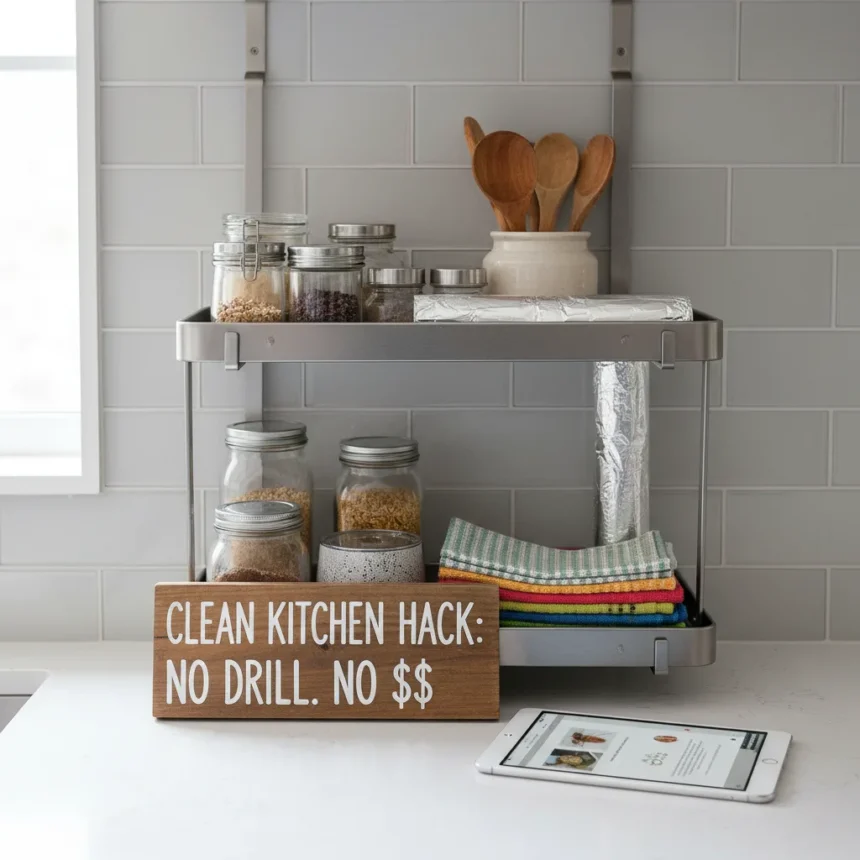
A shower caddy in your kitchen sounds absurd until you actually try it. Shower caddy kitchen storage is a repurposing hack that mounts an ordinary bathroom caddy on your kitchen wall or cabinet to store frequently accessed items like utensils, sponges, dish brushes, cleaning sprays, and produce bags. The setup requires no drilling, no new tools, and costs nothing if you already own an unused caddy—or around $10 to $20 for a basic tension-pole model online.
Key Takeaways
- Shower caddy kitchen storage uses existing hanging hardware with zero installation complexity.
- Frees up drawer and countertop space in small kitchens by moving items to vertical wall storage.
- Items dry faster when hung, reducing moisture buildup and sink-area clutter.
- Basic shower caddies cost $10–$20 on Amazon, Walmart, and Target if you don’t have one at home.
- No drilling or permanent installation required—caddy hangs using its built-in tension mechanism or S-hooks.
Why Shower Caddy Kitchen Storage Works Better Than Traditional Racks
The appeal is straightforward: a shower caddy gives you multi-tier baskets and hooks in a compact, low-profile footprint. Unlike over-sink shelves or magnetic strips that demand permanent mounting or take up counter real estate, a caddy hangs on existing hardware and moves easily if you change your mind. The vertical design keeps frequently used items within arm’s reach during cooking and cleaning without consuming drawer space or adding visual clutter to your countertop.
Wet sponges and brushes dry faster when hung in the caddy’s bottom baskets, preventing the soggy, bacteria-prone mess that accumulates in a sink caddy or drawer. Spray bottles hang from hooks, keeping cleaning supplies organized and accessible. Utensils, bags, and smaller tools slot into upper baskets. The caddy’s open design means nothing gets buried or forgotten—you see everything at a glance.
How to Set Up Shower Caddy Kitchen Storage
Start by identifying an unused shower caddy at home, or pick up a basic tension-pole or hanging-style model online. Choose a suitable kitchen spot—above the sink, on a cabinet side, or near the stove work well, as long as the location is stable and away from direct heat sources that could warp the caddy. Mount the caddy using its existing hooks or tension mechanism. If it’s a tension-pole style, extend it between your counter and cabinet. If it hangs via S-hooks, attach them to existing hardware on your cabinet or wall. No drilling, no permanent installation.


Organize items by frequency and weight. Place wet sponges and brushes in lower baskets where they drip-dry freely. Hang spray bottles on hooks for easy access. Store utensils, produce bags, or foil rolls in upper shelves. If heavier items like foil rolls unbalance the caddy, add extra hooks to distribute weight evenly. Adjust and rearrange as needed—the beauty of this hack is its flexibility. You can move the caddy in minutes if your kitchen layout changes.
What Makes Shower Caddy Kitchen Storage a significant shift for Small Kitchens
The real win is reclaiming space. In a small kitchen, every drawer and inch of counter matters. A shower caddy moves clutter off your countertop and out of drawers without requiring permanent installation or renovation. It’s the simplest hack that gives you more storage for free if you’re repurposing something you already own. Even if you buy a new caddy for $15, you’re spending far less than dedicated kitchen organizers, wall-mounted racks, or floating shelves.



The hack also addresses a practical pain point: wet tools and sponges. Hanging them in a caddy lets air circulate, reducing moisture, mold, and odors that plague traditional sink caddies or damp drawers. Your kitchen stays fresher, and your tools last longer. After trying this approach, most people report they’re never going back to cramped drawers or cluttered countertops.
Potential Limitations and When This Hack Might Not Work
Not every kitchen is a perfect fit. Uneven walls or cabinets with irregular surfaces can make mounting unstable. Heavy loads—if you’re storing cast iron or dozens of utensils—might stress the caddy’s hanging hardware beyond its design limits. In humid kitchens, metal caddies can rust over time, so look for stainless steel or plastic models if moisture is a concern. If your kitchen lacks suitable wall or cabinet space near your sink or work area, the hack loses its convenience advantage.
The caddy also works best for items you use daily. Storing seasonal tools or rarely used gadgets in a prominent wall-mounted caddy defeats the purpose of decluttering. Think of it as a high-traffic storage solution for your cooking and cleaning essentials, not a catch-all for everything.
Shower Caddy Kitchen Storage vs. Other Small-Space Solutions
How does this compare to alternatives? Over-sink shelves and magnetic strips require drilling or permanent adhesive, take up counter space, or offer limited storage capacity. Floating shelves like the Shario White model cost around $27 and need wall anchors. IKEA’s ÖBONÄS suction shelf costs about $5 but works only on smooth surfaces and holds lighter items. A shower caddy sidesteps these constraints: it’s cheaper, requires no tools, and works on cabinets and walls without permanent damage. For renters or anyone hesitant about drilling, it’s the fastest, most reversible option available.


Is shower caddy kitchen storage worth trying?
If you have an unused shower caddy at home, absolutely. Zero cost, zero installation complexity, and immediate clutter relief make it worth an afternoon experiment. Even if you buy a new caddy for $10 to $20, you’re investing in a flexible, movable storage solution that frees up drawer and counter space without renovation. The worst outcome is that it doesn’t fit your kitchen layout—and you move it back to the bathroom or donate it. The best outcome is you reclaim your countertops and never look back.
Can you use any shower caddy for kitchen storage?
Tension-pole caddies and hanging S-hook models both work, but tension-pole versions are more stable and easier to adjust. Look for caddies with multiple tiers and hooks so you can organize different item types. Stainless steel or plastic construction resists rust better than cheaper metal models, especially in humid kitchens. Avoid oversized caddies that won’t fit your space or look disproportionate to your kitchen layout.
What items work best in a shower caddy kitchen storage setup?
Sponges, brushes, spray bottles, utensils, produce bags, and cleaning cloths are ideal. Avoid heavy cast iron, large pots, or items that create imbalance. Anything that benefits from air-drying or frequent access is a good candidate. Avoid storing items that need to stay dry or hidden—the caddy’s open design leaves everything visible.
The shower caddy kitchen storage hack thrives on simplicity and reversibility. It solves a real problem—clutter and wasted space—without commitment, cost, or complexity. In a world of expensive organizers and complicated systems, sometimes the best solution is already in your bathroom closet.
Where to Buy
Edited by the All Things Geek team.
Source: Tom's Guide




