The Steam Machine launch has been clouded by uncertainty since Valve’s official reveal, but a new SteamOS 3.8.0 preview update marks the first concrete hardware support arriving ahead of the console’s arrival. This update signals Valve is moving forward with its 2026 release window despite global RAM shortages and rising component costs that have complicated pricing and exact availability timelines.
Key Takeaways
- SteamOS 3.8.0 preview delivers the first hardware support update for Steam Machine ahead of 2026 launch.
- Steam Machine is over six times more powerful than the Steam Deck with 16 GB DDR5 RAM and semi-custom AMD RDNA 3 GPU.
- Valve reaffirmed 2026 shipping plans despite blog edits and storage shortage challenges affecting all three 2026 products.
- No exact launch date or regional pricing confirmed as of March 2026 due to ongoing hardware supply constraints.
- Steam Machine supports 4K gaming at 60 FPS with ray tracing and comes in 512 GB or 2 TB storage configurations.
Steam Machine Launch Timeline Clarified Amid Delay Rumors
Uncertainty gripped the Steam Machine community when Valve’s official store page shifted from listing a “2026” release to vague language saying “coming soon.” Fans worried the console had slipped into indefinite limbo. A Valve spokesperson directly addressed this concern, telling media outlets that “nothing has actually changed on our end”. The company then updated its Steam Year in Review 2025 blog post to state: “We shared recently that there have been challenges with memory and storage shortages, but we will be shipping all three products this year,” confirming the Steam Machine, a redesigned Steam Controller, and the Steam Frame VR headset will all arrive in 2026. This reaffirmation came after the blog originally said Valve “hoped” to ship in 2026—a subtle wording change that sparked speculation about delays.
The global RAM shortage and rising component prices remain the primary obstacles to announcing an exact launch date or final pricing. Valve has not disclosed which quarter of 2026 customers can expect the Steam Machine to arrive, only that it is committed to shipping within the calendar year. This vagueness frustrates fans eager to pre-order, but it reflects genuine supply-chain pressure rather than development setbacks.
Hardware Specs Position Steam Machine as Deck’s Powerful Successor
The Steam Machine launch will introduce a console far more capable than its predecessor. The device packs 16 GB DDR5 system RAM paired with 8 GB GDDR6 dedicated video memory, a semi-custom AMD RDNA 3 GPU, and support for 4K gaming at 60 frames per second with ray tracing enabled. Storage options include 512 GB or 2 TB configurations, giving buyers flexibility depending on their library size and budget. Valve claims the Steam Machine is more than six times as powerful as the Steam Deck, a dramatic leap that positions it as a genuine TV-first console rather than a portable handheld.

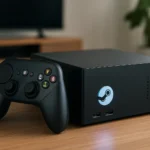
This power increase matters because it narrows the gap between PC gaming and console gaming. The Steam Deck reshaped portable play but always felt like a compromise—great for indie games and older AAA titles, but demanding modern games at lower settings. The Steam Machine’s RDNA 3 architecture and extra VRAM suggest it can handle current-generation gaming at settings closer to what desktop PCs deliver. For players who want console-like simplicity without sacrificing graphical fidelity, this is the proposition Valve is betting on.
SteamOS 3.8.0 Preview Brings First Hardware Support
The arrival of SteamOS 3.8.0 preview marks the first tangible sign that Steam Machine hardware support is moving from planning into execution. Preview releases typically indicate Valve is testing driver stability, GPU optimization, and system-level features with early hardware units. The update’s specific improvements remain partially opaque—the source article references “one major fix” the author has been waiting for, but does not detail what that fix addresses. This vagueness is frustrating for enthusiasts analyzing every update for clues about the console’s readiness, though it is typical of Valve’s approach to preview releases.



The timing of this preview matters. Releasing hardware support updates months before launch allows Valve to identify and patch driver issues, optimize game performance, and refine the user experience before retail units ship. Competitors like Sony and Microsoft typically follow this same pattern, using preview periods to catch critical bugs before customers receive their consoles. The fact that Valve is moving into this phase suggests the Steam Machine launch is progressing on schedule despite supply-chain headwinds.
Why Pricing and Availability Remain Uncertain
The Steam Machine launch price has not been announced, and the research brief indicates this delay stems from ongoing memory and storage shortages affecting component costs. DDR5 RAM prices fluctuate based on global supply, and the semi-custom AMD GPU requires long lead times. Valve likely wants to lock in final pricing only when it can guarantee supply and manufacture enough units to meet demand without creating artificial scarcity. Announcing a price too early risks either underselling due to supply constraints or overpromising availability.
Regional availability is also unconfirmed. The Steam Deck launched globally but with staggered regional releases and ongoing stock challenges. The Steam Machine may follow a similar pattern, with earlier availability in key markets like North America and Europe before expanding elsewhere. Valve has not publicly detailed its regional rollout strategy, so customers outside major markets should prepare for potential wait times.
How Steam Machine Compares to Steam Deck
The Steam Machine and Steam Deck occupy different market segments entirely. The Deck targets portable gaming—you play on the device’s screen or dock it to a TV. The Steam Machine is purpose-built for TV play, with specs designed for living-room gaming at 4K resolution. With over six times the GPU power and dedicated VRAM, the Steam Machine can handle demanding modern games that would require significant compromises on the Deck. The tradeoff is portability; the Steam Machine is a stationary console, not something you carry in a bag. For players who already own a Deck and want a more powerful home console, the Steam Machine fills a gap. For newcomers, the choice depends on whether you prioritize portable or stationary gaming.


What Happens If Supply Issues Worsen?
The research brief does not specify contingency plans if RAM shortages persist through 2026, but Valve’s explicit commitment to shipping all three products this year suggests the company has secured supply contracts or alternative sourcing. Tech companies typically lock in component allocations months in advance when announcing launch windows, so Valve likely has guaranteed access to the RAM and GPUs needed for production. That said, the updated blog post acknowledging “challenges with memory and storage shortages” indicates these constraints are real and could affect launch smoothness or initial availability.
Will Steam Machine launch in the first half of 2026?
Valve initially targeted first-half 2026, but the company has not confirmed an exact quarter or month. The SteamOS 3.8.0 preview suggests development is advancing, but no official launch date has been announced as of March 2026. Expect Valve to announce a more specific window once supply contracts are finalized and manufacturing ramps up.
What makes Steam Machine different from gaming PCs?
Steam Machine is a purpose-built console optimized for TV play with a simplified interface, whereas gaming PCs require configuration and offer more flexibility. The Steam Machine’s semi-custom AMD GPU and optimized SteamOS software target the living-room gaming experience, similar to PlayStation or Xbox, but running Valve’s ecosystem.
Can you play all Steam games on Steam Machine?
The research brief does not specify which games will be compatible at launch or whether all Steam titles will run on Steam Machine. Valve typically certifies games for its hardware, so not every Steam title may be officially supported initially, though the RDNA 3 architecture suggests broad compatibility with modern games.
The Steam Machine launch represents Valve’s most ambitious hardware bet since the Steam Deck. SteamOS 3.8.0 preview signals real progress, but Valve’s refusal to announce exact pricing or regional availability reflects the genuine supply-chain challenges plaguing the industry. If the company delivers in 2026, it will have a powerful living-room console. If shortages worsen, expect delays—and a disappointed community already primed for disappointment.
Edited by the All Things Geek team.
Source: TechRadar