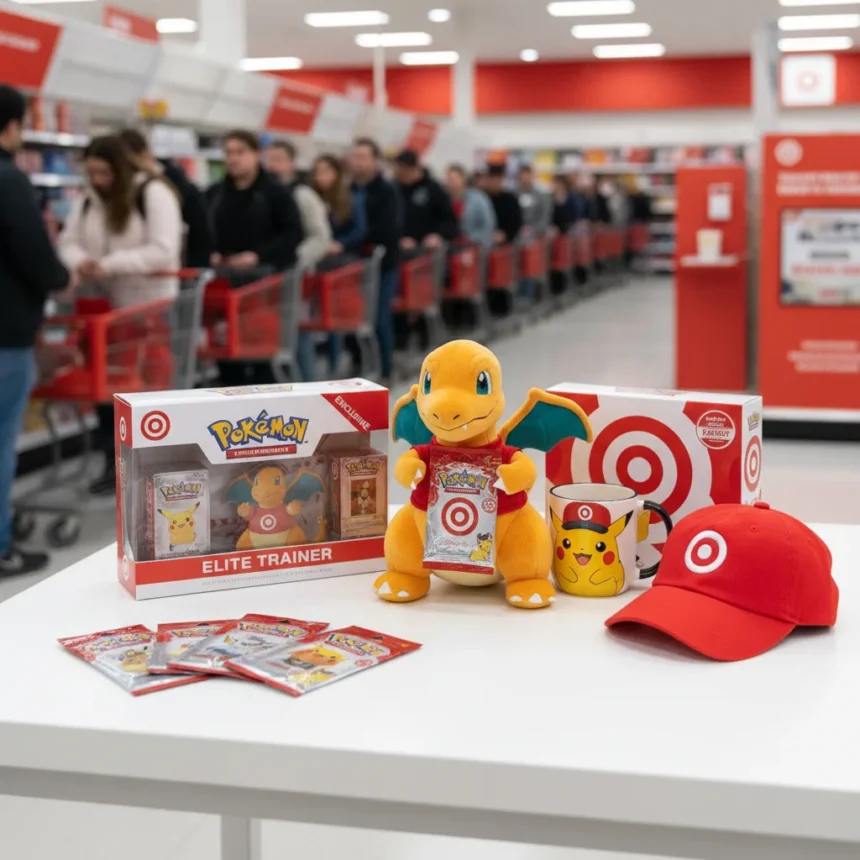
The Target x Pokémon collection is a limited trading card assortment expected to sell out quickly due to high collector demand and Pokémon’s dominance in Target’s trading card sales. Fans of the franchise are anticipating the next drops, but supply constraints and theft-related store closures mean buyers need a strategy to secure stock before it vanishes.
Key Takeaways
- Target x Pokémon collection faces rapid sellout risk driven by collector hype and strong spring 2025 demand.
- Target enforces a two-unit purchase limit per item on Pokémon cards to manage demand.
- Some Target stores temporarily halted in-store trading card sales due to theft concerns, though online stock may increase.
- Pokémon cards drove the majority of Target’s trading card sales in spring 2025, outpacing NFL, MLB, and NBA cards.
- Supply chain issues persist from previous shortages, making early online purchases essential.
Why the Target x Pokémon Collection Sells Out Fast
Pokémon trading cards dominated Target’s trading card category in spring 2025, accounting for the majority of sales compared to sports cards. This collector appetite creates immediate pressure on new releases. Unlike sports cards, which face higher resale markups that incentivize flipping, Pokémon cards attract both casual collectors and serious enthusiasts seeking rare pulls and set completion. The combination of nostalgia, competitive collecting culture, and persistent supply chain constraints from previous years means each new drop faces genuine scarcity.
Target’s trading card selection reaches customers through both Target.com and physical stores, but availability has become unpredictable. Select trading cards, including Pokémon products, faced temporary store unavailability due to organized theft groups targeting high-value inventory, though Pokémon was less affected than sports cards. This means online channels may become the primary distribution method, concentrating demand on a single platform and accelerating sellouts.
Purchase Limits and How They Work
Target implemented a two-unit purchase limit per item on Pokémon cards to prevent bulk buying and hoarding. This means you can buy a maximum of two copies of any single Pokémon product per transaction. The restriction applies both in-store and online, though enforcement is stricter on the website where inventory is tracked centrally. If you plan to purchase multiple different Pokémon products from the Target x Pokémon collection, you can buy two units of each distinct item, but not four of the same product.


This limit exists for a reason: without it, resellers would vacuum up stock within minutes of availability, leaving collectors empty-handed. The two-unit cap balances accessibility for genuine fans against the reality that some buyers will still attempt to flip cards for profit. It also signals that Target expects demand to outpace supply, which is why speed matters when stock drops.
Online vs. In-Store Availability
Target.com is now the more reliable channel for Pokémon trading cards, especially given temporary store halts in physical locations. Online inventory updates faster, and you can monitor restock from anywhere. However, online stock can disappear in seconds once a new product goes live, so you need to be ready.


In-store availability remains inconsistent. While some Target locations continue selling trading cards, others have paused Pokémon stock due to theft liability and security concerns. Before driving to a store, check Target’s website to confirm the specific location has the product in stock. Many collectors have wasted time traveling only to find shelves empty or the category cordoned off.
How to Beat the Rush and Secure Stock
Create a Target account now and save your payment method to the app or website. When the Target x Pokémon collection drops, checkout speed is the difference between success and a sold-out message. Set up notifications on Target.com for the specific products you want—the website’s notification system, while imperfect, gives you an edge over casual browsers.
Monitor Target’s official announcements and social channels for exact drop times. Pokémon product releases often happen early morning or mid-week to avoid peak traffic times. Have your phone or computer ready five minutes before the expected availability window. Avoid using guest checkout; logged-in accounts process faster.
If in-store availability returns to your location, arriving at opening time on the day of release is your best bet. Staff typically stock shelves overnight, and early birds catch the full selection before the two-unit limit kicks in for later shoppers. However, given current theft concerns, confirm availability by phone before making the trip.


Pokémon vs. Sports Cards at Target
Target stocks Pokémon alongside NFL, MLB, and NBA trading cards, but demand patterns differ significantly. Sports cards face steeper resale markups—sometimes 3 to 4 times the retail price on secondary markets—which drives aggressive flipping behavior and faster sellouts. Pokémon cards attract a different demographic: lifelong fans and set collectors rather than investment speculators. This makes Pokémon stock more stable in some ways, but the sheer volume of casual interest means it still sells out rapidly.
The theft issue also affects sports cards more severely than Pokémon, which is why some Target stores paused sports card sales while Pokémon remained available in many locations. If you’re choosing between categories, Pokémon offers better in-store availability right now, though online remains the safest bet for either category.
What Happens If the Target x Pokémon Collection Sells Out?
If you miss the initial drop, secondary market prices will spike immediately. Resellers monitor Target releases in real time and list stock on eBay and other platforms within minutes. Paying secondary market prices defeats the purpose of shopping at Target, where products are priced for retail value. Your best strategy is to stay alert for restocks—Target sometimes receives additional shipments of popular trading card products, especially if initial demand is high.
Set up a saved search on Target.com and check it daily for the first two weeks after release. Supply chain issues mean restocks are unpredictable, but they do happen. If the collection remains sold out after a month, assume it’s discontinued for that release cycle and wait for the next Target x Pokémon collaboration.
Is the Target x Pokémon collection worth buying immediately?
Yes, if you’re a collector or fan. The two-unit purchase limit and demonstrated sellout risk mean waiting costs you. Pokémon trading cards drove the majority of Target’s trading card sales in spring 2025, signaling sustained demand. Buy now, collect later—that’s the collector’s math.
Will the Target x Pokémon collection restock?
Possibly, but not guaranteed. Target sometimes receives additional shipments of popular trading card releases, but supply chain constraints make restocks unpredictable. If it restocks, it typically happens within two weeks of the initial drop. Check Target.com daily if you miss the first availability window.
Can I buy more than two units of the Target x Pokémon collection?
No. Target’s two-unit purchase limit per item applies to all Pokémon cards. You can buy two units of Product A and two units of Product B, but not four of the same item. This limit is enforced both online and in stores.
The Target x Pokémon collection represents a genuine scarcity moment in the trading card market. Pokémon’s dominance at Target, combined with persistent supply chain issues and theft-driven store closures, means this isn’t hype—it’s logistics. Act fast, shop online if possible, and respect the two-unit limit so other collectors have a fair shot. The window closes quickly.
Edited by the All Things Geek team.
Source: Creativebloq