





Xbox Storage Expansion Cards aren’t locked to consoles forever. A Reddit user discovered that Xbox Storage Expansion Cards—the proprietary NVMe drives made by Seagate for Xbox Series X and Series S—can function as high-speed PC storage when paired with a CFexpress Type B adapter, sidestepping Microsoft and Seagate’s official Xbox-only positioning.
Key Takeaways
- Xbox Storage Expansion Cards work on PC via CFexpress Type B adapters, delivering faster-than-SATA speeds.
- Cards feature proprietary connectors and Xbox-specific formatting, with roughly 800GB usable storage on the 1TB model.
- Official stance from Seagate and Microsoft: cards are designed exclusively for Xbox Series X|S consoles.
- The hack extends the lifespan of cards beyond console ownership, repurposing them as portable high-speed drives.
- No warranty or stability guarantees exist for PC use—this remains an unsupported workaround.
What Are Xbox Storage Expansion Cards?
Xbox Storage Expansion Cards are proprietary NVMe SSDs engineered specifically for Xbox Series X and Series S consoles, matching the internal drive’s peak performance through Xbox Velocity Architecture. Each card uses a proprietary connector and Xbox-specific formatting that partitions storage into system areas and user content. On a 1TB model, you get roughly 800GB of usable storage after accounting for system support, temporary content, and update partitions.
Seagate manufactures these cards exclusively for Xbox, and both Seagate and Microsoft have historically stated they work only with Series X|S hardware. Community forums and retailer Q&A sections reinforced this boundary—users asked repeatedly whether cards could work on PC, and responses were uniformly negative, citing proprietary slots and formatting incompatibility.
How the CFexpress Hack Works
The workaround is straightforward: acquire a CFexpress Type B adapter compatible with the Xbox card’s proprietary connector, insert the card into the adapter, then plug the adapter into a PC’s CFexpress slot or compatible reader. Once mounted, the card functions as a standard storage drive with read and write access. The real benefit emerges in speed—the hack delivers faster-than-SATA performance, making it a practical solution for gamers with aging mechanical drives or budget SATA SSDs.

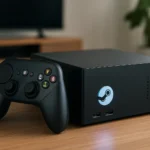
This discovery reframes what happens to Xbox Storage Expansion Cards after console ownership ends. Rather than becoming shelf-ware, the cards gain a second life as portable, high-speed storage. For users upgrading consoles or moving away from Xbox, the hack provides genuine utility instead of obsolescence.
Xbox Storage Expansion Cards vs. Standard PC Storage
Standard SATA SSDs represent the baseline for affordable PC storage, but they are considerably slower than NVMe drives. Xbox Storage Expansion Cards, when used on PC via the CFexpress adapter, exceed SATA speeds, positioning them as a middle ground between budget SATA and premium NVMe solutions. Inside an Xbox, these cards leverage custom optimizations that make them faster than generic SSDs in that ecosystem. On PC, they lose those Xbox-specific advantages but retain their raw speed advantage over SATA.
The comparison matters because many PC users still rely on SATA drives for secondary storage or game libraries. An Xbox card repurposed via CFexpress adapter offers a tangible speed upgrade without the cost of a new NVMe drive. However, this remains an unsupported hack—Seagate and Microsoft provide no warranty or stability guarantees for PC use, and potential risks like data corruption or driver conflicts are not documented in official testing.
Is This a Practical Solution for PC Gamers?
The hack works, but practicality depends on your situation. If you own an Xbox card you no longer need and have a PC with a CFexpress slot, the adapter method costs far less than buying a new drive and extends the card’s value. For gamers storing large game libraries, the faster-than-SATA performance justifies the effort. However, the lack of official support means you are on your own if something goes wrong—warranty coverage likely evaporates once the card leaves Xbox hardware.
The real appeal is environmental and economic. Rather than discarding a functional storage device, the hack gives it purpose. For budget-conscious builders or those with legacy Xbox cards gathering dust, this represents genuine value recovery.
Can You Use Xbox Internal SSDs on PC Instead?
The Xbox Series X internal SSD differs from the expansion card—it uses a standard NVMe form factor but with Xbox-specific optimizations. Testing shows partial readability when inserted into a PC NVMe slot, but performance suffers compared to console use, likely due to Xbox Velocity Architecture tweaks that do not translate to standard PC environments. The expansion card hack, by contrast, works more reliably because the CFexpress adapter bridges the proprietary connector to a standard interface.

What Happens to Your Games and Saves?
Games and save files stored on Xbox Storage Expansion Cards remain bound to your Xbox account and console ecosystem. They do not transfer to PC when you move the card—the card becomes blank storage once mounted on a PC, usable only for general file storage like videos, documents, or software. This means you cannot transplant your Xbox game library onto the card and play it on PC. The hack is purely about reclaiming storage capacity, not about cross-platform gaming.
Should You Buy an Xbox Card Just for PC Storage?
No. Buying an Xbox Storage Expansion Card specifically to use on PC via CFexpress adapter makes no financial sense. You would pay a premium price for hardware designed for a different platform, then rely on an unsupported workaround. Standard NVMe SSDs and CFexpress cards built for PC are cheaper and come with manufacturer support. The hack’s value exists only if you already own a card and want to repurpose it.
Will Microsoft or Seagate Ever Officially Support This?
Unlikely. Seagate’s FAQ explicitly states that Storage Expansion Cards work exclusively with Xbox Series X|S for optimized compatibility and gameplay performance. Official support would require engineering work, driver development, and warranty coverage—investments that do not align with the cards’ original design purpose. The hack will likely remain a community workaround rather than an endorsed feature.
The Xbox Storage Expansion Card hack represents a clever second act for hardware that would otherwise become obsolete. If you have a card you no longer need and access to a CFexpress adapter, the workaround delivers real speed benefits for PC storage. Just go in knowing it is unsupported and unsanctioned—and that your primary use case for these cards remains what they were built for: expanding Xbox Series X and Series S game libraries.
Where to Buy
NGFF PCI-E 4.0 PCIE 4X Host to CF Express Extension Card Socket Adapter:
Edited by the All Things Geek team.
Source: Windows Central




